Cunha Debora M G, Becegato Marcela, Meurer Ywlliane S R, Lima Alvaro C, Gonçalves Narriman, Bioni Vinícius S, Engi Sheila A, Bianchi Paula C, Cruz Fabio C, Santos Jose R, Silva Regina H
Behavioral Neuroscience Laboratory, Department of Pharmacology, Universidade Federal de São Paulo, São Paulo, Brazil.
Behavioral and Evolutionary Neurobiology Laboratory, Department of Bioscience, Universidade Federal do Sergipe, Itabaiana, Brazil.
Front Neurosci. 2022 Aug 26;16:923957. doi: 10.3389/fnins.2022.923957. eCollection 2022.
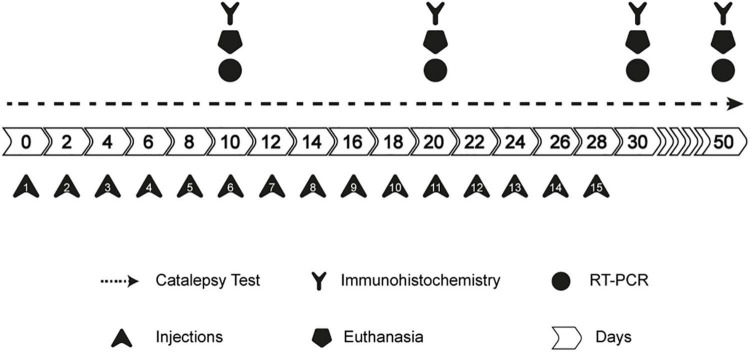
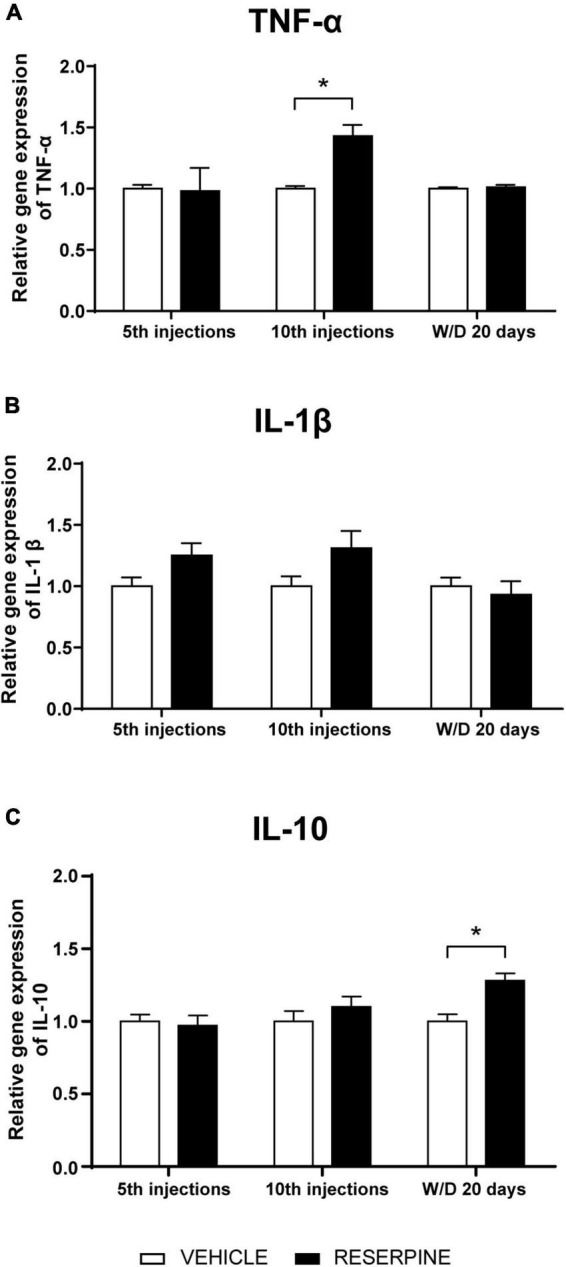
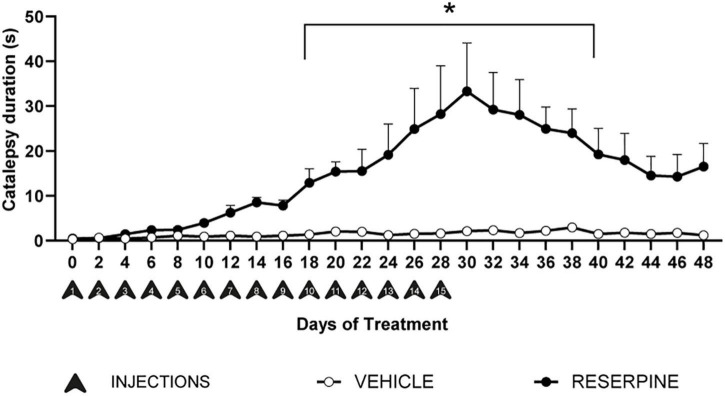
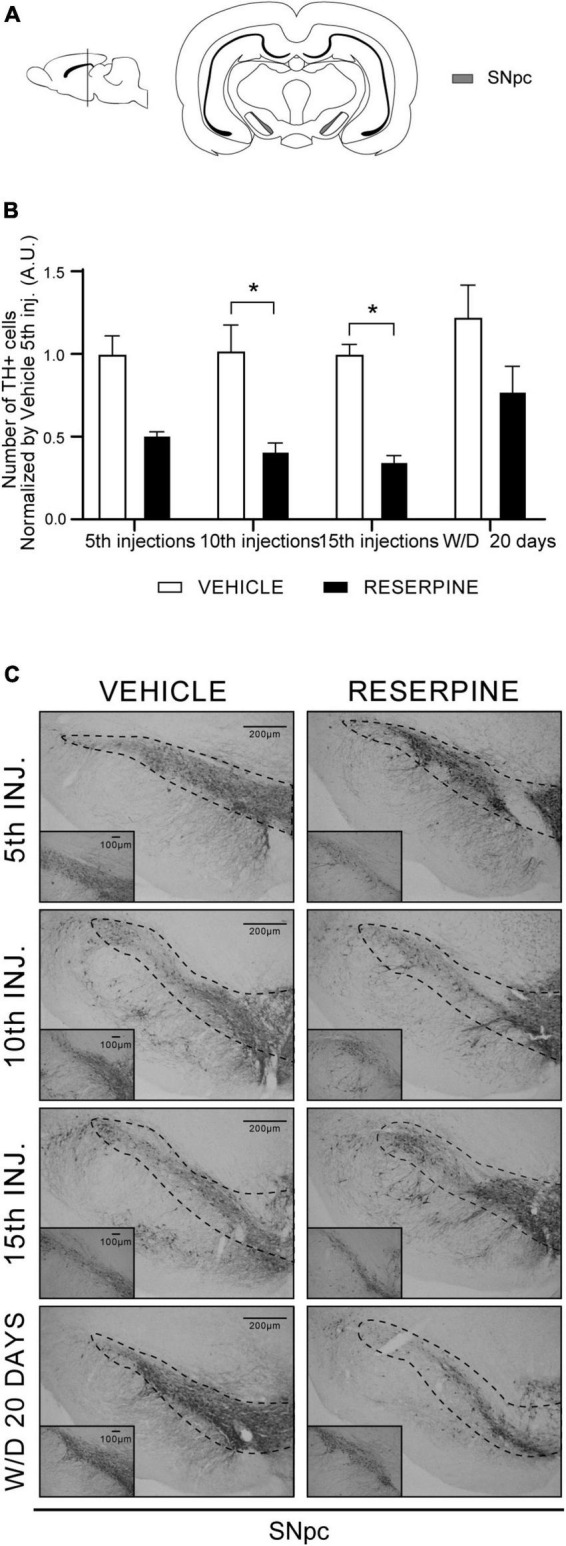
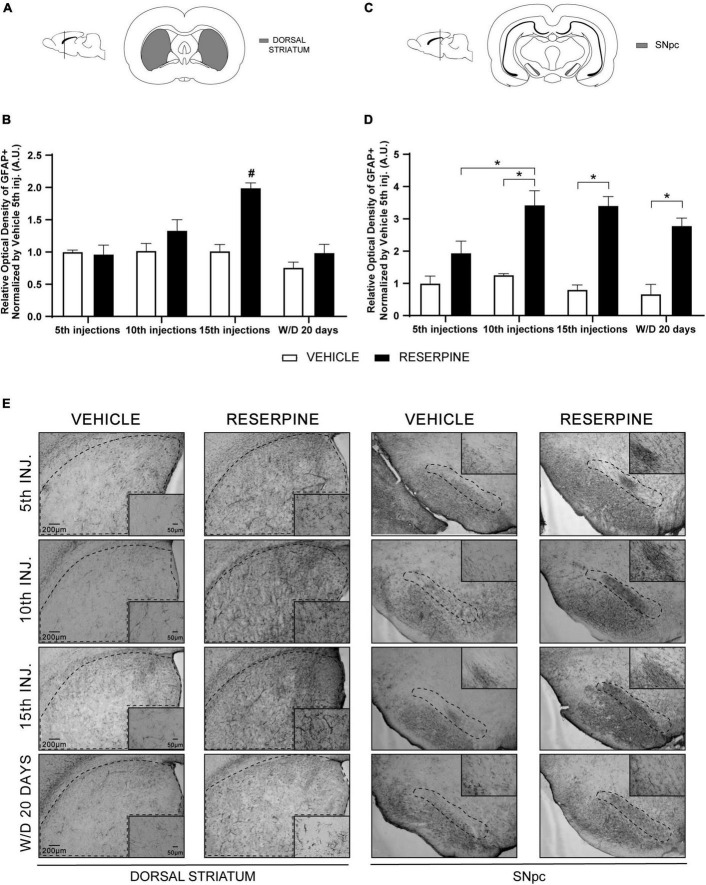
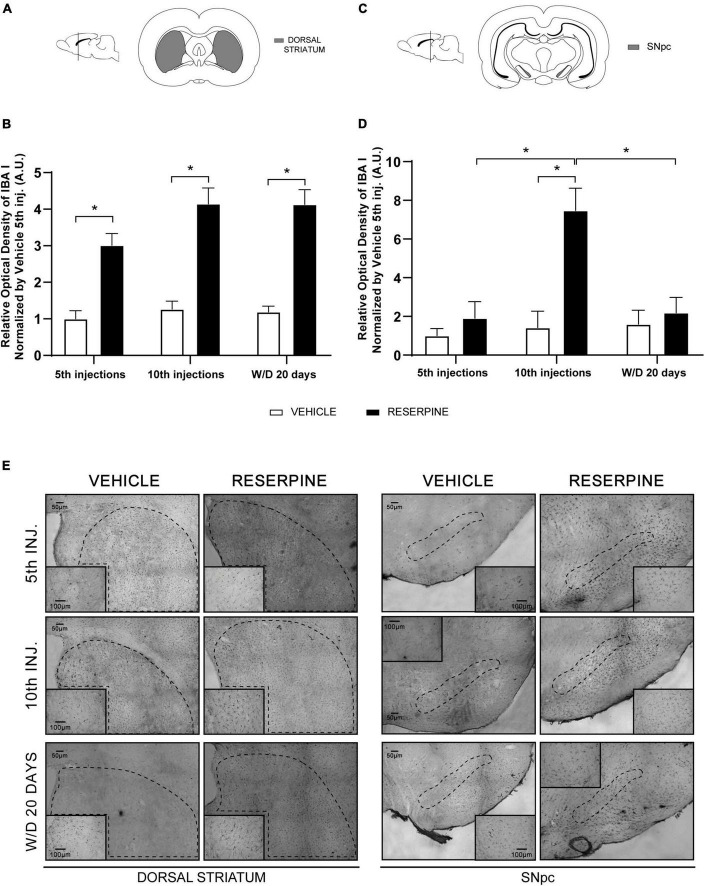
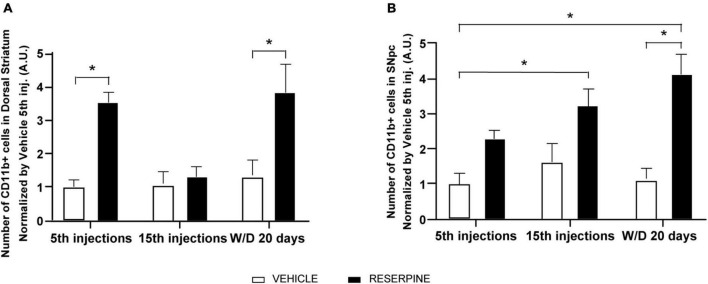
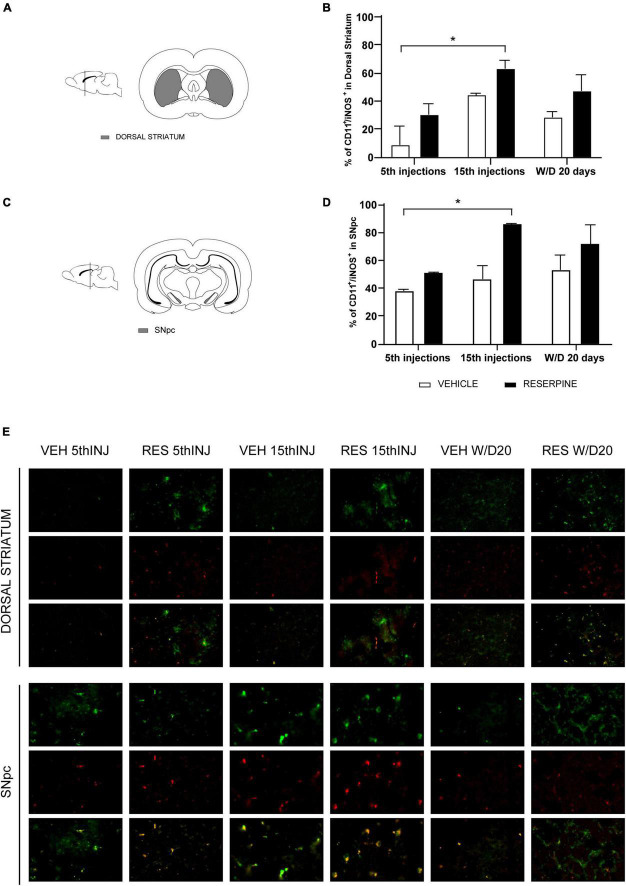
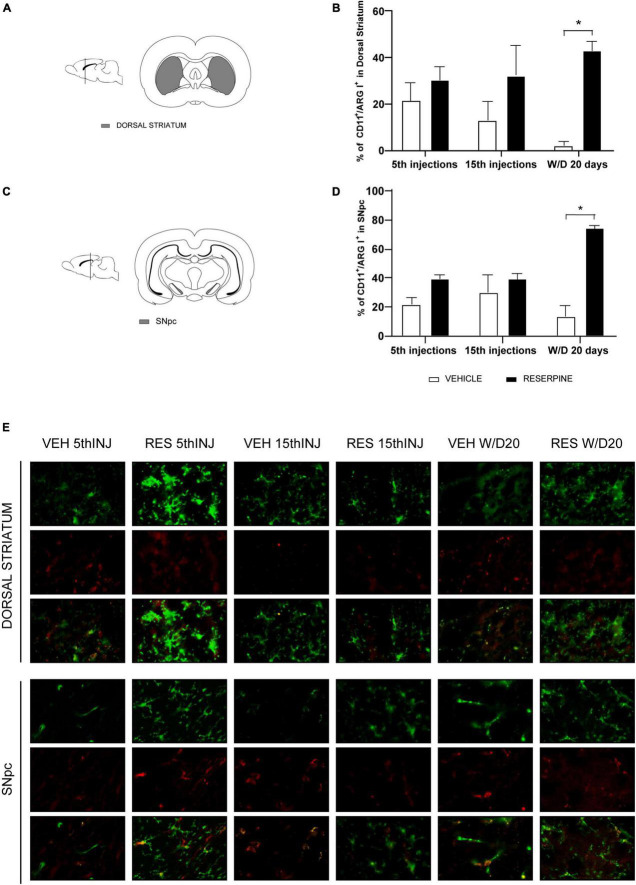
Parkinson's disease (PD) is characterized by motor and non-motor signs, which are accompanied by progressive degeneration of dopaminergic neurons in the substantia nigra. Although the exact causes are unknown, evidence links this neuronal loss with neuroinflammation and oxidative stress. Repeated treatment with a low dose of reserpine-inhibitor of VMAT2-has been proposed as a progressive pharmacological model of PD. The aim of this study was to investigate whether this model replicates the neuroinflammation characteristic of this disease. Six-month-old Wistar rats received repeated subcutaneous injections of reserpine (0.1 mg/kg) or vehicle on alternate days. Animals were euthanized after 5, 10, or 15 injections, or 20 days after the 15th injection. Catalepsy tests (motor assessment) were conducted across treatment. Brains were collected at the end of each treatment period for immunohistochemical and RT-PCR analyzes. Reserpine induced a significant progressive increase in catalepsy duration. We also found decreased immunostaining for tyrosine hydroxylase (TH) in the substantia nigra (SNpc) and increased GFAP + cells in the SNpc and dorsal striatum after 10 and 15 reserpine injections. Phenotyping microglial M1 and M2 markers showed increased number of CD11b + cells and percentage of CD11b + /iNOS + cells in reserpine-treated animals after 15 injections, which is compatible with tissue damage and production of cytotoxic factors. In addition, increased CD11b + /ArgI + cells were found 20 days after the last reserpine injection, together with an increment in IL-10 gene expression in the dorsal striatum, which is indicative of tissue repair or regeneration. Reserpine also induced increases in striatal interleukin TNF-alpha mRNA levels in early stages. In view of these results, we conclude that reserpine-induced progressive parkinsonism model leads to neuroinflammation in regions involved in the pathophysiology of PD, which is reversed 20 days after the last injection. These findings reveal that withdrawal period, together with the shift of microglial phenotypes from the pro-inflammatory to the anti-inflammatory stage, may be important for the study of the mechanisms involved in reversing this condition, with potential clinical applicability.
帕金森病(PD)的特征是运动和非运动症状,同时伴有黑质中多巴胺能神经元的进行性退化。尽管确切病因尚不清楚,但有证据表明这种神经元损失与神经炎症和氧化应激有关。反复给予低剂量的利血平(VMAT2抑制剂)被提议作为PD的一种进行性药理学模型。本研究的目的是调查该模型是否复制了这种疾病的神经炎症特征。6个月大的Wistar大鼠每隔一天接受一次利血平(0.1mg/kg)或溶剂的皮下注射。在注射5次、10次或15次后,或在第15次注射后20天对动物实施安乐死。在整个治疗过程中进行僵住症测试(运动评估)。在每个治疗期结束时收集大脑进行免疫组织化学和RT-PCR分析。利血平导致僵住症持续时间显著逐渐增加。我们还发现,在注射10次和15次利血平后,黑质致密部(SNpc)中酪氨酸羟化酶(TH)的免疫染色减少,SNpc和背侧纹状体中GFAP+细胞增加。对小胶质细胞M1和M2标志物进行表型分析显示,注射15次利血平后,利血平处理的动物中CD11b+细胞数量增加,CD11b+/iNOS+细胞百分比增加,这与组织损伤和细胞毒性因子的产生相一致。此外,在最后一次注射利血平20天后发现CD11b+/ArgI+细胞增加,同时背侧纹状体中IL-10基因表达增加,这表明组织修复或再生。利血平在早期还诱导纹状体白细胞介素TNF-αmRNA水平升高。鉴于这些结果,我们得出结论,利血平诱导的进行性帕金森病模型导致PD病理生理学相关区域的神经炎症,在最后一次注射20天后这种炎症会逆转。这些发现表明,停药期以及小胶质细胞表型从促炎阶段向抗炎阶段的转变,对于研究逆转这种状况的机制可能很重要,具有潜在的临床应用价值。