McGettigan Carolyn, Jasmin Kyle, Eisner Frank, Agnew Zarinah K, Josephs Oliver J, Calder Andrew J, Jessop Rosemary, Lawson Rebecca P, Spielmann Mona, Scott Sophie K
Department of Psychology, Royal Holloway University of London, Egham Hill, Egham TW20 0EX, UK; Institute of Cognitive Neuroscience, University College London, 17 Queen Square, London WC1N 3AR, UK.
Institute of Cognitive Neuroscience, University College London, 17 Queen Square, London WC1N 3AR, UK.
Neuropsychologia. 2017 Jun;100:51-63. doi: 10.1016/j.neuropsychologia.2017.04.013. Epub 2017 Apr 8.
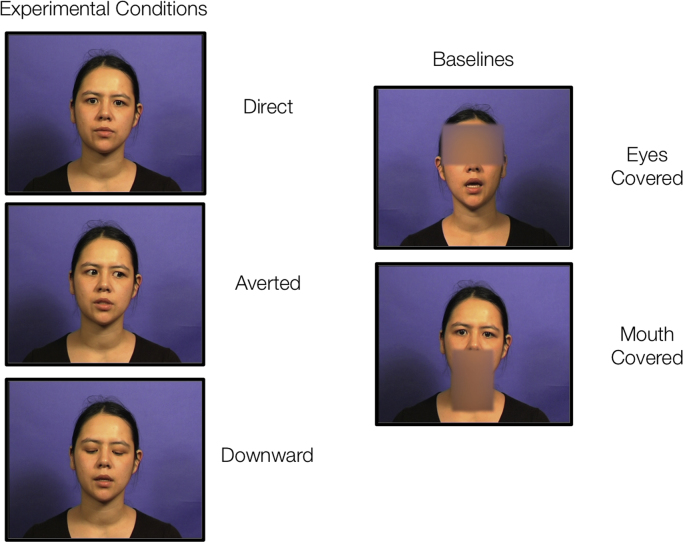
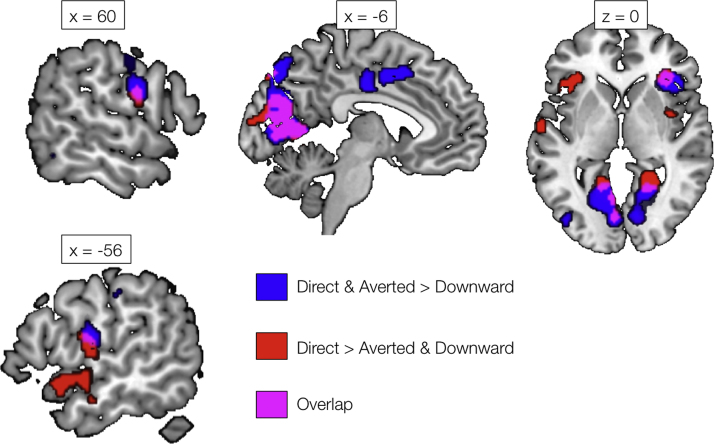
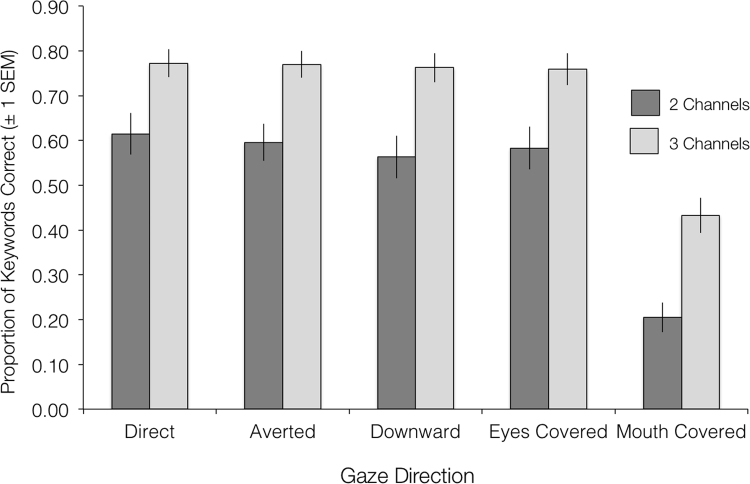
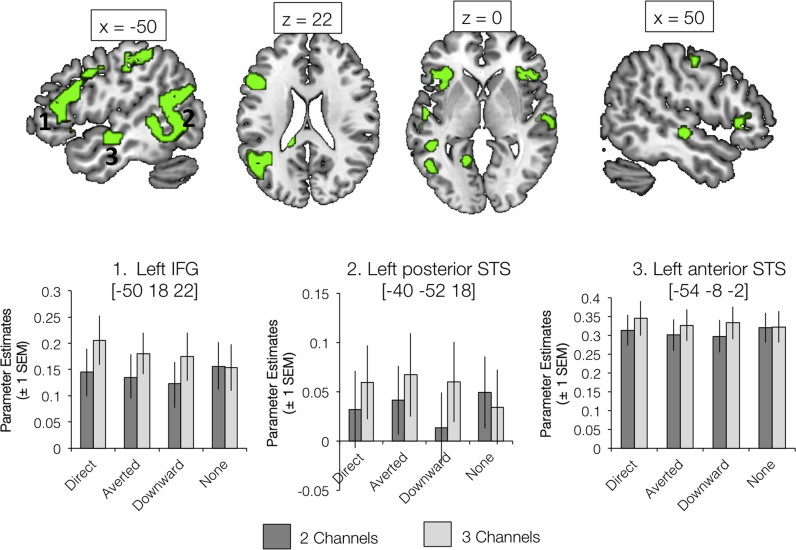
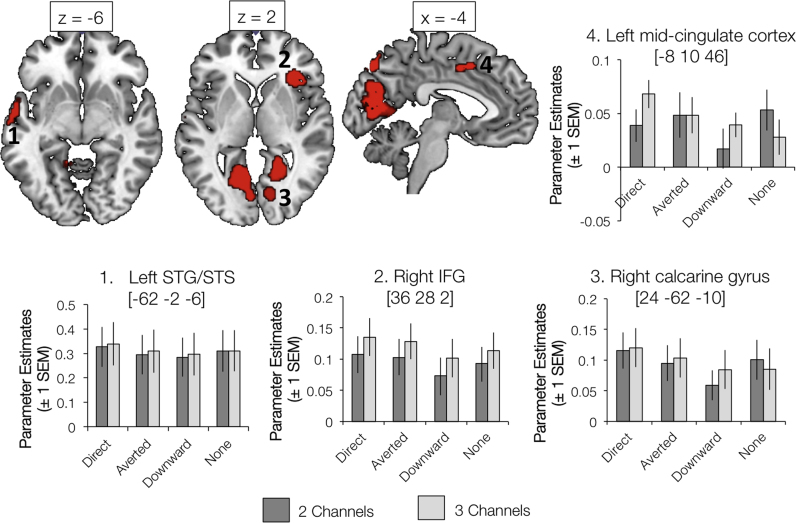
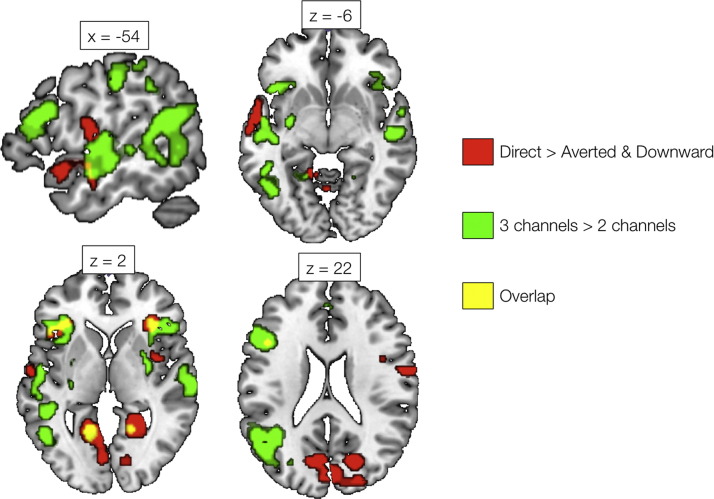
Neuroimaging studies of speech perception have consistently indicated a left-hemisphere dominance in the temporal lobes' responses to intelligible auditory speech signals (McGettigan and Scott, 2012). However, there are important communicative cues that cannot be extracted from auditory signals alone, including the direction of the talker's gaze. Previous work has implicated the superior temporal cortices in processing gaze direction, with evidence for predominantly right-lateralized responses (Carlin & Calder, 2013). The aim of the current study was to investigate whether the lateralization of responses to talker gaze differs in an auditory communicative context. Participants in a functional MRI experiment watched and listened to videos of spoken sentences in which the auditory intelligibility and talker gaze direction were manipulated factorially. We observed a left-dominant temporal lobe sensitivity to the talker's gaze direction, in which the left anterior superior temporal sulcus/gyrus and temporal pole showed an enhanced response to direct gaze - further investigation revealed that this pattern of lateralization was modulated by auditory intelligibility. Our results suggest flexibility in the distribution of neural responses to social cues in the face within the context of a challenging speech perception task.
言语感知的神经影像学研究一直表明,颞叶对可理解的听觉言语信号的反应存在左半球优势(麦吉蒂根和斯科特,2012年)。然而,有一些重要的交流线索无法仅从听觉信号中提取,包括说话者的注视方向。先前的研究表明颞上叶参与了注视方向的处理,有证据表明反应主要偏向右侧化(卡林和考尔德,2013年)。本研究的目的是调查在听觉交流背景下,对说话者注视的反应的偏侧化是否存在差异。一项功能磁共振成像实验的参与者观看并聆听了口语句子的视频,其中听觉清晰度和说话者注视方向进行了析因操作。我们观察到颞叶对说话者注视方向存在左侧优势敏感性,其中左前颞上沟/颞回和颞极对直接注视表现出增强的反应——进一步研究表明,这种偏侧化模式受到听觉清晰度的调节。我们的结果表明,在具有挑战性的言语感知任务背景下,面部社交线索的神经反应分布具有灵活性。