Department of Ecology and Evolutionary Biology, University of Toronto, Toronto, Canada.
Department of Biology and Burke Museum of Natural History and Culture, University of Washington, Seattle, USA.
Sci Rep. 2017 Apr 11;7(1):828. doi: 10.1038/s41598-017-00959-2.
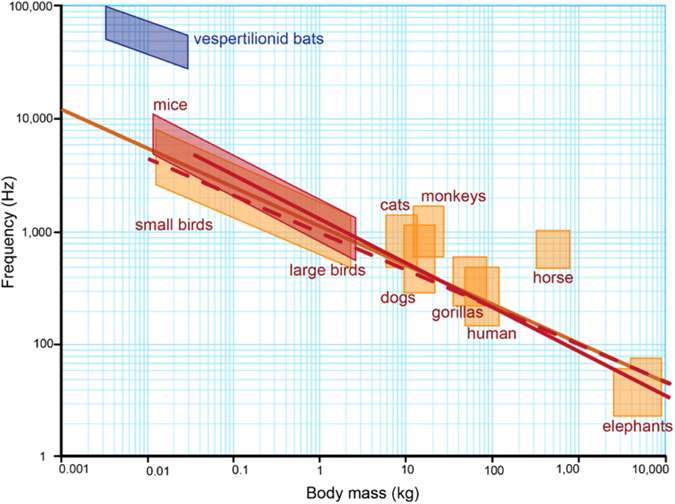
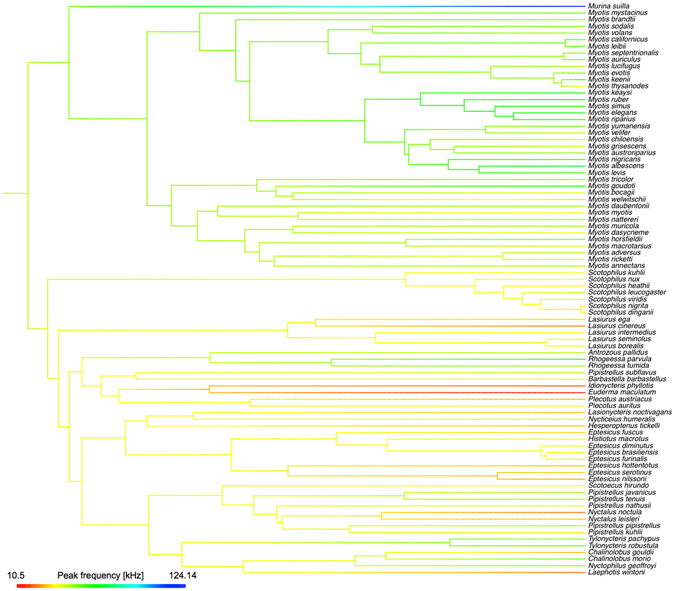
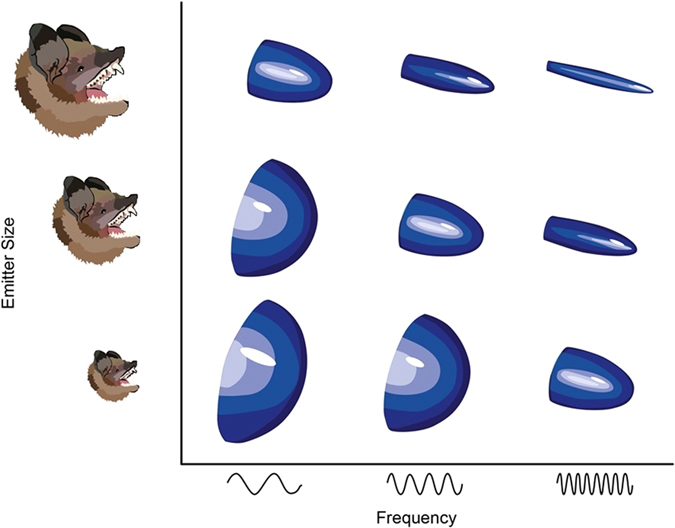
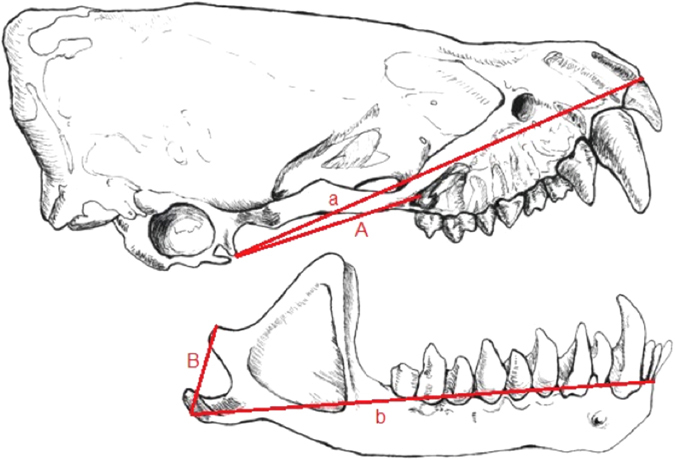
In most vocalizing vertebrates, lighter animals tend to produce acoustic signals of higher frequency than heavier animals. Two hypotheses propose to explain this negative relationship in vespertilionid bats: (i) mass-signal frequency allometry and (ii) emitter-limited (maximum gape) signal directionality. The first hypothesis, that lighter bats with smaller larynges are constrained to calls with higher frequencies, is supported at the species level. The second hypothesis proposes that in open space, small bats use higher frequencies to achieve narrow sonar beams, as beam directionality increases with both emitter size (maximum gape) and signal frequency. This hypothesis is supported within a comparative context but remains untested beyond a few species. We analyzed gape, body mass, and echolocation data under a phylogenetic comparative framework to test these hypotheses, and considered forearm length as both a proxy for wing design and an alternative measure of bat size. Controlling for mass, we found no support for the directionality hypothesis. Body mass and relative forearm length were negatively related to open space echolocation call peak frequency, reflecting species-specific size differences, but also the influence of wing design and preferred foraging habitat on size-independent species-specific differences in echolocation call design.
在大多数发声脊椎动物中,较轻的动物往往比较重的动物产生更高频率的声学信号。有两个假说试图解释蝙蝠中这种负相关关系:(i)质量-信号频率异速生长和(ii)发射器限制(最大张口)信号方向性。第一个假说认为,喉头较小的较轻蝙蝠被限制在高频叫声中,这在物种水平上得到了支持。第二个假说提出,在开阔空间中,小蝙蝠使用更高的频率来实现狭窄的声纳波束,因为波束方向性随着发射器大小(最大张口)和信号频率的增加而增加。该假说在比较背景下得到支持,但在少数几个物种之外尚未得到验证。我们在系统发育比较框架下分析了张口、体重和回声定位数据,以检验这些假说,并将前臂长度作为翅膀设计的替代指标,以及蝙蝠大小的替代测量指标。在控制体重的情况下,我们没有发现对方向性假说的支持。体重和相对前臂长度与开阔空间回声定位叫声的峰值频率呈负相关,这反映了物种特异性的大小差异,但也反映了翅膀设计和首选觅食栖息地对与大小无关的回声定位叫声设计的物种特异性差异的影响。