
青藏高原不同土壤水分平衡生境中的独特土壤微生物群落。
Distinct Soil Microbial Communities in habitats of differing soil water balance on the Tibetan Plateau.
机构信息
State Key Laboratory of Soil and Sustainable Agriculture, Institute of Soil Science, Chinese Academy of Sciences, East Beijing Road 71, Nanjing 210008, China.
University of Chinese Academy of Sciences, Beijing 100049, China.
出版信息
Sci Rep. 2017 Apr 12;7:46407. doi: 10.1038/srep46407.
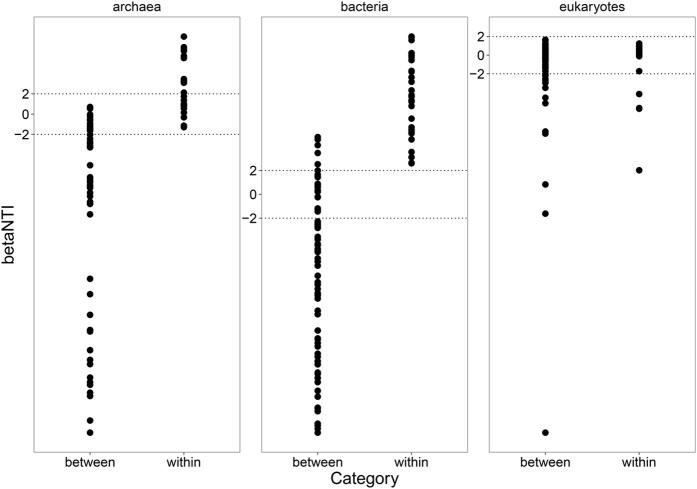
Global change may be a severe threat to natural and agricultural systems, partly through its effects in altering soil biota and processes, due to changes in water balance. We studied the potential influence of changing soil water balance on soil biota by comparing existing sites along a natural water balance gradient in the Qinghai-Tibetan Plateau. In this study, the community structure of bacteria, archaea and eukaryotes differed between the different soil water conditions. Soil moisture was the strongest predictor of bacterial and eukaryotic community structure, whereas C/N ratio was the key factor predicting variation in the archaeal community. Bacterial and eukaryotic diversity was quite stable among different soil water availability, but archaeal diversity was dramatically different between the habitats. The auxotype of methanogens also varied significantly among different habitats. The co-varying soil properties among habitats shaped the community structure of soil microbes, with archaea being particularly sensitive in terms of community composition, diversity and functional groups. Bacterial and archaeal phylogenetic community turnover was mainly driven by deterministic processes while stochastic processes had stronger effects on eukaryotic phylogenetic community turnover. Our work provides insight into microbial community, functional group and phylogenetic turnover under different soil conditions in low-latitude alpine ecosystem.
全球变化可能严重威胁到自然和农业系统,部分原因是它通过改变水平衡来影响土壤生物区系和过程。我们通过比较青藏高原自然水平衡梯度上现有的地点,研究了土壤水平衡变化对土壤生物区系的潜在影响。在这项研究中,不同土壤水分条件下细菌、古菌和真核生物的群落结构存在差异。土壤水分是细菌和真核生物群落结构的最强预测因子,而 C/N 比是预测古菌群落变化的关键因素。不同土壤水分条件下,细菌和真核生物多样性相当稳定,但古菌多样性在不同生境之间差异显著。不同生境中产甲烷菌的营养型也有很大差异。生境之间共变的土壤特性塑造了土壤微生物的群落结构,古菌在群落组成、多样性和功能群方面特别敏感。细菌和古菌系统发育群落的周转率主要由确定性过程驱动,而随机过程对真核生物系统发育群落的周转率有更强的影响。我们的工作为低纬高山生态系统不同土壤条件下微生物群落、功能群和系统发育周转率提供了深入的了解。


 Zotero 插件