Division of Rheumatology, Immunology and Allergy, Department of Medicine, Brigham and Women's Hospital, Harvard Medical School, Boston, Massachusetts, USA.
Department of Medicine, Department of Microbiology and Immunology, McGill International TB Centre, McGill University Health Centre, Meakins-Christie Laboratories, Montreal, Quebec, Canada.
Mucosal Immunol. 2017 Nov;10(6):1553-1568. doi: 10.1038/mi.2017.12. Epub 2017 Apr 12.
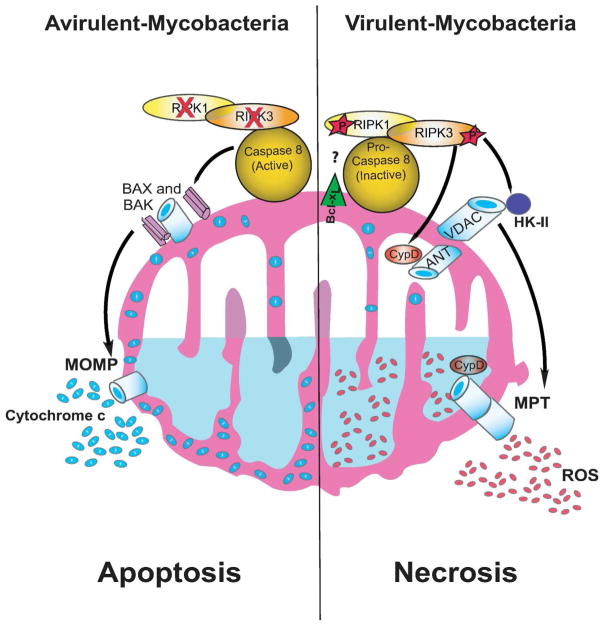
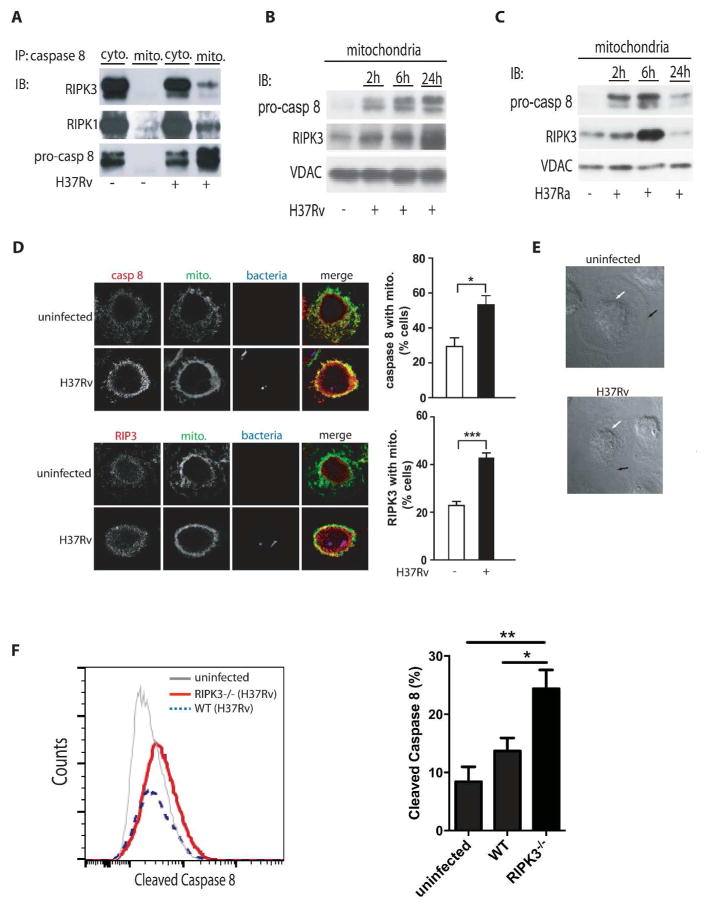
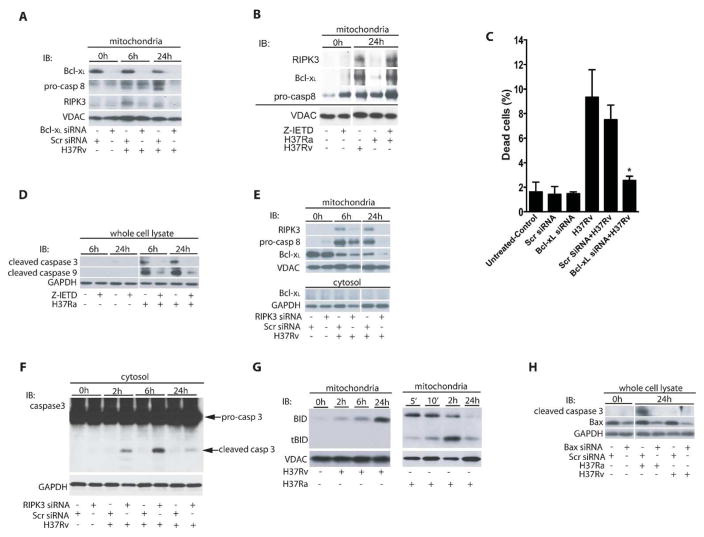
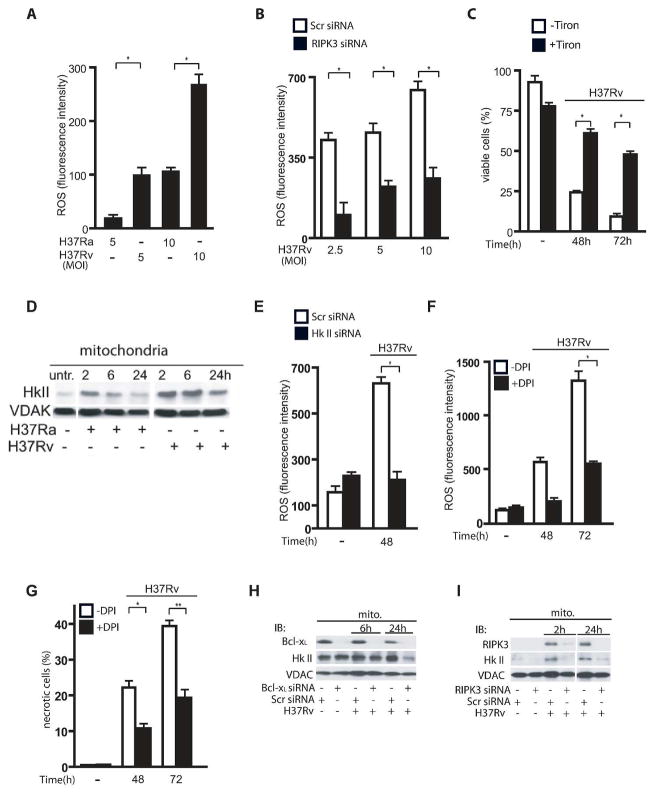
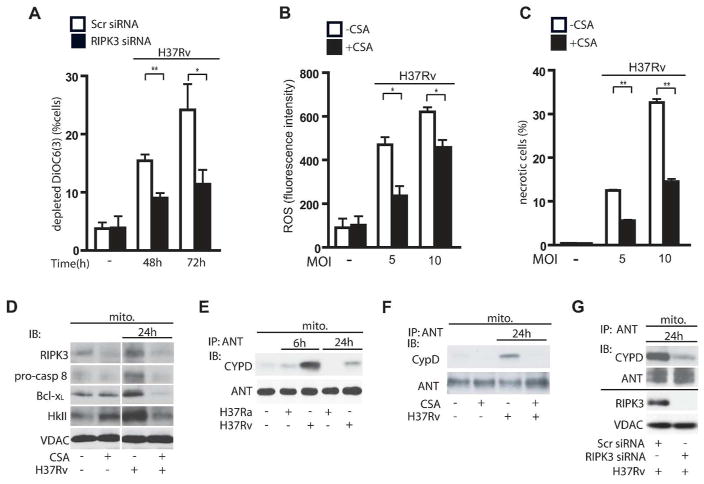
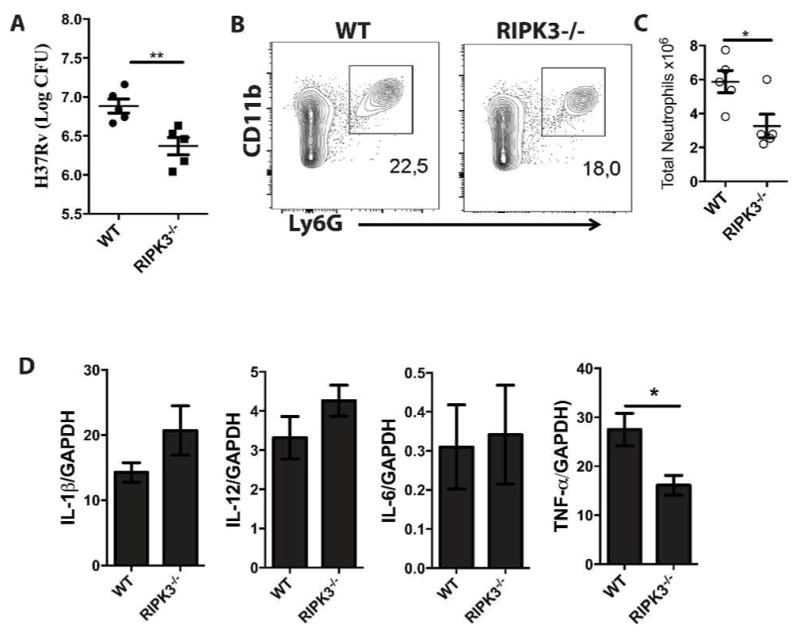
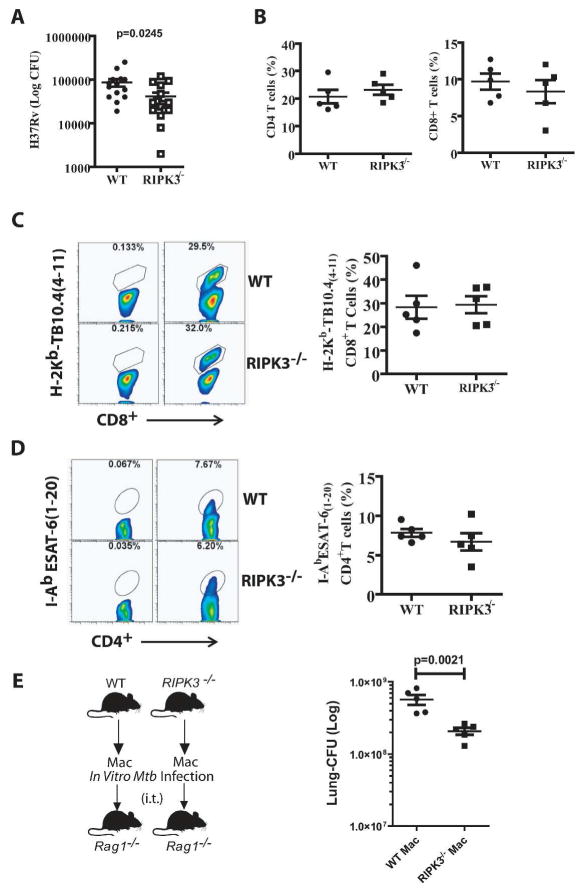
Virulent Mycobacterium tuberculosis (Mtb) triggers necrosis in host Mϕ, which is essential for successful pathogenesis in tuberculosis. Here we demonstrate that necrosis of Mtb-infected Mϕ is dependent on the action of the cytosolic Receptor Interacting Protein Kinase 3 (RIPK3) and the mitochondrial Bcl-2 family member protein B-cell lymphoma-extra large (Bcl-x). RIPK3-deficient Mϕ are able to better control bacterial growth in vitro and in vivo. Mechanistically, cytosolic RIPK3 translocates to the mitochondria where it promotes necrosis and blocks caspase 8-activation and apoptosis via Bcl-x. Furthermore, necrosis is associated with stabilization of hexokinase II on the mitochondria as well as cyclophilin D-dependent mitochondrial permeability transition. Collectively, these events upregulate the level of reactive oxygen species to induce necrosis. Thus, in Mtb-infected Mϕ, mitochondria are an essential platform for induction of necrosis by activating RIPK3 function and preventing caspase 8-activation.
毒力结核分枝杆菌(Mtb)在宿主巨噬细胞(Mϕ)中引发坏死,这对于结核病的成功发病机制至关重要。在这里,我们证明了受 Mtb 感染的 Mϕ 的坏死依赖于细胞质受体相互作用蛋白激酶 3(RIPK3)和线粒体 Bcl-2 家族成员蛋白 B 细胞淋巴瘤-extra large(Bcl-x)的作用。RIPK3 缺陷型 Mϕ 能够更好地控制体外和体内的细菌生长。从机制上讲,细胞质 RIPK3 易位到线粒体,在那里它通过 Bcl-x 促进坏死并阻止半胱天冬酶 8 的激活和细胞凋亡。此外,坏死与线粒体上己糖激酶 II 的稳定以及亲环素 D 依赖性线粒体通透性转换有关。总之,这些事件上调活性氧水平以诱导坏死。因此,在受 Mtb 感染的 Mϕ 中,线粒体是通过激活 RIPK3 功能和防止半胱天冬酶 8 激活来诱导坏死的重要平台。