Lyu Jiwon, Narum Drew E, Baldwin Susan L, Larsen Sasha E, Bai Xiyuan, Griffith David E, Dartois Véronique, Naidoo Threnesan, Steyn Adrie J C, Coler Rhea N, Chan Edward D
Division of Pulmonary and Critical Medicine, Soon Chun Hyang University Cheonan Hospital, Seoul, Republic of Korea.
Department of Academic Affairs, National Jewish Health, Denver, CO, United States.
Front Immunol. 2024 Dec 9;15:1427559. doi: 10.3389/fimmu.2024.1427559. eCollection 2024.
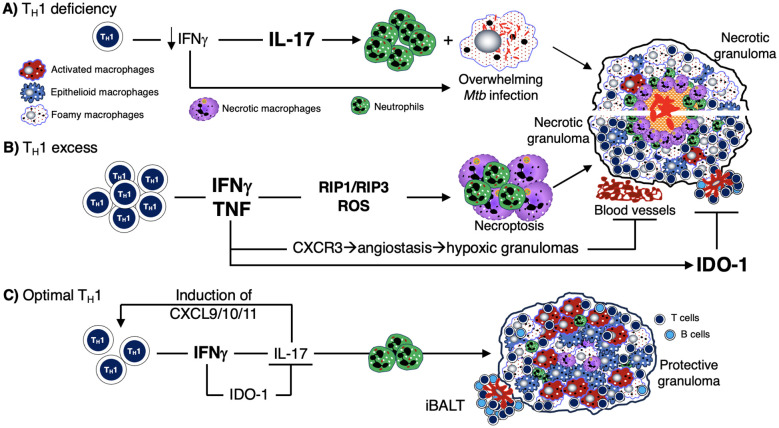
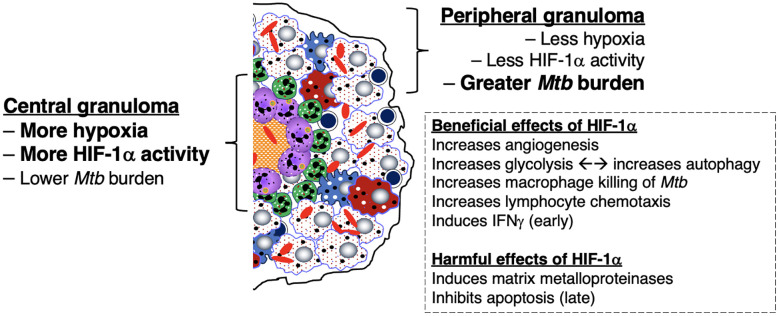
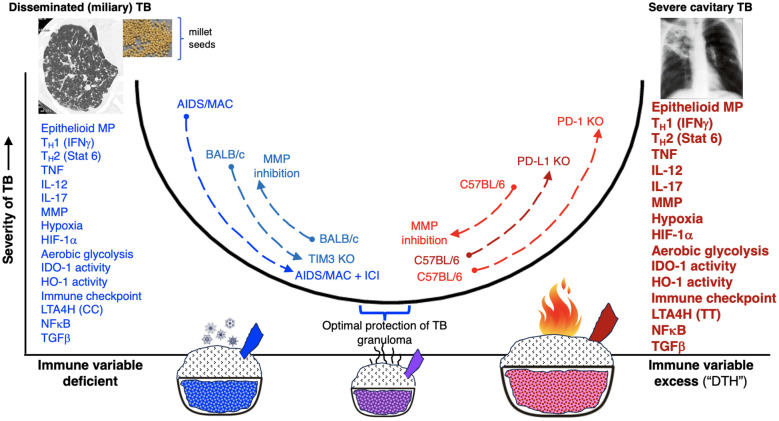
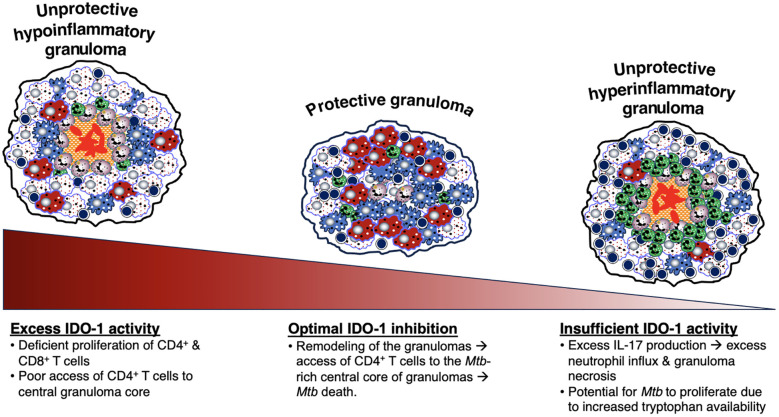
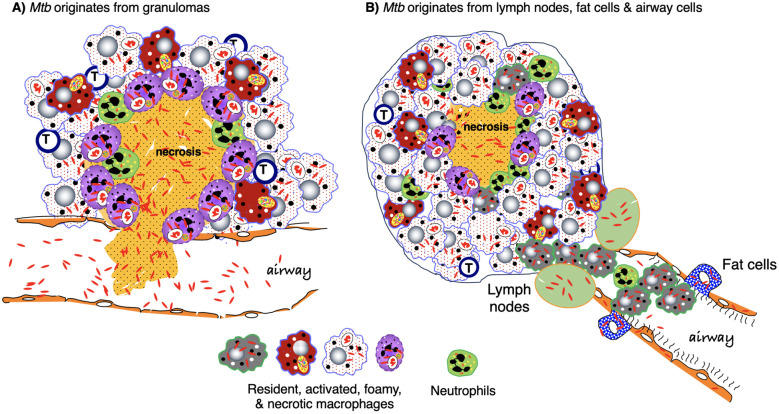
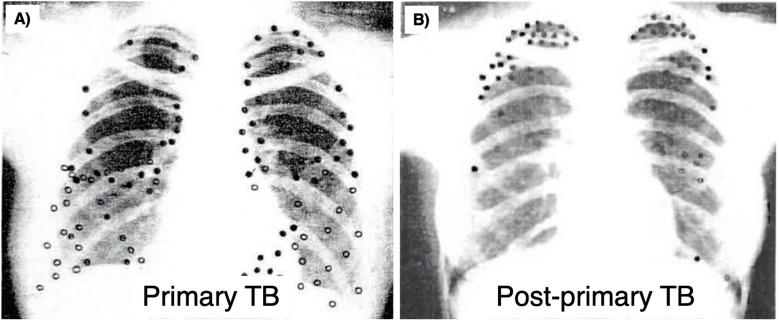
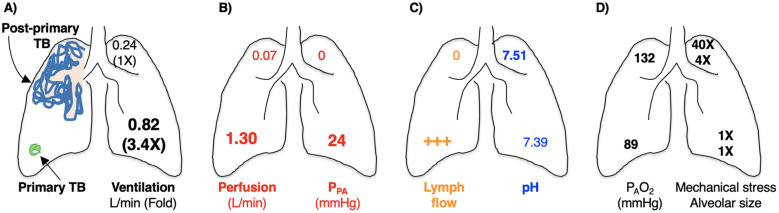
Granulomas, organized aggregates of immune cells which form in response to (), are characteristic but not exclusive of tuberculosis (TB). Despite existing investigations on TB granulomas, the determinants that differentiate host-protective granulomas from granulomas that contribute to TB pathogenesis are often disputed. Thus, the goal of this narrative review is to help clarify the existing literature on such determinants. We adopt the view that TB granulomas are host-protective organelles and discuss the molecular and cellular determinants that induce protective granulomas and those that promote their failure. While reports about protective TB granulomas and their failure may initially seem contradictory, it is increasingly recognized that either deficiencies or excesses of the molecular and cellular components in TB granuloma formation may be detrimental to the host. More specifically, insufficient or excessive expression/representation of the following components have been reported to skew granulomas toward the less protective phenotype: epithelioid macrophages; type 1 adaptive immune response; type 2 adaptive immune response; tumor necrosis factor; interleukin-12; interleukin-17; matrix metalloproteinases; hypoxia in the TB granulomas; hypoxia inducible factor-1 alpha; aerobic glycolysis; indoleamine 2,3-dioxygenase activity; heme oxygenase-1 activity; immune checkpoint; leukotriene A4 hydrolase activity; nuclear-factor-kappa B; and transforming growth factor-beta. Rather, more precise and timely coordinated immune responses appear essential for eradication or containment of infection. Since there are several animal models of infection with , other species within the complex, and the surrogate - whether natural (cattle, elephants) or experimental (zebrafish, mouse, guinea pig, rabbit, mini pig, goat, non-human primate) infections - we also compared the TB granulomatous response and other pathologic lung lesions in various animals infected with one of these mycobacteria with that of human pulmonary TB. Identifying components that dictate the formation of host-protective granulomas and the circumstances that result in their failure can enhance our understanding of the macrocosm of human TB and facilitate the development of novel remedies - whether they be direct therapeutics or indirect interventions - to efficiently eliminate infection and prevent its pathologic sequelae.
肉芽肿是免疫细胞的有组织聚集体,它是对()作出反应而形成的,是结核病(TB)的特征性表现但并非其独有特征。尽管已有关于结核肉芽肿的研究,但区分宿主保护性肉芽肿与促成结核病发病机制的肉芽肿的决定因素常常存在争议。因此,本叙述性综述的目的是帮助阐明关于此类决定因素的现有文献。我们采纳结核肉芽肿是宿主保护细胞器的观点,并讨论诱导保护性肉芽肿的分子和细胞决定因素以及促使其功能失效的因素。虽然关于保护性结核肉芽肿及其功能失效的报道最初可能看似相互矛盾,但人们越来越认识到,结核肉芽肿形成过程中分子和细胞成分的不足或过量都可能对宿主有害。更具体地说,以下成分的表达/表现不足或过量据报道会使肉芽肿偏向保护性较弱的表型:上皮样巨噬细胞;1型适应性免疫反应;2型适应性免疫反应;肿瘤坏死因子;白细胞介素-12;白细胞介素-17;基质金属蛋白酶;结核肉芽肿中的缺氧;缺氧诱导因子-1α;有氧糖酵解;吲哚胺2,3-双加氧酶活性;血红素加氧酶-1活性;免疫检查点;白三烯A4水解酶活性;核因子-κB;以及转化生长因子-β。相反,更精确和及时协调的免疫反应对于根除或控制感染似乎至关重要。由于存在几种感染结核分枝杆菌、结核分枝杆菌复合群内其他菌种以及替代菌种(无论是自然感染(牛、大象)还是实验性感染(斑马鱼、小鼠、豚鼠、兔子、小型猪、山羊、非人灵长类动物))的动物模型,我们还比较了感染这些分枝杆菌之一的各种动物与人类肺结核中结核肉芽肿反应及其他病理性肺部病变。确定决定宿主保护性肉芽肿形成的成分以及导致其功能失效的情况,可以增进我们对人类结核病全貌的理解,并促进开发新的治疗方法——无论是直接治疗还是间接干预——以有效消除感染并预防其病理后遗症。