Yan Feng, Ying Le, Li Xiaofang, Qiao Bin, Meng Qiaohong, Yu Liang, Yuan Xiangliang, Ren Shu-Ting, Chan David W, Shi Liyun, Ni Peihua, Wang Xuefeng, Xu Dakang, Hu Yiqun
Faculty of Medical Laboratory Science, Ruijin Hospital, Shanghai Jiaotong University School of Medicine, Shanghai, China.
Institute of Ageing Research, Hangzhou Normal University School of Medicine, Hangzhou, China.
Oncotarget. 2017 Jul 18;8(29):47020-47036. doi: 10.18632/oncotarget.16638.
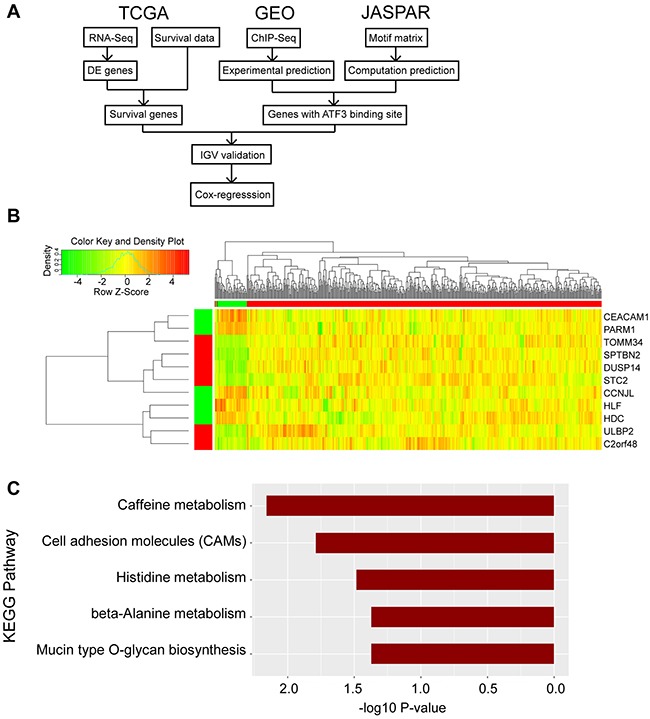
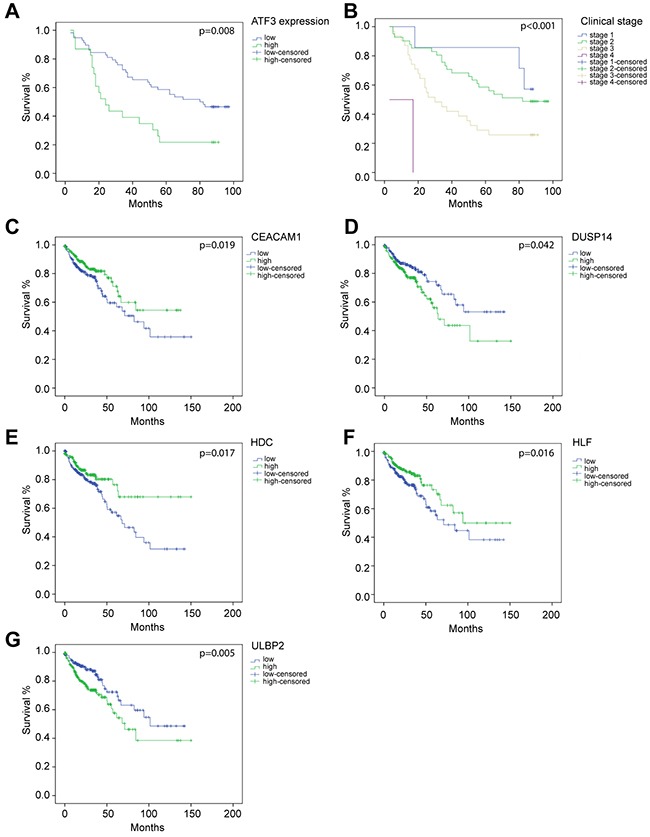
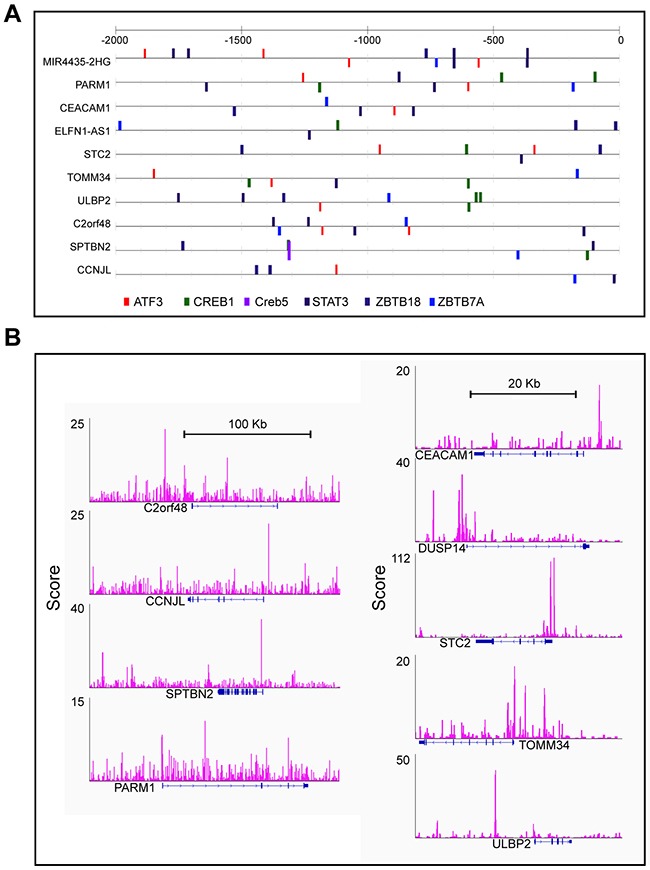
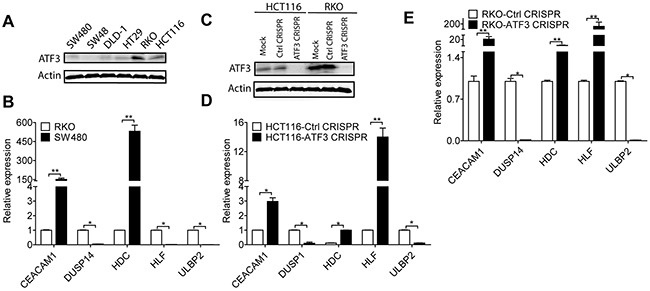
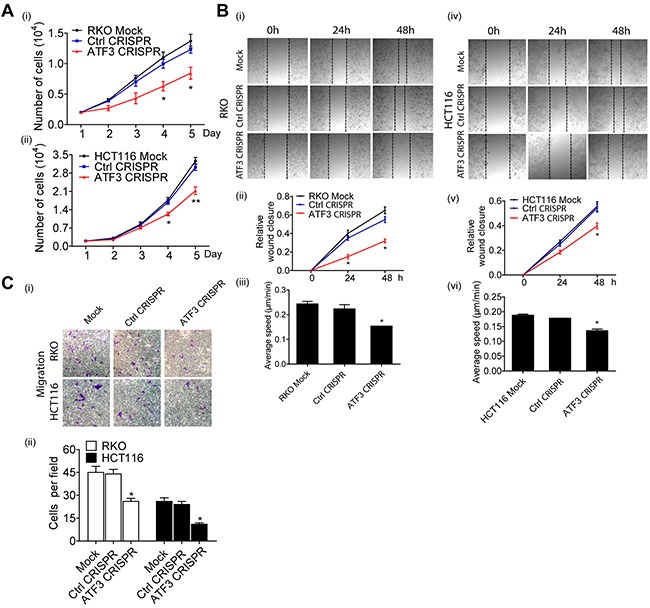
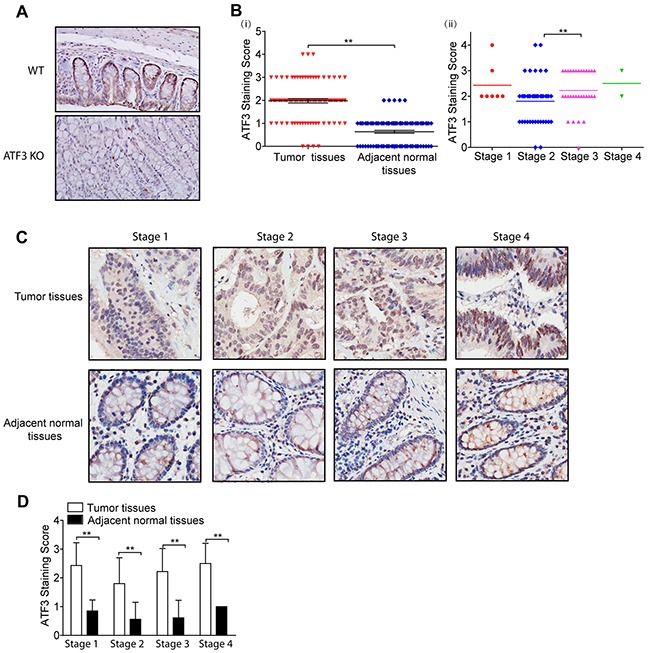
The identification of novel biomarkers of cancer is important for improved diagnosis and prognosis. With an abundant amount of resources in the publicly available database, such as the Cancer Genome Atlas (TCGA) database, an integrative strategy is used to systematically characterize the aberrant patterns of colorectal cancer (CRC) based on RNA-Seq, chromatin immunoprecipitation sequencing (ChIP-Seq), tissue microarray (TMA), gene profiling and molecular signatures. The expression of the transcription factor ATF3 was elevated in human CRC specimens in a TMA by immunochemistry analysis compared to the adjacent normal tissues. In addition, ATF3 overexpression associated with a regulatory molecular signature, and its functions are related to the pathogenic development of CRC. Furthermore, putative ATF3 regulatory elements were identified within the promoters of ATF3 target genes and were confirmed by ChIP-Seq. Critically, in higher ATF3 expression cell lines (HCT116 and RKO) with CRISPR/Cas9 mediated ATF3 knock out, we are able to show that ATF3 target genes such as CEACAM1, DUSP14, HDC, HLF and ULBP2, are required for invasion and proliferation, and they are robustly linked with poor prognosis in CRC. Our findings have important implications for CRC tumorigenesis and may be exploited for diagnostic and therapeutic purposes.
鉴定癌症的新型生物标志物对于改善诊断和预后至关重要。利用公开可用数据库(如癌症基因组图谱(TCGA)数据库)中的大量资源,采用综合策略基于RNA测序、染色质免疫沉淀测序(ChIP-Seq)、组织微阵列(TMA)、基因谱分析和分子特征来系统地表征结直肠癌(CRC)的异常模式。通过免疫化学分析,与相邻正常组织相比,转录因子ATF3在TMA中的人CRC标本中表达升高。此外,ATF3过表达与一种调控分子特征相关,其功能与CRC的致病发展有关。此外,在ATF3靶基因的启动子内鉴定出推定的ATF3调控元件,并通过ChIP-Seq得到证实。至关重要的是,在具有CRISPR/Cas9介导的ATF3敲除的高ATF3表达细胞系(HCT116和RKO)中,我们能够证明ATF3靶基因如癌胚抗原相关细胞黏附分子1(CEACAM1)、双特异性磷酸酶14(DUSP14)、组胺脱羧酶(HDC)、肝白血病因子(HLF)和ULBP2蛋白(ULBP2)对于侵袭和增殖是必需的,并且它们与CRC的不良预后密切相关。我们的发现对CRC的肿瘤发生具有重要意义,可能用于诊断和治疗目的。