Kingman Joshua, Uitto Jouni, Li Qiaoli
Department of Dermatology and Cutaneous Biology, The Sidney Kimmel Medical College, and the PXE International Center of Excellence in Research and Clinical Care, Thomas Jefferson University, Philadelphia, PA, USA.
Oncotarget. 2017 Jun 13;8(24):38152-38160. doi: 10.18632/oncotarget.16687.
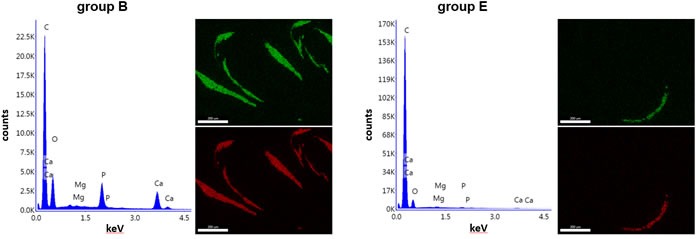
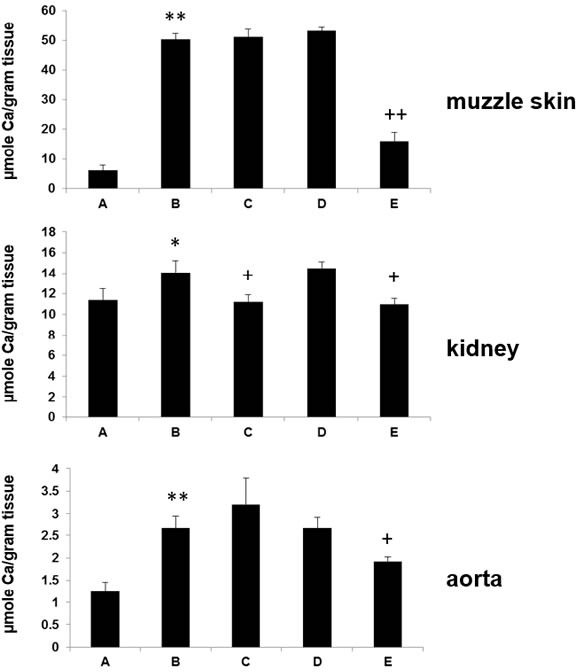
Generalized arterial calcification of infancy (GACI) is an autosomal recessive disorder caused by mutations in the ENPP1 gene. It is characterized by mineralization of the arterial blood vessels, often diagnosed prenatally, and associated with death in early childhood. There is no effective treatment for this devastating disorder. We previously characterized the Enpp1asjmutant mouse as a model of GACI, and we have now explored the effect of elevated dietary magnesium (five-fold) in pregnant mothers and continuing for the first 14 weeks of postnatal life. The mothers were kept on either control diet or experimental diet supplemented with magnesium. Upon weaning at 4 weeks of age the pups were placed either on control diet or high magnesium diet. The degree of mineralization was assessed at 14 weeks of age by histopathology and a chemical calcium assay in muzzle skin, kidney and aorta. Mice placed on high magnesium diet showed little, if any, evidence of mineralization when their corresponding mothers were also placed on diet enriched with magnesium during pregnancy and nursing. The reduced ectopic mineralization in these mice was accompanied by increased calcium and magnesium content in the urine, suggesting that magnesium competes calcium-phosphate binding thereby preventing the mineral deposition. These results have implications for dietary management of pregnancies in which the fetus is suspected of having GACI. Moreover, augmenting a diet with high magnesium may be beneficial for other ectopic mineralization diseases, including nephrocalcinosis.
婴儿全身性动脉钙化(GACI)是一种常染色体隐性疾病,由ENPP1基因突变引起。其特征是动脉血管矿化,常在产前被诊断出来,且与幼儿期死亡相关。对于这种毁灭性疾病没有有效的治疗方法。我们之前将Enpp1asj突变小鼠作为GACI的模型进行了表征,现在我们探究了在怀孕母鼠中增加膳食镁(五倍)并在产后生命的前14周持续这种做法的效果。母鼠被喂食对照饮食或补充了镁的实验性饮食。在4周龄断奶时,幼崽被置于对照饮食或高镁饮食中。在14周龄时,通过组织病理学以及对口鼻部皮肤、肾脏和主动脉进行化学钙测定来评估矿化程度。当相应的母鼠在怀孕和哺乳期间也被喂食富含镁的饮食时,置于高镁饮食的小鼠几乎没有矿化迹象。这些小鼠异位矿化的减少伴随着尿液中钙和镁含量的增加,这表明镁竞争钙 - 磷酸盐结合从而防止矿物质沉积。这些结果对怀疑胎儿患有GACI的妊娠的饮食管理具有启示意义。此外,增加高镁饮食可能对其他异位矿化疾病有益,包括肾钙质沉着症。