Moore Lindsey J, Nilsen Tom Ole, Jarungsriapisit Jiraporn, Fjelldal Per Gunnar, Stefansson Sigurd O, Taranger Geir Lasse, Patel Sonal
Institute of Marine Research, Bergen, Norway.
Uni Research Environment, Bergen, Norway.
PLoS One. 2017 Apr 12;12(4):e0175468. doi: 10.1371/journal.pone.0175468. eCollection 2017.
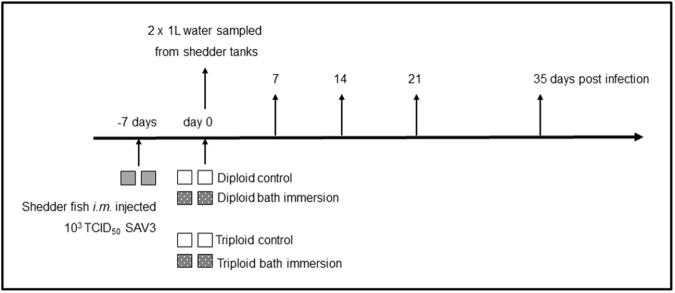
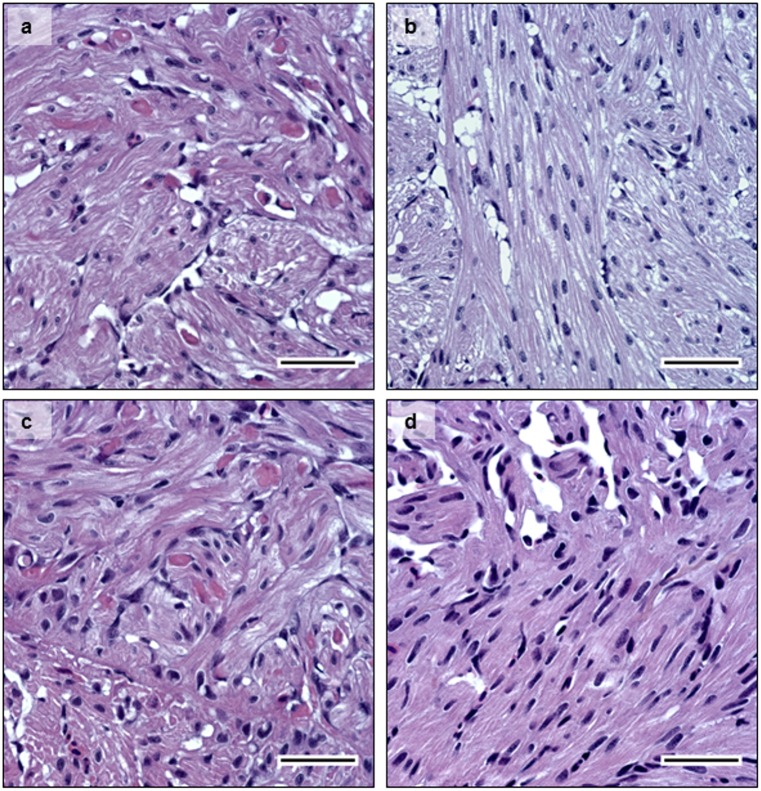
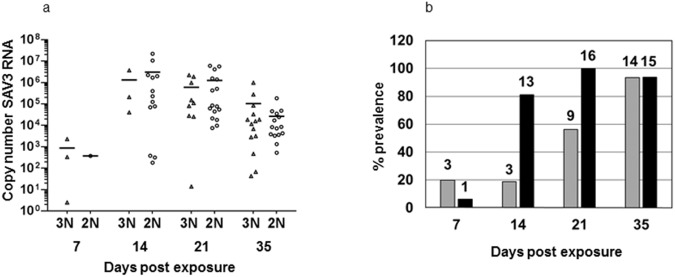
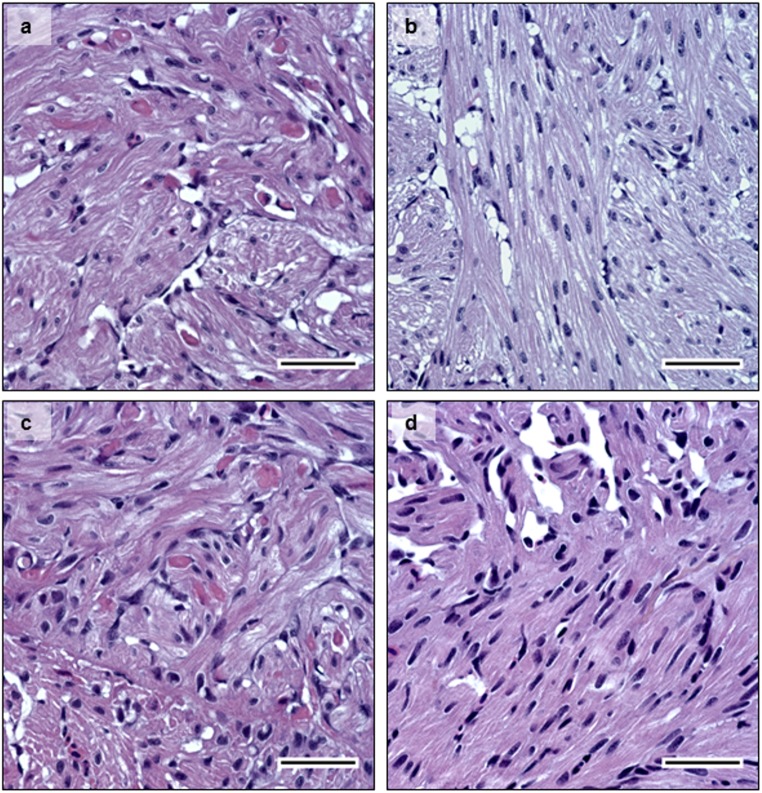
Triploid Atlantic salmon (Salmo salar L.) may play an important role in the sustainable expansion of the Norwegian aquaculture industry. Therefore, the susceptibility of triploid salmon to common infections such as salmonid alphavirus (SAV), the causative agent of pancreas disease (PD), requires investigation. In this study, shortly after seawater transfer, diploid and triploid post-smolts were exposed to SAV type 3 (SAV3) using a bath challenge model where the infectious dose was 48 TCID50 ml-1 of tank water. Copy number analysis of SAV3 RNA in heart tissue showed that there was no difference in viral loads between the diploids and triploids. Prevalence reached 100% by the end of the 35-day experimental period in both infected groups. However, prevalence accumulated more slowly in the triploid group reaching 19% and 56% at 14 and 21 days post exposure (dpe) respectively. Whereas prevalence in the diploid group was 82% and 100% at the same time points indicating some differences between diploid and triploid fish. Both heart and pancreas from infected groups at 14 dpe showed typical histopathological changes associated with pancreas disease. Observation of this slower accumulation of prevalence following a natural infection route was possible due to the early sampling points and the exposure to a relatively low dose of virus. The triploid salmon in this study were not more susceptible to SAV3 than diploid salmon indicating that they could be used commercially to reduce the environmental impact of escaped farmed fish interbreeding with wild salmon. This is important information regarding the future use of triploid fish in large scale aquaculture where SAV3 is a financial threat to increased production.
三倍体大西洋鲑(Salmo salar L.)可能在挪威水产养殖业的可持续扩张中发挥重要作用。因此,三倍体鲑鱼对常见感染(如胰腺疾病(PD)的病原体鲑鱼α病毒(SAV))的易感性需要进行研究。在本研究中,海水转移后不久,二倍体和三倍体后幼鲑使用浸浴攻毒模型暴露于3型SAV(SAV3),其中感染剂量为每毫升养殖用水48个半数组织培养感染剂量(TCID50)。心脏组织中SAV3 RNA的拷贝数分析表明,二倍体和三倍体之间的病毒载量没有差异。在35天的实验期结束时,两个感染组的患病率均达到100%。然而,三倍体组的患病率累积较慢,在暴露后14天(dpe)和第21天分别达到19%和56%。而二倍体组在相同时间点的患病率分别为82%和100%,表明二倍体和三倍体鱼之间存在一些差异。在14 dpe时,感染组的心脏和胰腺均显示出与胰腺疾病相关的典型组织病理学变化。由于早期采样点和暴露于相对低剂量的病毒,通过自然感染途径观察到患病率的这种较慢累积是可能的。本研究中的三倍体鲑鱼对SAV3的易感性并不高于二倍体鲑鱼,这表明它们可用于商业养殖,以减少养殖逃逸鱼与野生鲑鱼杂交对环境的影响。这是关于三倍体鱼在大规模水产养殖中未来应用的重要信息,在这种养殖中,SAV3对产量增加构成经济威胁。