Carvalho Adriana Camargo, Leal Frederico, Sasse Andre Deeke
Centre for Evidence in Oncology, Department of Internal Medicine, University of Campinas (UNICAMP), Campinas, Sao Paulo, Brazil.
PLoS One. 2017 Apr 12;12(4):e0175409. doi: 10.1371/journal.pone.0175409. eCollection 2017.
Cetuximab and panitumumab are monoclonal antibodies targeting the epidermal growth factor receptor. Both drugs are active against RAS wild type metastatic colorectal cancer after chemotherapy failure, with similar efficacy and toxicity profiles. However, their cost and limited survival benefits may compromise incorporation in the Brazilian public healthcare system, the Unified Heath System (Sistema Único de Saúde) (SUS).
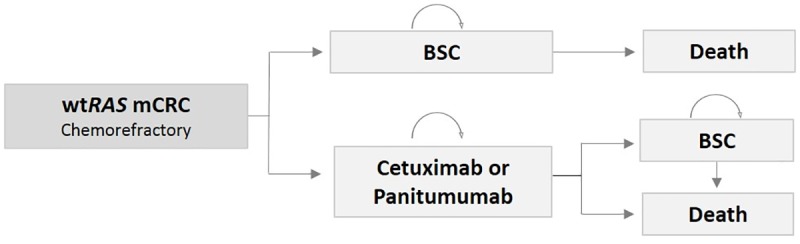
A cost-effectiveness analysis was conducted using a Markov model from the Brazilian Public health perspective and a lifetime horizon in patients with RAS -wt mCRC. Transition probabilities and mortality rates were extracted from randomized studies. Treatment costs were obtained from price tables regulated by the Brazilian Health Ministry. The World Health Organization recommendation of three times GDP per capita was used to define the cost-effectiveness threshold.
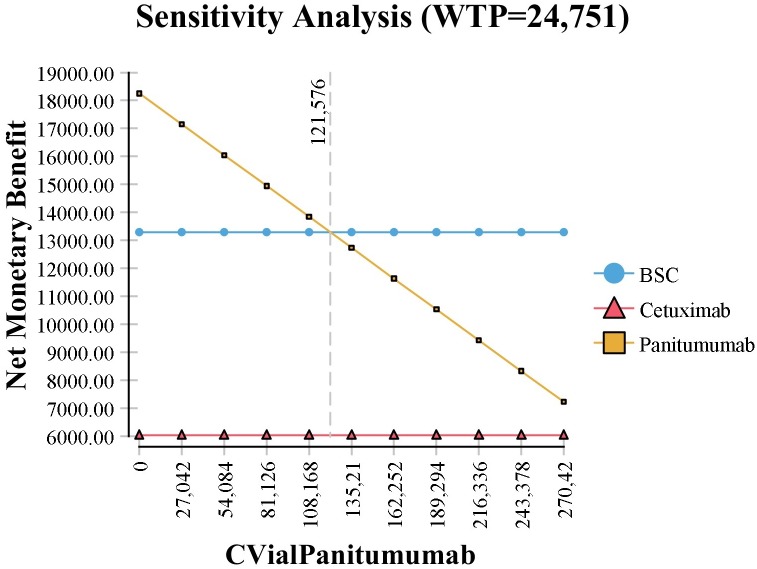
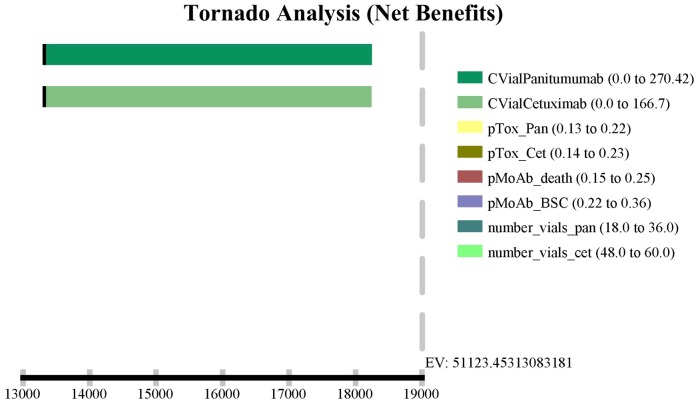
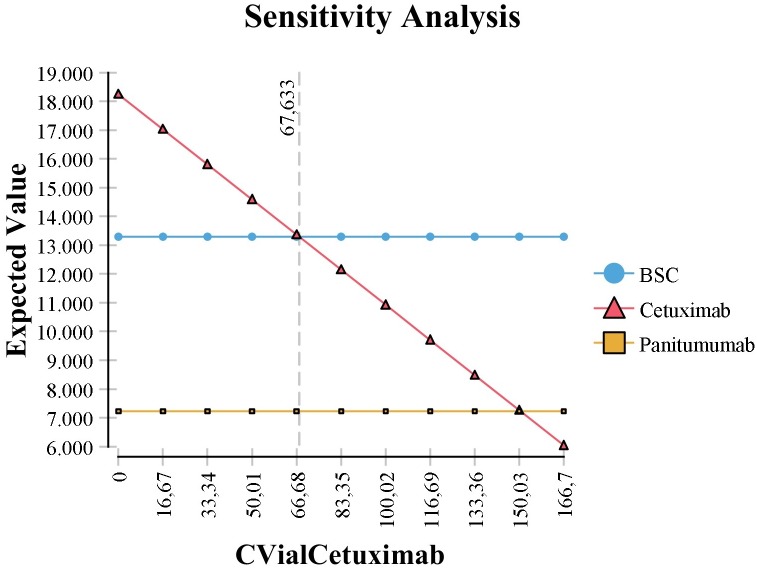
The use of cetuximab or panitumumab for chemotherapy-refractory mCRC patients resulted in 0.22 additional life-years relative to BSC, with incremental cost-effectiveness ratios (ICERs) of $58,240 and $52,772 per LY, respectively. That exceeds the pre-specified threshold for cost-effectiveness. Acquisition of biological agents was the major driver of increased costs.
Our economic evaluation demonstrates that both cetuximab and panitumumab are not a cost-effective approach in RAS-wt mCRC patients. Discussion about drug price should be prioritized to enable incorporation of these monoclonal antibodies in the SUS.
西妥昔单抗和帕尼单抗是靶向表皮生长因子受体的单克隆抗体。这两种药物在化疗失败后对RAS野生型转移性结直肠癌均有活性,疗效和毒性特征相似。然而,它们的成本和有限的生存获益可能会影响其纳入巴西公共医疗体系,即统一卫生系统(Sistema Único de Saúde,SUS)。
从巴西公共卫生角度出发,采用马尔可夫模型对RAS野生型转移性结直肠癌患者进行终身成本效益分析。转移概率和死亡率从随机研究中提取。治疗成本从巴西卫生部规定的价格表中获取。采用世界卫生组织人均国内生产总值三倍的建议来确定成本效益阈值。
相对于最佳支持治疗(BSC),使用西妥昔单抗或帕尼单抗治疗化疗难治性转移性结直肠癌患者可使生命年数增加0.22,增量成本效益比(ICER)分别为每生命年58,240美元和52,772美元。这超过了预先设定的成本效益阈值。生物制剂的购置是成本增加的主要驱动因素。
我们的经济评估表明西妥昔单抗和帕尼单抗在RAS野生型转移性结直肠癌患者中均不是具有成本效益的治疗方法。应优先讨论药品价格,以便将这些单克隆抗体纳入SUS。