Fan Jiaxin, Bao Yongrui, Meng Xiansheng, Wang Shuai, Li Tianjiao, Chang Xin, Yang Guanlin, Bo Tao
School of Pharmacy, Liaoning University of Traditional Chinese Medicine, Dalian 116600, P. R. China.
Component Medicine Engineering Research Center of Liaoning Province, Dalian 116600, P. R. China.
Oncotarget. 2017 May 9;8(19):31395-31405. doi: 10.18632/oncotarget.15608.
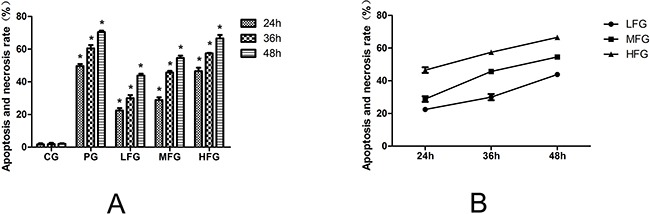
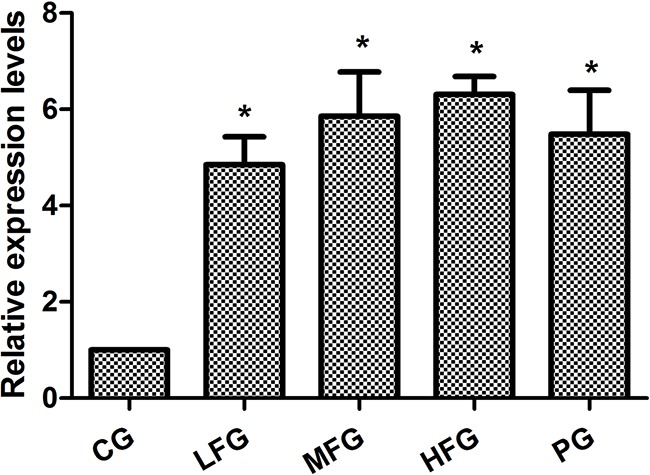
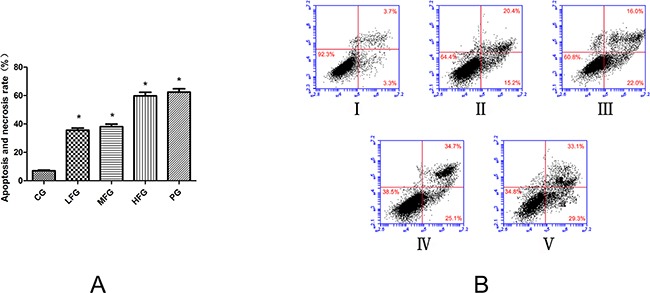
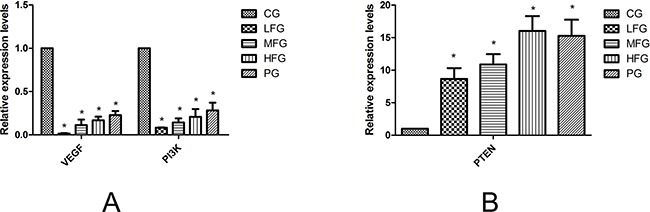
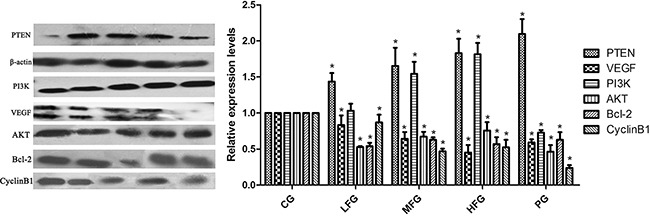
Non-small cell lung cancer (NSCLC) is regarded as one of the major intractable diseases, which was cured mainly by chemotherapeutics in the clinical treatment at present. But it is still a vital mission for the current medical and researchers that hunting a natural medicine which have little side effects and high-efficiency against the NSCLC on account of the shortcomings on current drugs. Nepeta cataria L. plays an important role in anti-cancer treatment according to the reports which was recorded in the Chinese Pharmacopoeia of version 2015 and belongs to one of the Traditional Chinese medicine (TCM). Microfluidic chip technology is widely used in scientific research field due to its high-throughput, high sensitivity and low cost with the continuous progress of science and technology. In this study, we investigate the effect of total flavonoid extracted from Nepeta cataria L. (TFS) through human lung cancer cell line A549 based on the microfluidic device and Flow Cytometry. So we detected the mRNA expression of MicroRNA-126 (miR-126), VEGF, PI3K, PTEN and proteins expression respectively to explore the partial PI3K-AKT pathway molecular mechanisms through Quantitative Real-time PCR (qRT-PCR) and Western Blot. The results showed that TFS can disturb the expression of miR-126 and regulate the PI3K-AKT signaling pathway to meet the effect of anti-cancer. Taking all these results into consideration we can draw a conclusion that TFS may be used as a novel therapeutic agent for NSCLC in the near future.
非小细胞肺癌(NSCLC)被视为主要的难治性疾病之一,目前在临床治疗中主要通过化疗药物进行治疗。但鉴于现有药物的缺点,寻找一种副作用小且对NSCLC高效的天然药物仍是当前医学和研究人员的一项重要任务。根据《2015年版中国药典》记载,荆芥在抗癌治疗中发挥着重要作用,属于传统中药之一。随着科技的不断进步,微流控芯片技术因其高通量、高灵敏度和低成本而在科研领域得到广泛应用。在本研究中,我们基于微流控装置和流式细胞术,研究了从荆芥中提取的总黄酮(TFS)对人肺癌细胞系A549的影响。因此,我们分别通过定量实时聚合酶链反应(qRT-PCR)和蛋白质免疫印迹法检测了MicroRNA-126(miR-126)、血管内皮生长因子(VEGF)、磷脂酰肌醇-3激酶(PI3K)、磷酸酶和张力蛋白同源物(PTEN)的mRNA表达以及蛋白质表达,以探索PI3K-AKT信号通路的部分分子机制。结果表明,TFS可干扰miR-126的表达并调节PI3K-AKT信号通路,从而达到抗癌效果。综合所有这些结果,我们可以得出结论,TFS在不久的将来可能用作NSCLC的新型治疗药物。