Ren Ling, Hong Ellen S, Mendoza Arnulfo, Issaq Sameer, Tran Hoang Christine, Lizardo Michael, LeBlanc Amy, Khanna Chand
Comparative Oncology Program, Center for Cancer Research, National Cancer Institute, Bethesda, Maryland, USA.
Molecular Oncology Section, Pediatric Oncology Branch, Center for Cancer Research, National Cancer Institute, Bethesda, Maryland, USA.
Oncotarget. 2017 Jun 13;8(24):38541-38553. doi: 10.18632/oncotarget.15872.
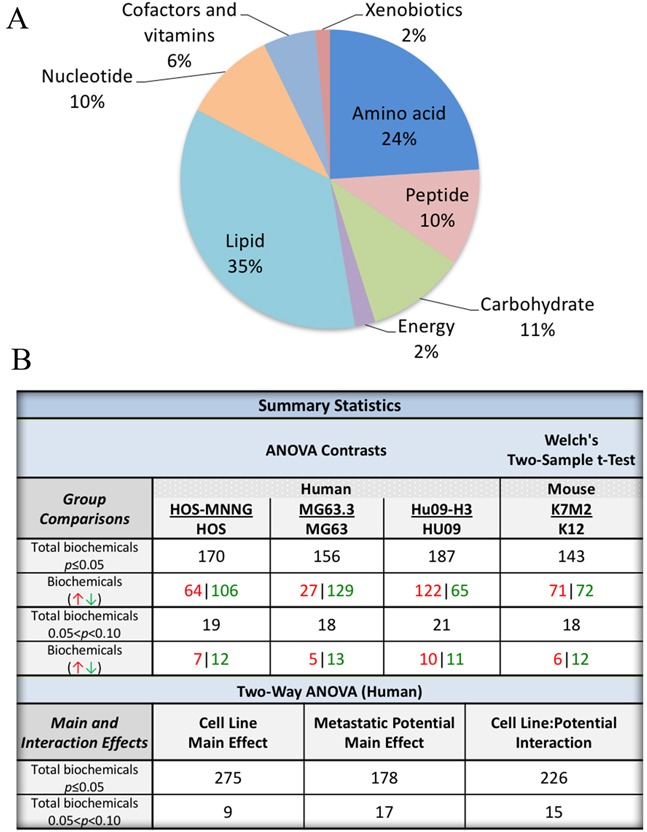
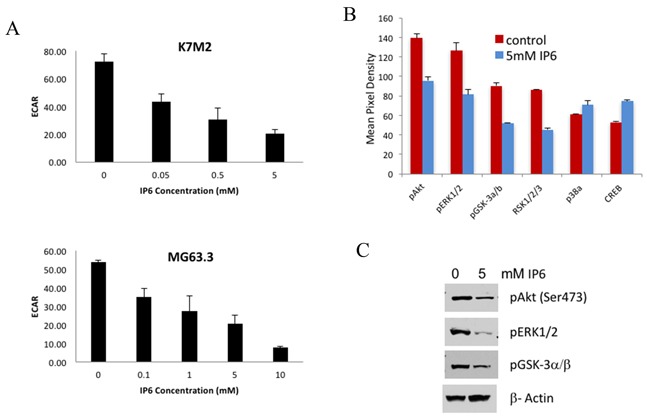
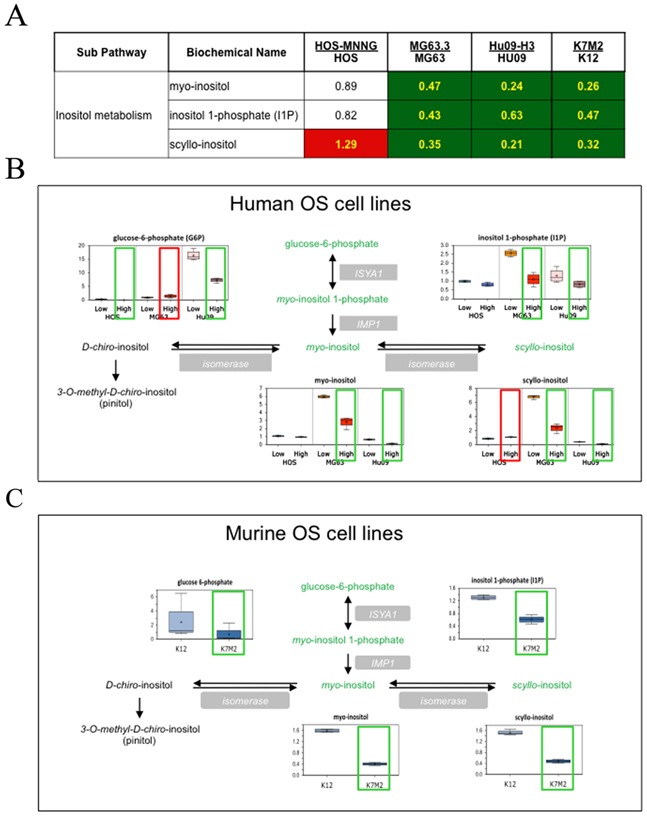
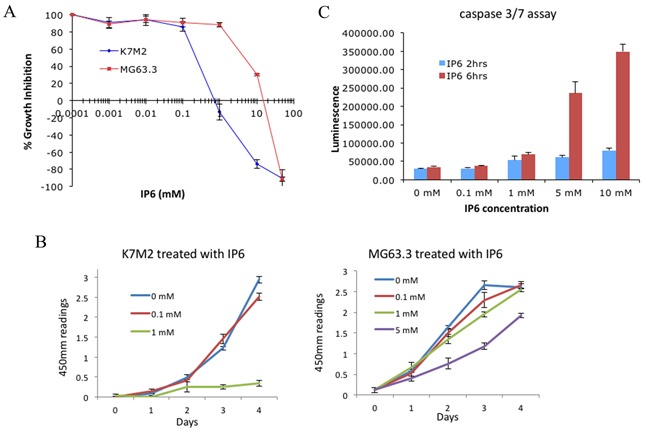
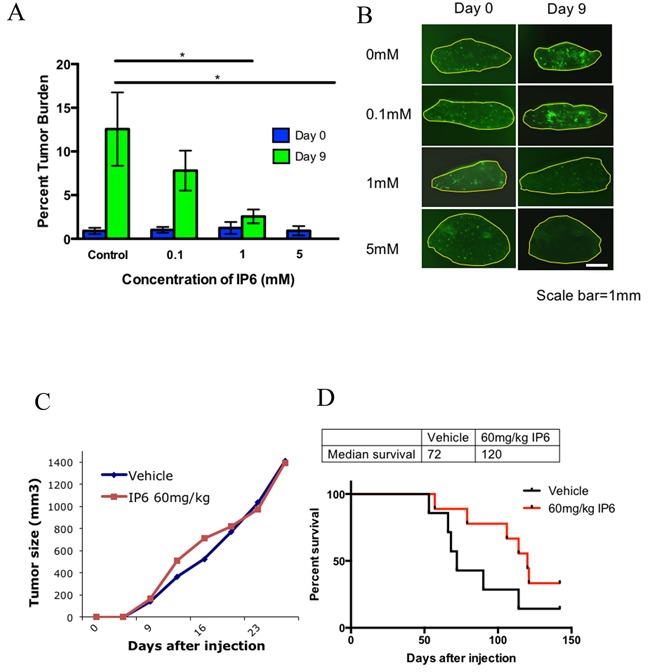
Cancer development and progression are characterized by complex molecular events. The acquisition of these events is primarily believed to result from alterations in gene and protein expression/function. Recent studies have also suggested the role of metabolic alterations, or "metabolic reprogramming," that may similarly contribute to these events. Indeed, our previous investigations in osteosarcoma (OS) identified metabolic changes uniquely linked to metastasis. Based on those findings, here we sought to build a more detailed understanding of the specific alterations in metabolites or metabolic pathways that may be responsible for the observed metastasis-associated metabolic alterations, suggested by gene expression data. This was pursued using a combination of high-throughput liquid- and gas-chromatography-based mass spectrometry (LC/MS and GC/MS) for a global metabolic profiling/subtraction of four pairs of high/low metastatic OS cell lines. By comparing the identity and level of the metabolites between high/low metastatic cells, several metabolic pathways were identified to be differentially activated, such as arginine, glutathione, inositol and fatty acid metabolic pathways. To further interrogate these results, we investigated the effects of inositol pathway dysregulation, through the exposure of metastatic OS cells to IP6 (inositol hexaphosphate). Although IP6 exposures had modest to minimal effects on cell proliferation, we observed reduced cellular glycolysis, down-regulation of PI3K/Akt signaling and suppression of OS metastatic progression. Collectively these data supported further investigation of metabolic sensitivities as anti-metastatic strategies in a clinical setting as well as investigation of altered metabolomics associated with metastatic progression.
癌症的发生和发展具有复杂的分子事件特征。这些事件的发生主要被认为是基因和蛋白质表达/功能改变的结果。最近的研究还表明,代谢改变或“代谢重编程”可能同样促成了这些事件。事实上,我们之前对骨肉瘤(OS)的研究确定了与转移独特相关的代谢变化。基于这些发现,我们在此试图更详细地了解代谢物或代谢途径的具体改变,这些改变可能是基因表达数据所表明的与转移相关的代谢改变的原因。为此,我们结合基于高通量液相色谱和气相色谱的质谱分析法(LC/MS和GC/MS),对四对高/低转移骨肉瘤细胞系进行了全面的代谢谱分析/对比。通过比较高/低转移细胞之间代谢物的种类和水平,确定了几种代谢途径被差异激活,如精氨酸、谷胱甘肽、肌醇和脂肪酸代谢途径。为了进一步探究这些结果,我们通过将转移性骨肉瘤细胞暴露于IP6(肌醇六磷酸)来研究肌醇途径失调的影响。虽然IP6处理对细胞增殖的影响较小至最小,但我们观察到细胞糖酵解减少、PI3K/Akt信号通路下调以及骨肉瘤转移进程受到抑制。总体而言,这些数据支持在临床环境中进一步研究代谢敏感性作为抗转移策略,以及研究与转移进程相关的代谢组学改变。