Ballarin Roberto, Cucchetti Alessandro, Russo Francesco Paolo, Magistri Paolo, Cescon Matteo, Cillo Umberto, Burra Patrizia, Pinna Antonio Daniele, Di Benedetto Fabrizio
Roberto Ballarin, Paolo Magistri, Fabrizio Di Benedetto, Hepatopancreatobiliary Surgery and Liver Transplant Unit, University Hospital "Policlinico", University of Modena and Reggio Emilia, 41124 Modena, Italy.
World J Gastroenterol. 2017 Mar 28;23(12):2095-2105. doi: 10.3748/wjg.v23.i12.2095.
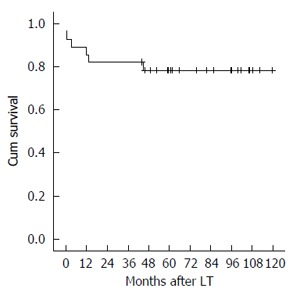
Liver transplant for hepatitis B virus (HBV) currently yields excellent outcomes: it allows to rescue patients with an HBV-related advanced liver disease, resulting in a demographical modification of the waiting list for liver transplant. In an age of patient-tailored treatments, in liver transplantation as well the aim is to offer the best suitable graft to the patient who can benefit from it, also expanding the criteria for organ acceptance and allocation. With the intent of developing strategies to increase the donor pool, we set-up a multicenter study involving 3 Liver Transplant Centers in Italy: patients undergoing liver transplantation between March 03, 2004, and May 21, 2010, were retrospectively evaluated. 1408 patients underwent liver transplantation during the study period, 28 (2%) received the graft from hepatitis B surface antigen positive (HBsAg)-positive deceased donors. The average follow-up after liver transplantation was 63.7 mo [range: 0.1-119.4; SD ± 35.8]. None Primary non-function, re-liver transplantation, early or late hepatic artery thrombosis occurred. The 1-, 3- and 5-year graft and patient survival resulted of 85.7%, 82.1%, 78.4%. Our results suggest that the use of HBsAg-positive donors liver grafts is feasible, since HBV can be controlled without affecting graft stability. However, the selection of grafts and the postoperative antiviral therapy should be managed appropriately.
目前,乙型肝炎病毒(HBV)相关肝移植取得了出色的成果:它能够挽救患有HBV相关晚期肝病的患者,从而改变了肝移植等待名单的人员构成。在个性化治疗的时代,肝移植领域同样旨在为能够从中受益的患者提供最合适的移植物,同时也扩大了器官接受和分配的标准。为了制定增加供体库的策略,我们开展了一项多中心研究,涉及意大利的3个肝移植中心:对2004年3月3日至2010年5月21日期间接受肝移植的患者进行回顾性评估。在研究期间,1408例患者接受了肝移植,其中28例(2%)接受了来自乙型肝炎表面抗原阳性(HBsAg阳性)的脑死亡供体的移植物。肝移植后的平均随访时间为63.7个月[范围:0.1 - 119.4;标准差±35.8]。未发生原发性无功能、再次肝移植、早期或晚期肝动脉血栓形成。1年、3年和5年的移植物和患者生存率分别为85.7%、82.1%、78.4%。我们的结果表明,使用HBsAg阳性供体的肝移植物是可行的,因为HBV能够得到控制且不影响移植物稳定性。然而,移植物的选择和术后抗病毒治疗应妥善管理。