Kitevski-LeBlanc Julianne, Fradet-Turcotte Amélie, Kukic Predrag, Wilson Marcus D, Portella Guillem, Yuwen Tairan, Panier Stephanie, Duan Shili, Canny Marella D, van Ingen Hugo, Arrowsmith Cheryl H, Rubinstein John L, Vendruscolo Michele, Durocher Daniel, Kay Lewis E
Department of Molecular Genetics, University of Toronto, Toronto, Canada.
Department of Biochemistry, University of Toronto, Toronto, Canada.
Elife. 2017 Apr 13;6:e23872. doi: 10.7554/eLife.23872.
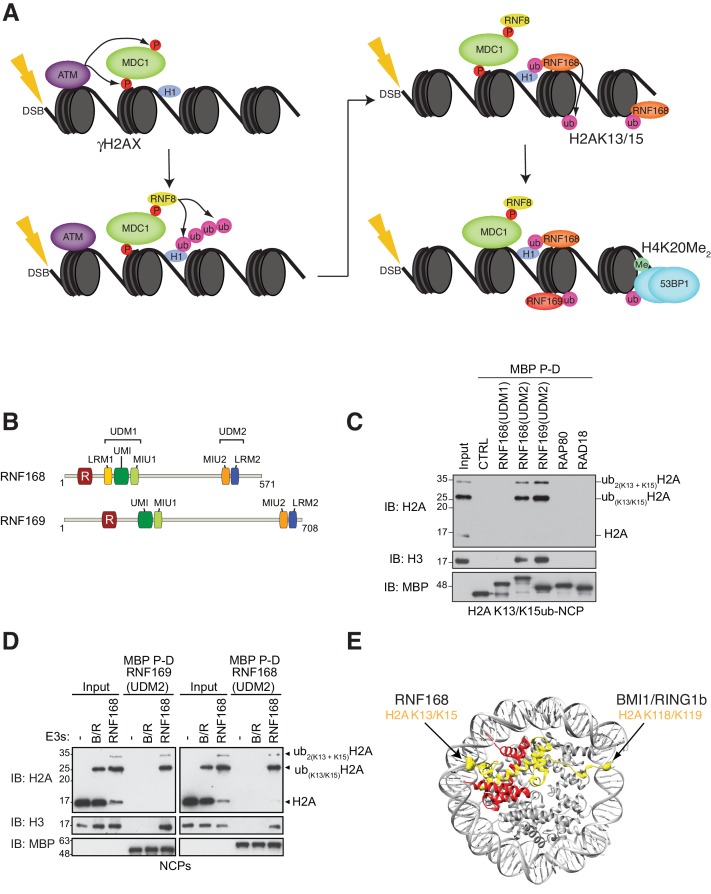
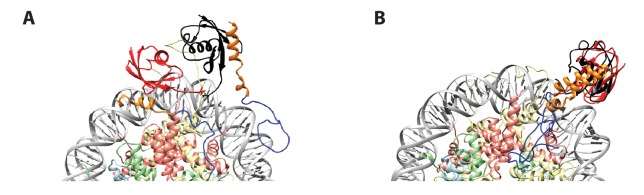
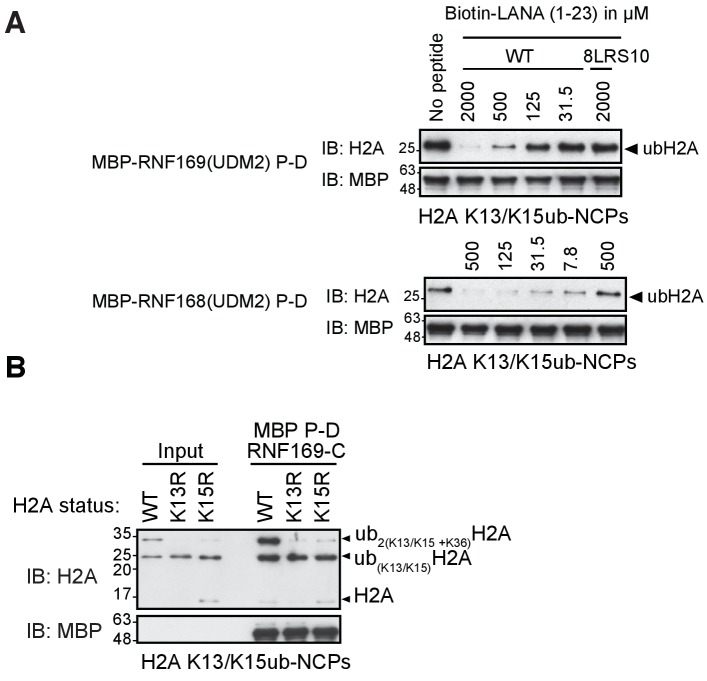
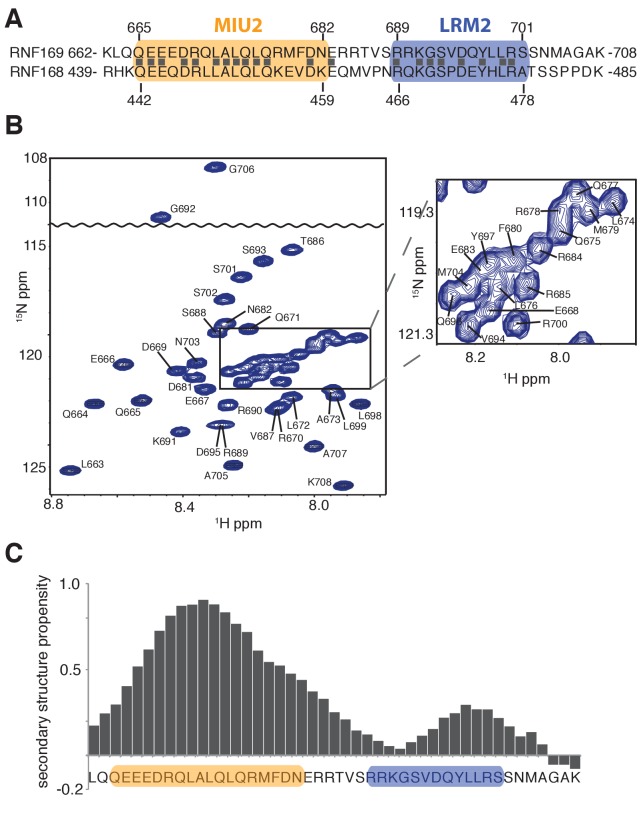
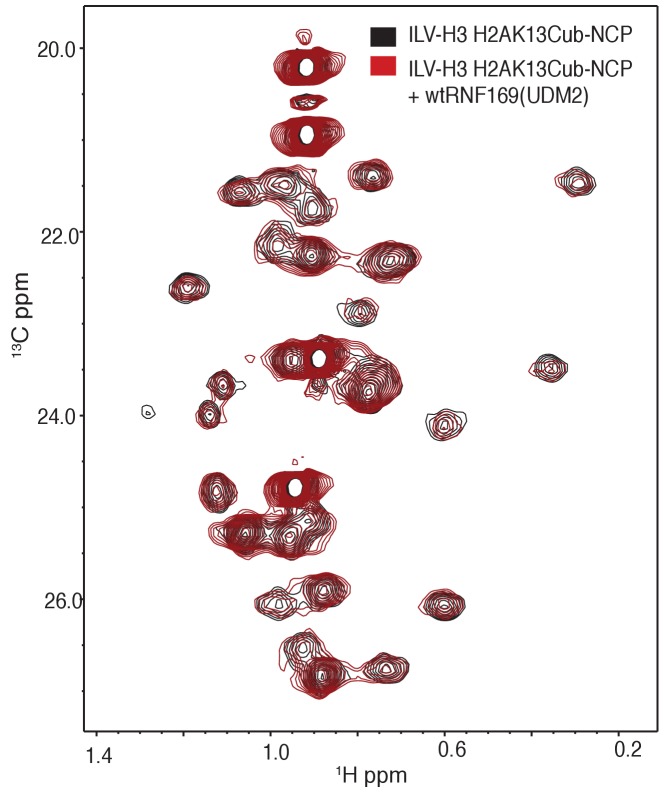
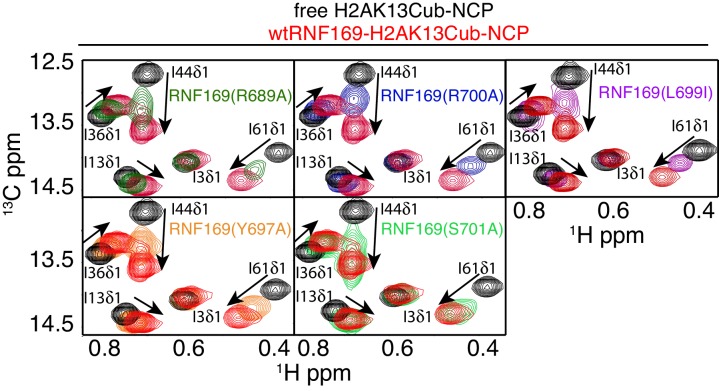
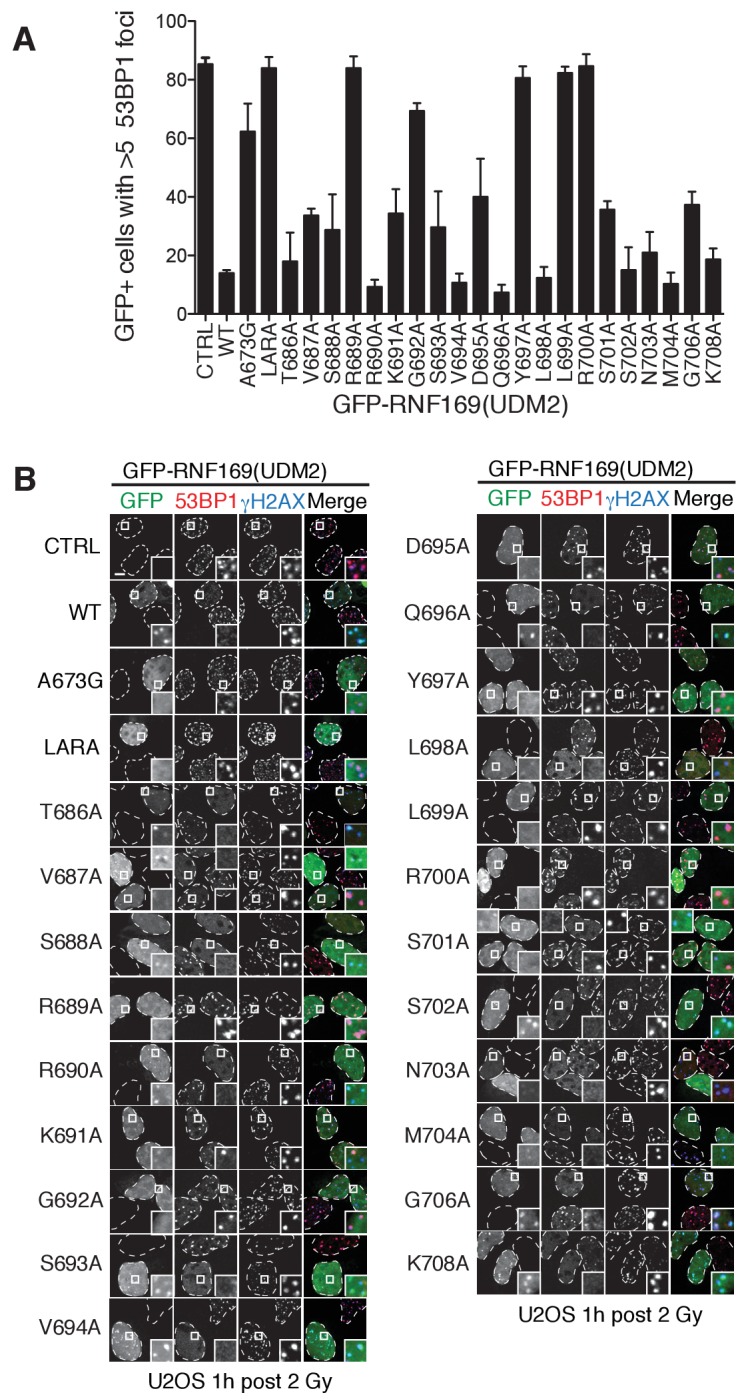
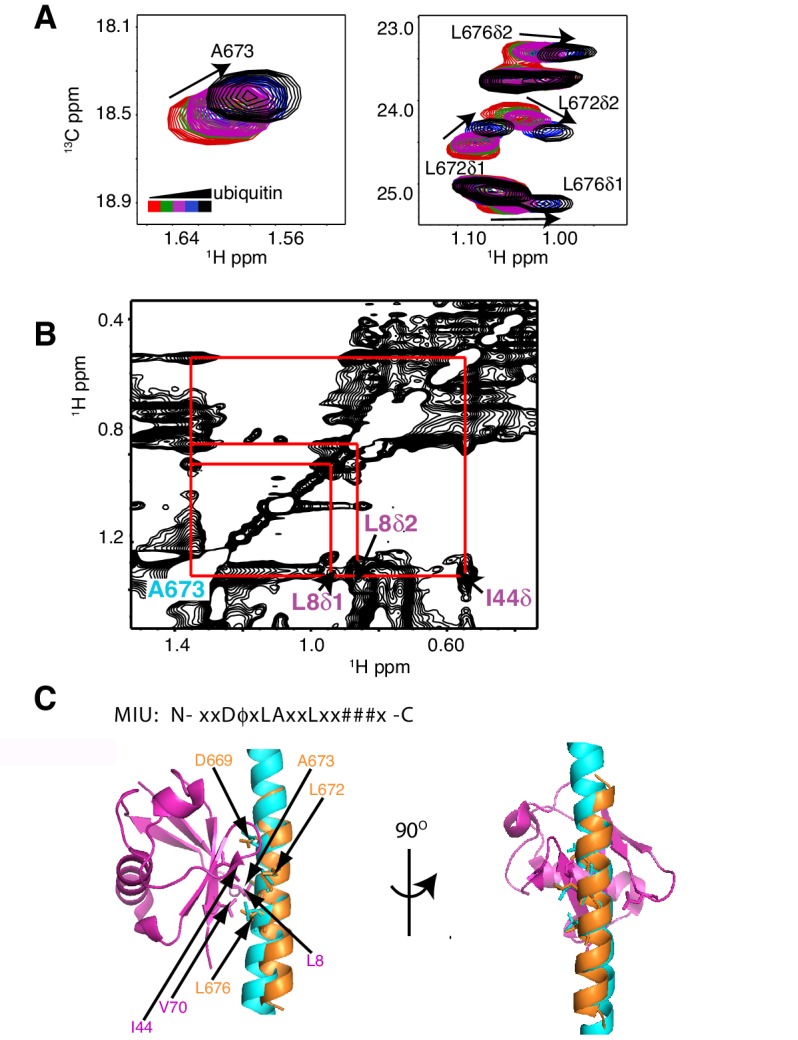
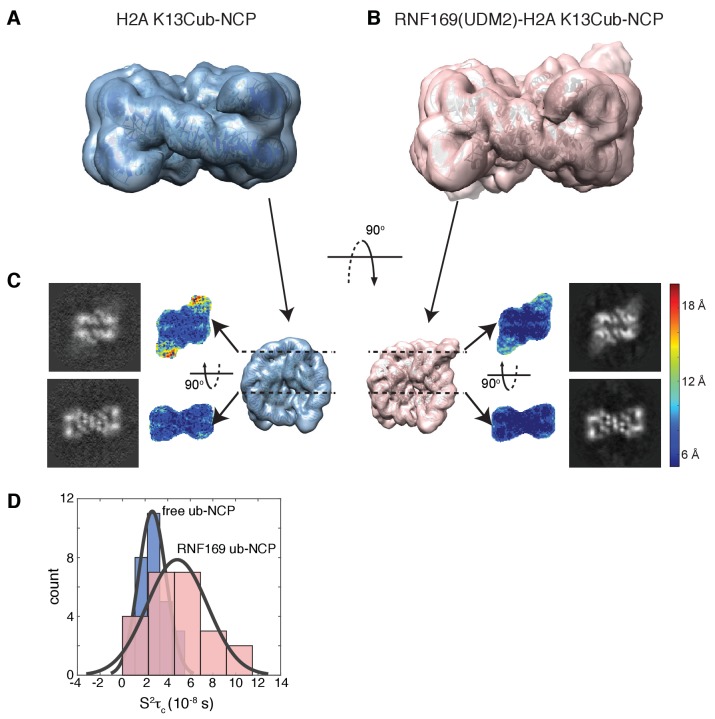
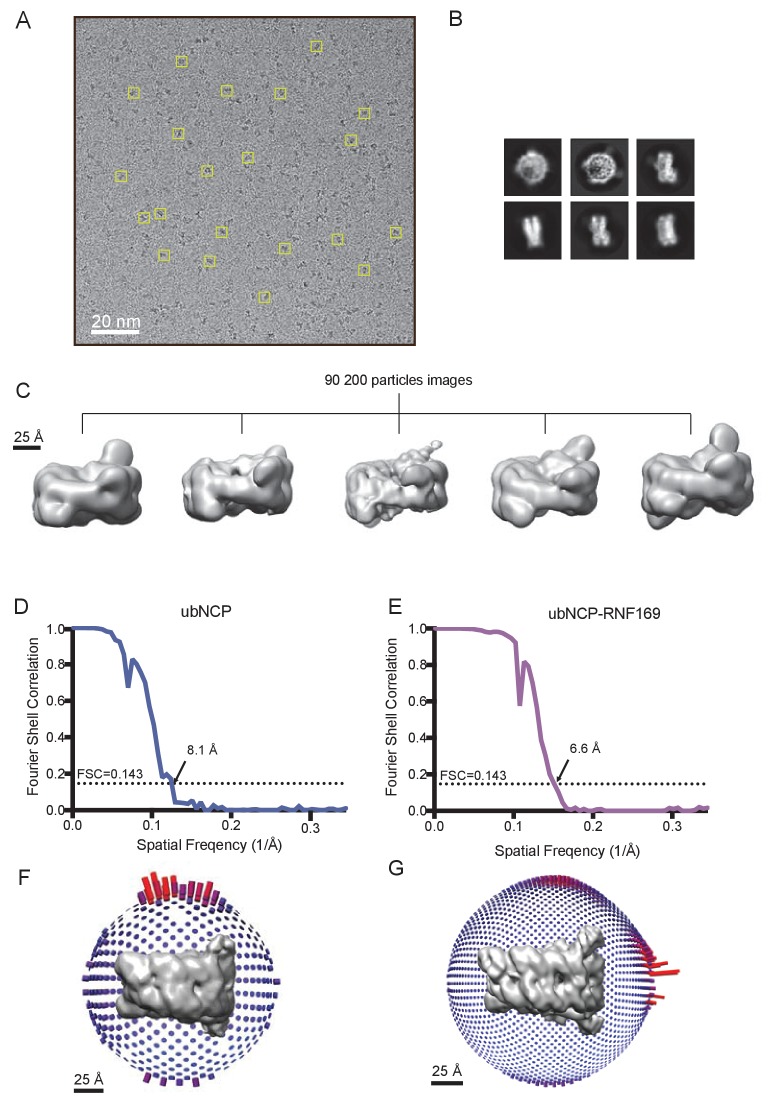
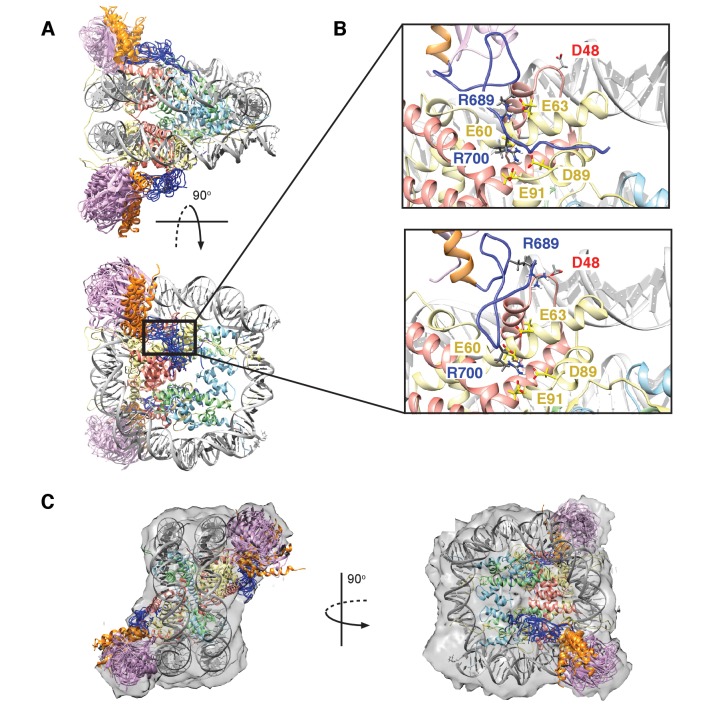
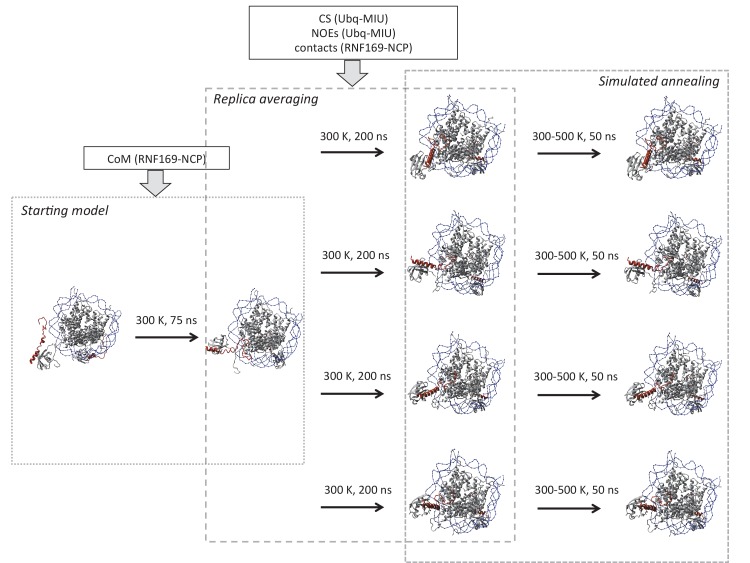
Site-specific histone ubiquitylation plays a central role in orchestrating the response to DNA double-strand breaks (DSBs). DSBs elicit a cascade of events controlled by the ubiquitin ligase RNF168, which promotes the accumulation of repair factors such as 53BP1 and BRCA1 on the chromatin flanking the break site. RNF168 also promotes its own accumulation, and that of its paralog RNF169, but how they recognize ubiquitylated chromatin is unknown. Using methyl-TROSY solution NMR spectroscopy and molecular dynamics simulations, we present an atomic resolution model of human RNF169 binding to a ubiquitylated nucleosome, and validate it by electron cryomicroscopy. We establish that RNF169 binds to ubiquitylated H2A-Lys13/Lys15 in a manner that involves its canonical ubiquitin-binding helix and a pair of arginine-rich motifs that interact with the nucleosome acidic patch. This three-pronged interaction mechanism is distinct from that by which 53BP1 binds to ubiquitylated H2A-Lys15 highlighting the diversity in site-specific recognition of ubiquitylated nucleosomes.
位点特异性组蛋白泛素化在协调对DNA双链断裂(DSB)的反应中起核心作用。DSB引发了一系列由泛素连接酶RNF168控制的事件,RNF168促进了诸如53BP1和BRCA1等修复因子在断裂位点两侧染色质上的积累。RNF168还促进自身及其旁系同源物RNF169的积累,但它们如何识别泛素化染色质尚不清楚。利用甲基-TROSY溶液核磁共振光谱和分子动力学模拟,我们提出了人类RNF169与泛素化核小体结合的原子分辨率模型,并通过低温电子显微镜对其进行了验证。我们确定RNF169以一种涉及其典型泛素结合螺旋和一对与核小体酸性补丁相互作用的富含精氨酸基序的方式与泛素化的H2A-Lys13/Lys15结合。这种三管齐下的相互作用机制不同于53BP1与泛素化H2A-Lys15结合的机制,突出了泛素化核小体位点特异性识别的多样性。