Zheng Peiming, Chen Lei, Yuan Xiangliang, Luo Qin, Liu Yi, Xie Guohua, Ma Yanhui, Shen Lisong
Department of Clinical Laboratory, Xinhua Hospital, Shanghai Jiao Tong University School of Medicine, Shanghai, 200092, China.
Department of General Surgery, Xinhua Hospital, Shanghai Jiao Tong University School of Medicine, Shanghai, 200092, China.
J Exp Clin Cancer Res. 2017 Apr 13;36(1):53. doi: 10.1186/s13046-017-0528-y.
Cisplatin-based chemotherapy is frequently used to treat advanced gastric cancer (GC). However, the resistance often occurs with the mechanisms being not well understood. Recently, emerging evidence indicates that tumor-associated macrophages (TAMs) play an important role in chemoresistance of cancer. As the important mediators in intercellular communications, exosomes secreted by host cells mediate the exchange of genetic materials and proteins to be involved in tumor aggressiveness. The aim of the study was to investigate whether exosomes derived from TAMs mediate cisplatin resistance in gastric cancer.
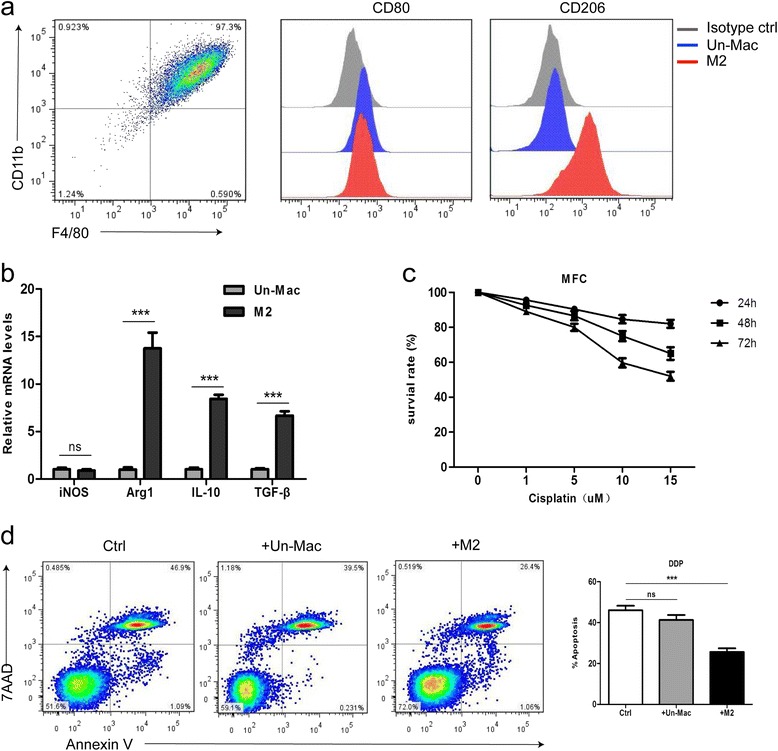
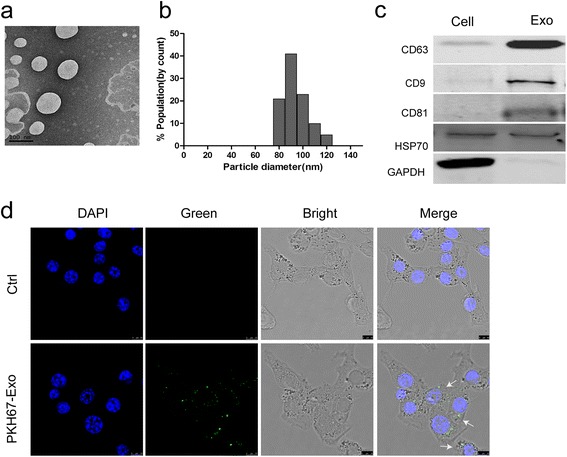
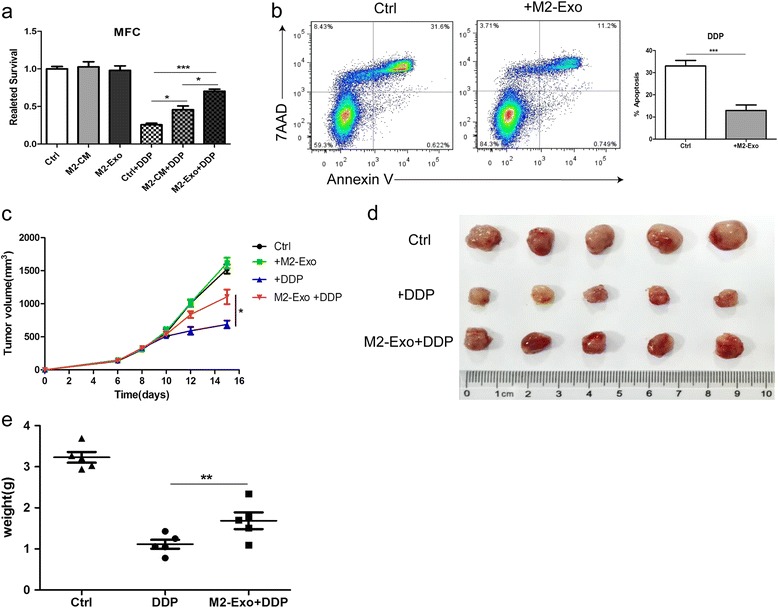
M2 polarized macrophages were obtained from mouse bone marrow or human PBMCs stimulated with IL-4 and IL-13. Exosomes isolated from M2 macrophages culture medium were characterized, and miRNA expression profiles of M2 derived exosomes (M2-exos) were analyzed using miRNA microarray. In vitro cell coculture was further conducted to investigate M2-exos mediated crosstalk between TAMs and tumor cells. Moreover, the in vivo experiments were performed using a subcutaneous transplantation tumor model in athymic nude mice.
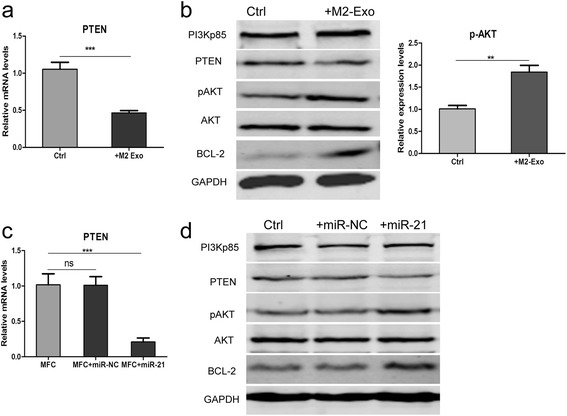
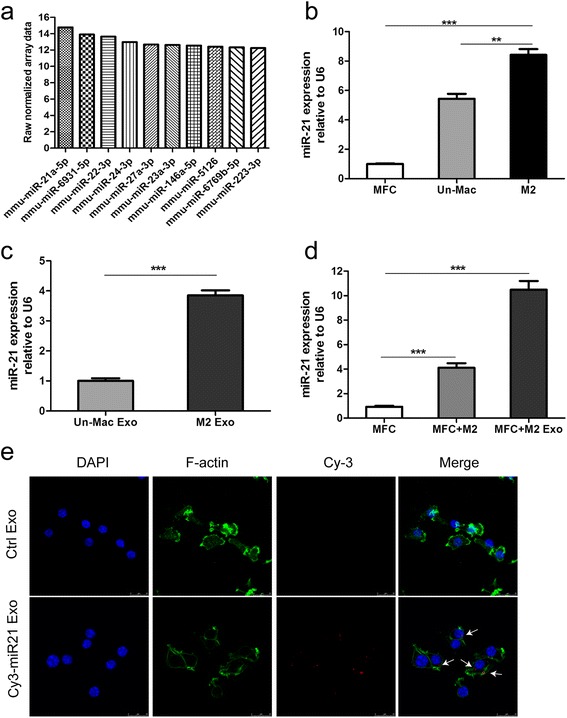
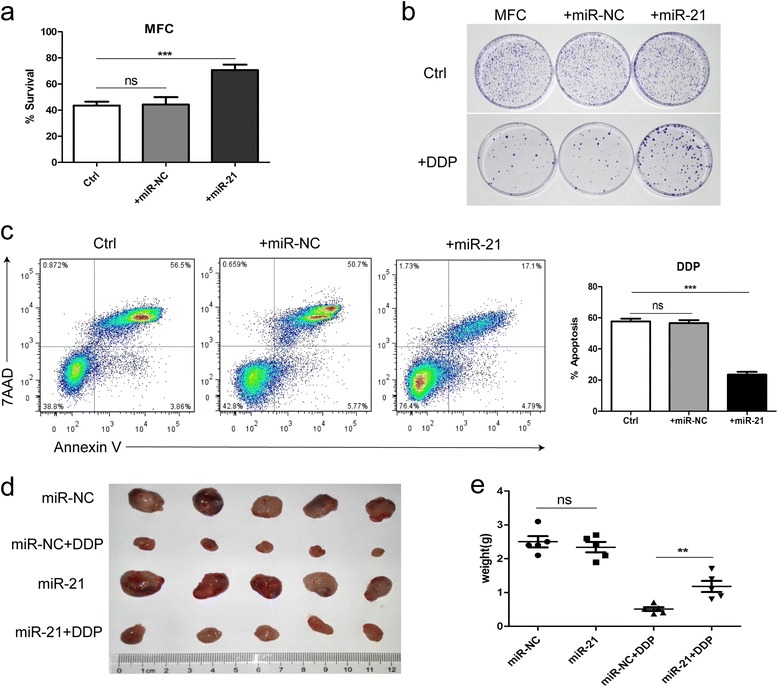
In this study, we showed that M2 polarized macrophages promoted cisplatin (DDP) resistance in gastric cancer cells and exosomes derived from M2 macrophages (M2-exos) are involved in mediating the resistance to DDP. Using miRNA profiles assay, we identify significantly higher levels of microRNA-21 (miR21) isomiRNAs in exosomes and cell lysate isolated from M2 polarized macrophage. Functional studies revealed that exosomal miR-21 can be directly transferred from macrophages to the gastric cancer cells, where it suppresses cell apoptosis and enhances activation of PI3K/AKT signaling pathway by down-regulation of PTEN.
Our findings suggest that exosomal transfer of tumor-associated macrophages derived miR-21 confer DDP resistance in gastric cancer, and targeting exosome communication may be a promising new therapeutic strategy for gastric cancer patients.
基于顺铂的化疗常用于治疗晚期胃癌(GC)。然而,耐药性经常出现,其机制尚不清楚。最近,新出现的证据表明,肿瘤相关巨噬细胞(TAM)在癌症化疗耐药中起重要作用。作为细胞间通讯的重要介质,宿主细胞分泌的外泌体介导遗传物质和蛋白质的交换,参与肿瘤侵袭性。本研究的目的是探讨TAM来源的外泌体是否介导胃癌的顺铂耐药。
用白细胞介素-4和白细胞介素-13刺激从小鼠骨髓或人外周血单核细胞中获得M2极化巨噬细胞。对从M2巨噬细胞培养基中分离的外泌体进行表征,并使用miRNA微阵列分析M2来源外泌体(M2-exos)的miRNA表达谱。进一步进行体外细胞共培养,以研究M2-exos介导的TAM与肿瘤细胞之间的相互作用。此外,使用无胸腺裸鼠的皮下移植肿瘤模型进行体内实验。
在本研究中,我们表明M2极化巨噬细胞促进胃癌细胞对顺铂(DDP)的耐药,并且M2巨噬细胞来源的外泌体(M2-exos)参与介导对DDP的耐药。使用miRNA谱分析,我们发现在从M2极化巨噬细胞分离的外泌体和细胞裂解物中,微小RNA-21(miR21)异构体的水平显著更高。功能研究表明,外泌体miR-21可以直接从巨噬细胞转移到胃癌细胞,通过下调PTEN抑制细胞凋亡并增强PI3K/AKT信号通路的激活。
我们的研究结果表明,肿瘤相关巨噬细胞来源的miR-21的外泌体转移赋予胃癌顺铂耐药性,靶向外泌体通讯可能是胃癌患者一种有前景的新治疗策略。