Terasaki Michishige, Hiromura Munenori, Mori Yusaku, Kohashi Kyoko, Kushima Hideki, Ohara Makoto, Watanabe Takuya, Andersson Olov, Hirano Tsutomu
Department of Medicine, Division of Diabetes, Metabolism, and Endocrinology, Showa University School of Medicine, Tokyo, Japan.
Department of Cell and Molecular Biology, Karolinska Institutet, Stockholm, Sweden.
Int J Endocrinol. 2017;2017:1365209. doi: 10.1155/2017/1365209. Epub 2017 Mar 19.
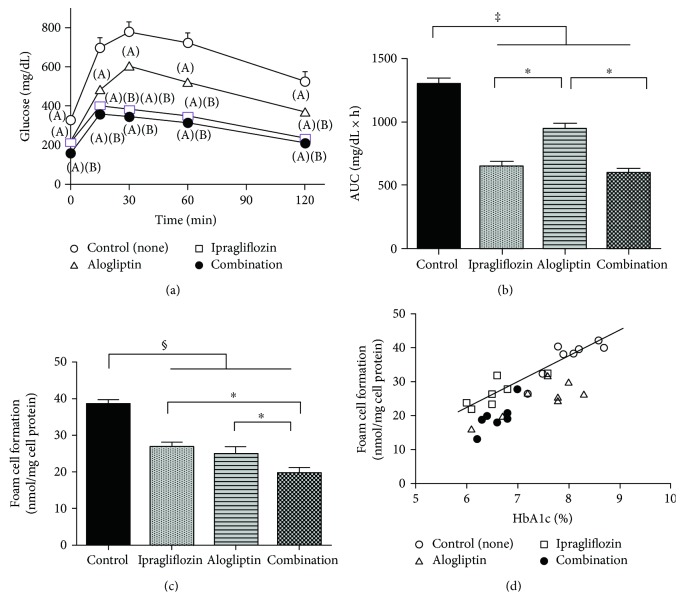
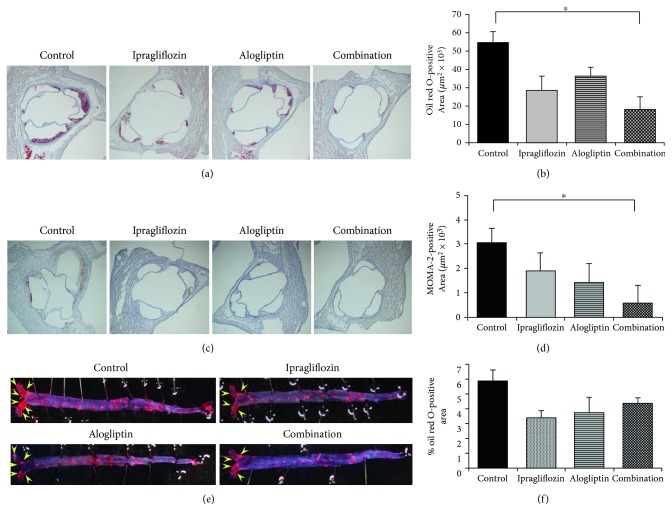
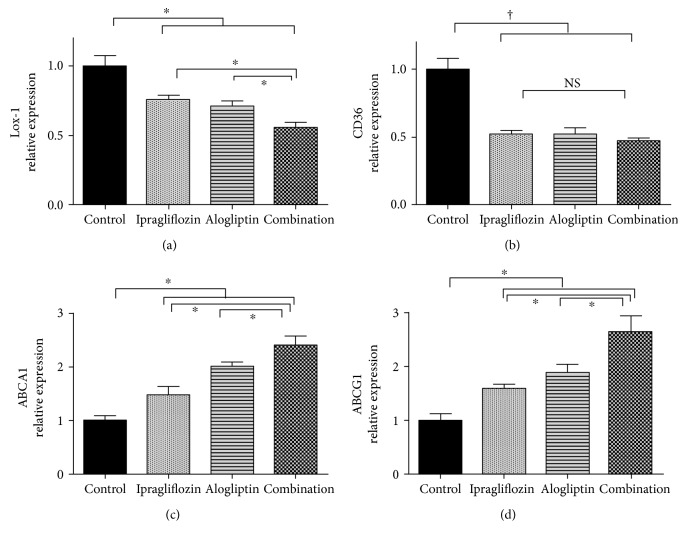
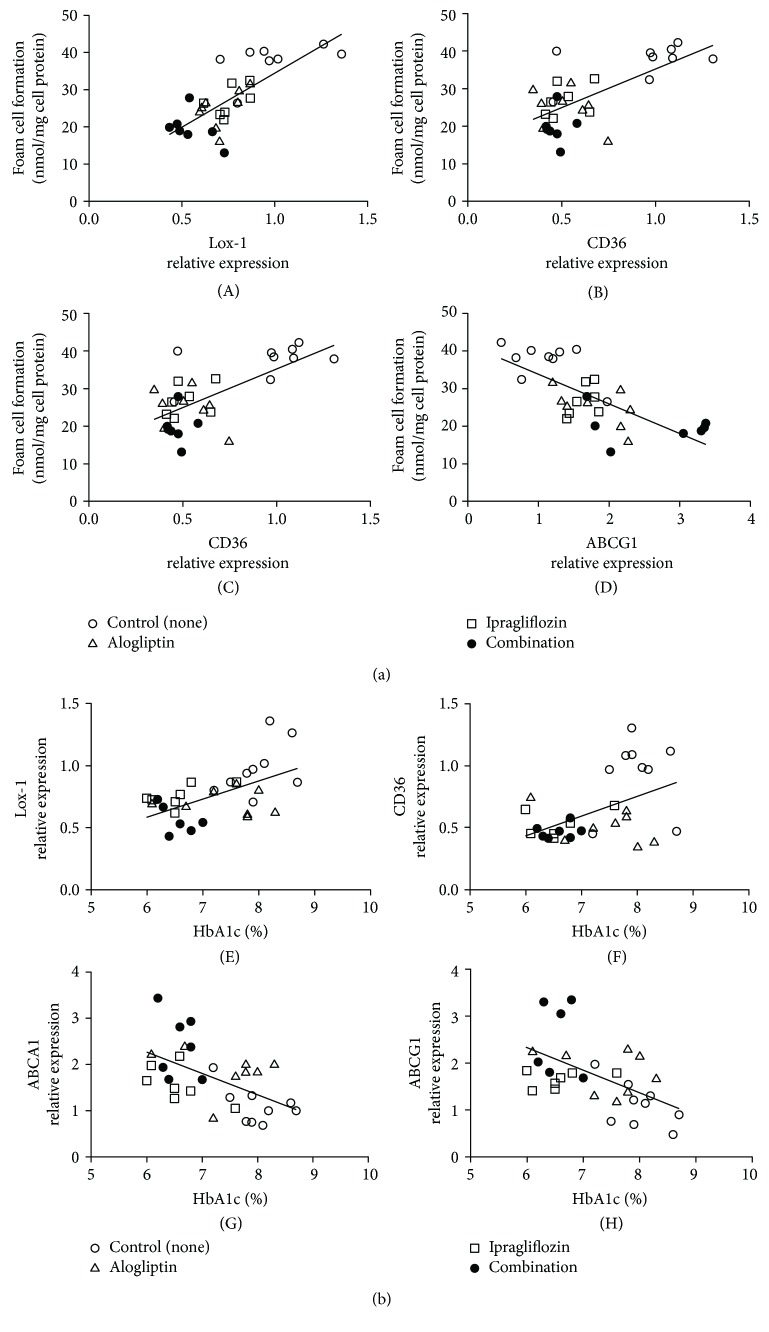
Dipeptidyl peptidase-4 inhibitors (DPP-4is), in addition to their antihyperglycemic roles, have antiatherosclerotic effects. We reported that sodium-glucose cotransporter 2 inhibitors (SGLT2is) suppress atherosclerosis in a glucose-dependent manner in diabetic mice. Here, we investigated the effects of combination therapy with SGLT2i and DPP-4i on atherosclerosis in diabetic mice. SGLT2i (ipragliflozin, 1.0 mg/kg/day) and DPP-4i (alogliptin, 8.0 mg/kg/day), either alone or in combination, were administered to mice or streptozotocin-induced diabetic apolipoprotein E-null ( ) mice. Ipragliflozin and alogliptin monotherapies improved glucose intolerance; however, combination therapy did not show further improvement. The foam cell formation of peritoneal macrophages was suppressed by both the ipragliflozin and alogliptin monotherapies and was further enhanced by combination therapy. Although foam cell formation was closely associated with HbA1c levels in all groups, DPP-4i alone or the combination group showed further suppression of foam cell formation compared with the control or SGLT2i group at corresponding HbA1c levels. Both ipragliflozin and alogliptin monotherapies decreased scavenger receptors and increased cholesterol efflux regulatory genes in peritoneal macrophages, and combination therapy showed additive changes. In diabetic mice, combination therapy showed the greatest suppression of plaque volume in the aortic root. In conclusion, combination therapy with SGLT2i and DPP4i synergistically suppresses macrophage foam cell formation and atherosclerosis in diabetic mice.
二肽基肽酶-4抑制剂(DPP-4i)除了具有抗高血糖作用外,还具有抗动脉粥样硬化作用。我们曾报道,钠-葡萄糖协同转运蛋白2抑制剂(SGLT2i)在糖尿病小鼠中以葡萄糖依赖的方式抑制动脉粥样硬化。在此,我们研究了SGLT2i与DPP-4i联合治疗对糖尿病小鼠动脉粥样硬化的影响。将SGLT2i(依帕列净,1.0毫克/千克/天)和DPP-4i(阿格列汀,8.0毫克/千克/天)单独或联合给予小鼠或链脲佐菌素诱导的糖尿病载脂蛋白E基因敲除()小鼠。依帕列净和阿格列汀单药治疗改善了葡萄糖不耐受;然而,联合治疗并未显示出进一步改善。依帕列净和阿格列汀单药治疗均抑制了腹腔巨噬细胞的泡沫细胞形成,联合治疗进一步增强了这种抑制作用。尽管所有组的泡沫细胞形成均与糖化血红蛋白水平密切相关,但在相应的糖化血红蛋白水平下,单独使用DPP-4i或联合治疗组与对照组或SGLT2i组相比,对泡沫细胞形成的抑制作用更强。依帕列净和阿格列汀单药治疗均降低了腹腔巨噬细胞中的清道夫受体,并增加了胆固醇流出调节基因,联合治疗显示出相加性变化。在糖尿病小鼠中,联合治疗对主动脉根部斑块体积的抑制作用最大。总之,SGLT2i与DPP4i联合治疗可协同抑制糖尿病小鼠巨噬细胞泡沫细胞形成和动脉粥样硬化。