Kaiser Vera B, Semple Colin A
MRC Human Genetics Unit, MRC Institute of Genetics and Molecular Medicine, The University of Edinburgh, Western General Hospital, Crewe Road, Edinburgh, EH4 2XU, UK.
F1000Res. 2017 Mar 24;6. doi: 10.12688/f1000research.10792.1. eCollection 2017.
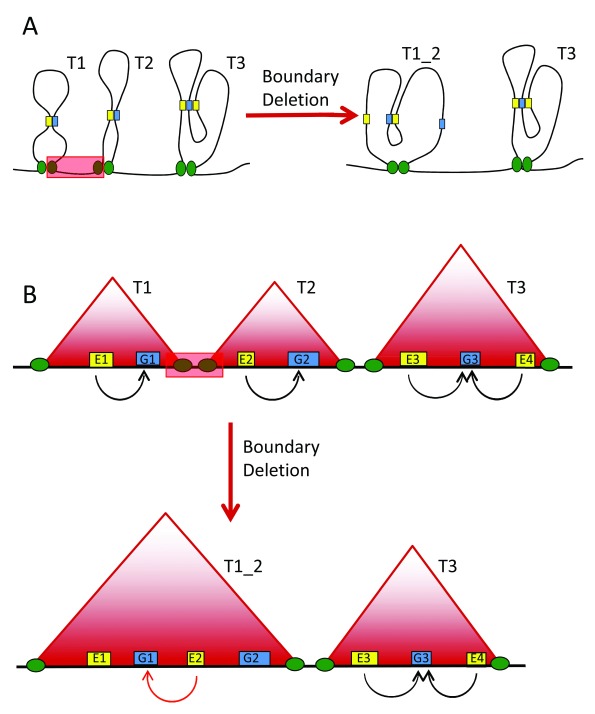
Chromatin in the interphase nucleus is organised as a hierarchical series of structural domains, including self-interacting domains called topologically associating domains (TADs). This arrangement is thought to bring enhancers into closer physical proximity with their target genes, which often are located hundreds of kilobases away in linear genomic distance. TADs are demarcated by boundary regions bound by architectural proteins, such as CTCF and cohesin, although much remains to be discovered about the structure and function of these domains. Recent studies of TAD boundaries disrupted in engineered mouse models show that boundary mutations can recapitulate human developmental disorders as a result of aberrant promoter-enhancer interactions in the affected TADs. Similar boundary disruptions in certain cancers can result in oncogene overexpression, and CTCF binding sites at boundaries appear to be hyper-mutated across cancers. Further insights into chromatin organisation, in parallel with accumulating whole genome sequence data for disease cohorts, are likely to yield additional valuable insights into the roles of noncoding sequence variation in human disease.
间期细胞核中的染色质被组织成一系列层次结构域,包括称为拓扑相关结构域(TADs)的自相互作用结构域。这种排列方式被认为能使增强子与其靶基因在物理距离上更接近,而这些靶基因在线性基因组距离上通常位于数百千碱基之外。TADs由诸如CTCF和黏连蛋白等结构蛋白结合的边界区域划定,尽管关于这些结构域的结构和功能仍有许多有待发现。最近对工程小鼠模型中破坏的TAD边界的研究表明,边界突变可因受影响TAD中异常的启动子 - 增强子相互作用而重现人类发育障碍。某些癌症中类似的边界破坏可导致癌基因过度表达,并且跨癌症边界处的CTCF结合位点似乎高度突变。与疾病队列中积累的全基因组序列数据并行,对染色质组织的进一步深入了解可能会对非编码序列变异在人类疾病中的作用产生更多有价值的见解。