Department of Stem Cell and Regenerative Biology, Harvard University, Cambridge, MA, USA.
Present address: Donnelly Centre, University of Toronto, Toronto, ON, Canada.
Skelet Muscle. 2022 Aug 15;12(1):20. doi: 10.1186/s13395-022-00303-x.
The AP-1 transcription factor, FBJ osteosarcoma oncogene (FOS), is induced in adult muscle satellite cells (SCs) within hours following muscle damage and is required for effective stem cell activation and muscle repair. However, why FOS is rapidly downregulated before SCs enter cell cycle as progenitor cells (i.e., transiently expressed) remains unclear. Further, whether boosting FOS levels in the proliferating progeny of SCs can enhance their myogenic properties needs further evaluation.
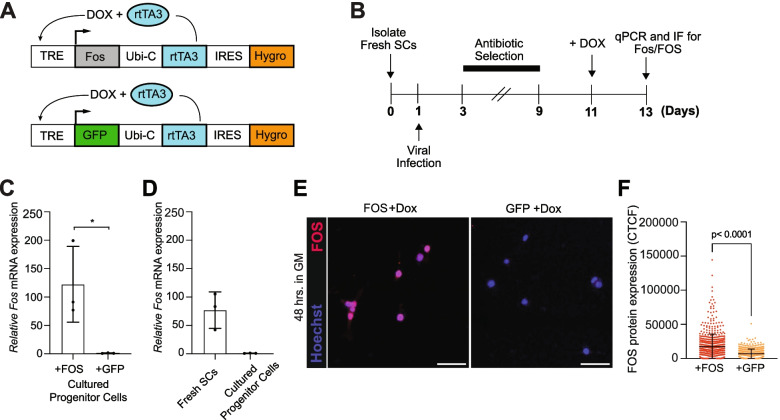
We established an inducible, FOS expression system to evaluate the impact of persistent FOS activity in muscle progenitor cells ex vivo. We performed various assays to measure cellular proliferation and differentiation, as well as uncover changes in RNA levels and three-dimensional (3D) chromatin interactions.
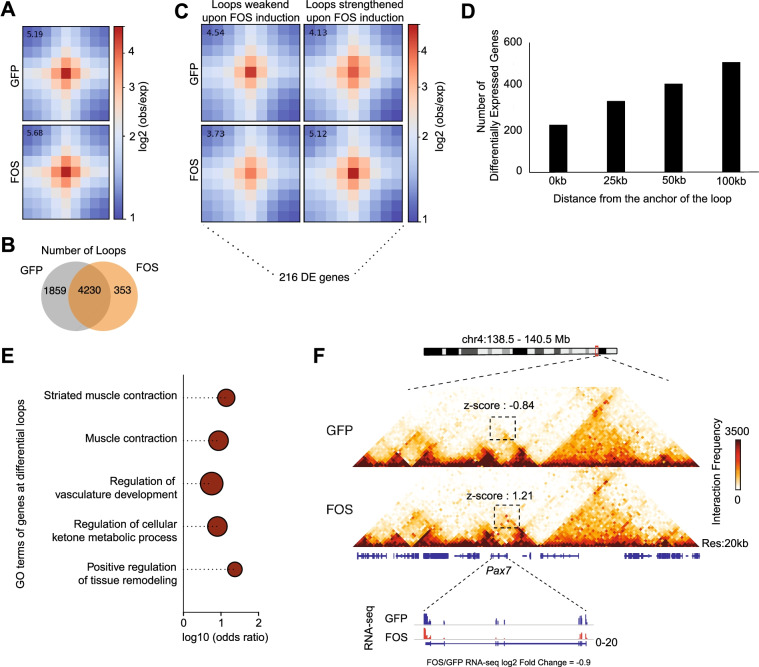
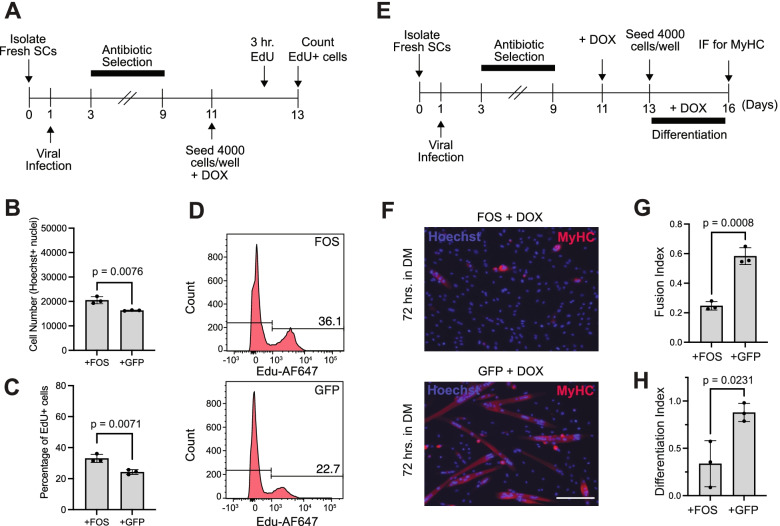
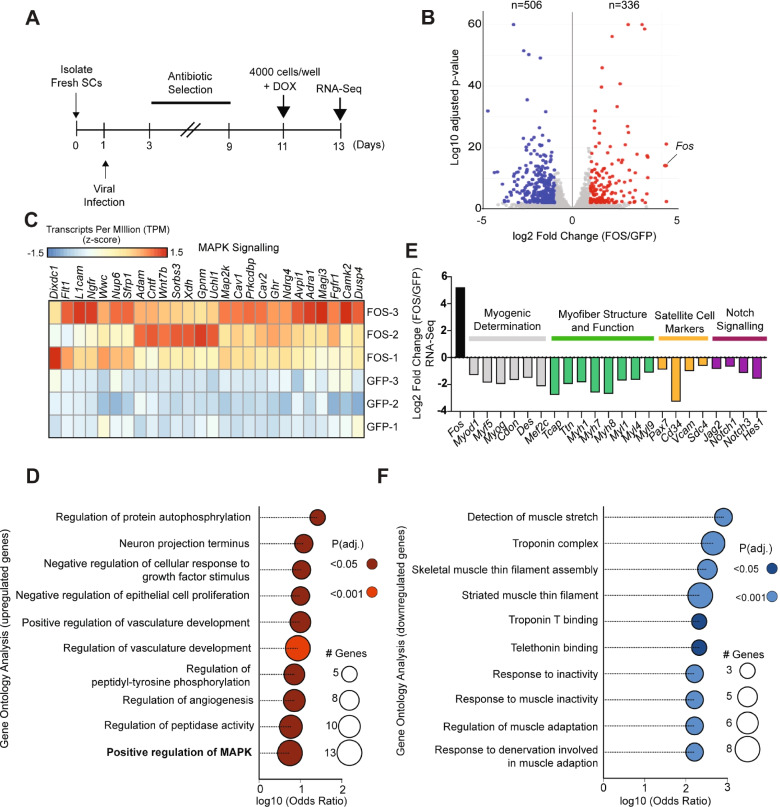
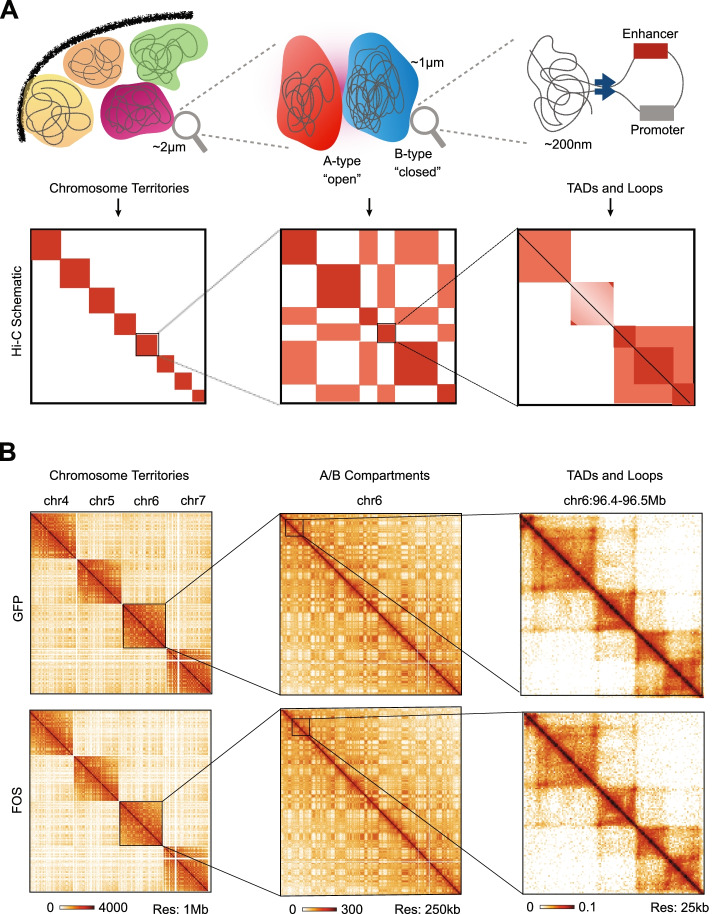
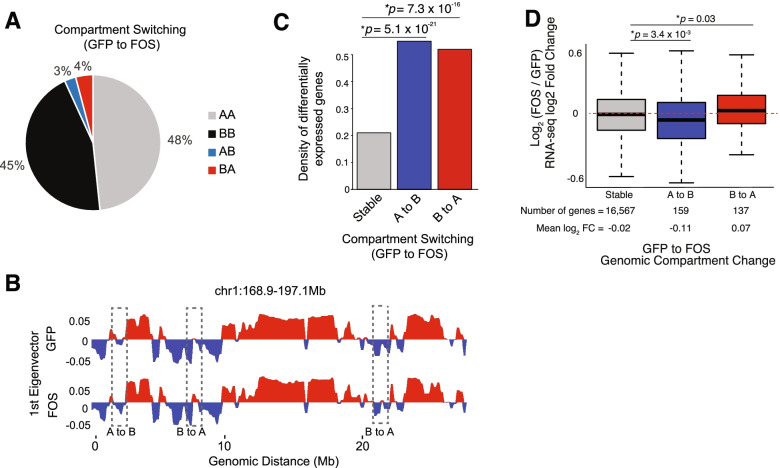
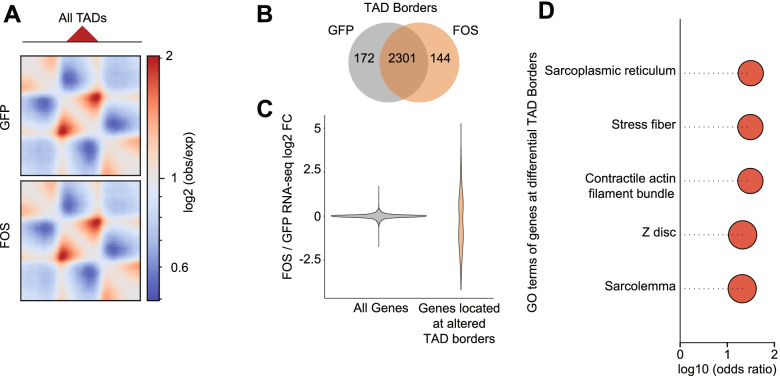
Persistent FOS activity in primary muscle progenitor cells severely antagonizes their ability to differentiate and form myotubes within the first 2 weeks in culture. RNA-seq analysis revealed that ectopic FOS activity in muscle progenitor cells suppressed a global pro-myogenic transcriptional program, while activating a stress-induced, mitogen-activated protein kinase (MAPK) transcriptional signature. Additionally, we observed various FOS-dependent, chromosomal re-organization events in A/B compartments, topologically associated domains (TADs), and genomic loops near FOS-regulated genes.
Our results suggest that elevated FOS activity in recently activated muscle progenitor cells perturbs cellular differentiation by altering the 3D chromosome organization near critical pro-myogenic genes. This work highlights the crucial importance of tightly controlling FOS expression in the muscle lineage and suggests that in states of chronic stress or disease, persistent FOS activity in muscle precursor cells may disrupt the muscle-forming process.
AP-1 转录因子 FBJ 骨肉瘤癌基因(FOS)在肌肉损伤后数小时内诱导成年肌肉卫星细胞(SCs)表达,并在有效的干细胞激活和肌肉修复中发挥作用。然而,FOS 在 SC 进入细胞周期作为祖细胞(即短暂表达)之前为何迅速下调仍不清楚。此外,在 SC 增殖后代中提高 FOS 水平是否能增强其成肌特性还需要进一步评估。
我们建立了一种可诱导的 FOS 表达系统,以评估持续的 FOS 活性对体外肌肉祖细胞的影响。我们进行了各种测定,以测量细胞增殖和分化,并揭示 RNA 水平和三维(3D)染色质相互作用的变化。
在培养的前 2 周内,原发性肌肉祖细胞中持续的 FOS 活性严重拮抗其分化和形成肌管的能力。RNA-seq 分析显示,肌肉祖细胞中异位 FOS 活性抑制了全局的成肌转录程序,同时激活了应激诱导的丝裂原激活蛋白激酶(MAPK)转录特征。此外,我们观察到在 FOS 调节基因附近的 A/B 区室、拓扑关联域(TAD)和基因组环中存在各种依赖 FOS 的染色体重排事件。
我们的结果表明,在最近激活的肌肉祖细胞中升高的 FOS 活性通过改变关键成肌基因附近的 3D 染色体组织来干扰细胞分化。这项工作强调了在肌肉谱系中严格控制 FOS 表达的重要性,并表明在慢性应激或疾病状态下,肌肉前体细胞中持续的 FOS 活性可能会破坏肌肉形成过程。