Hall Kathleen B
Department of Biochemistry and Molecular Biophysics, Washington University School of Medicine, St Louis, MO, 63110, USA.
F1000Res. 2017 Mar 27;6:345. doi: 10.12688/f1000research.10572.1. eCollection 2017.
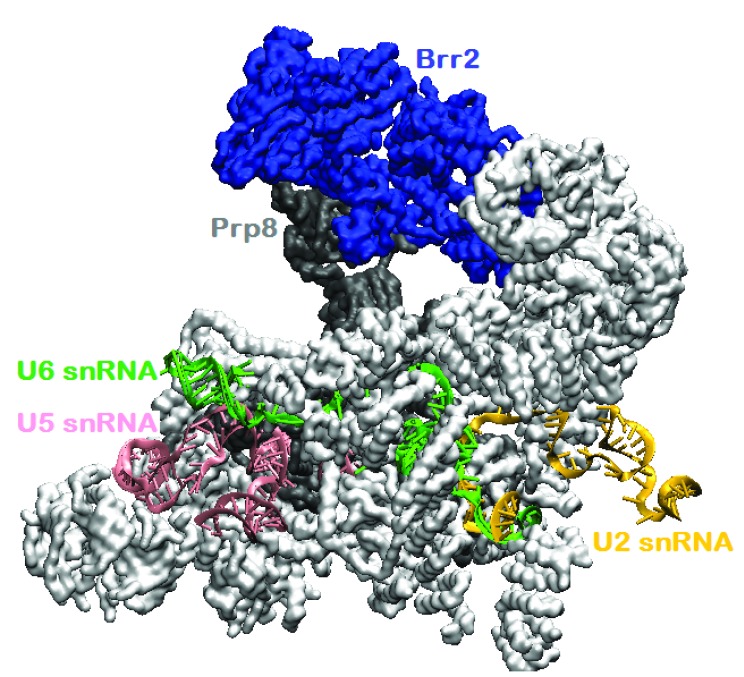
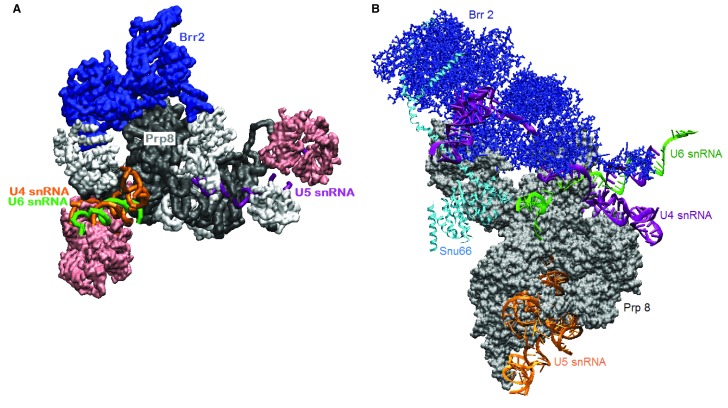
Proteins and RNA are often found in ribonucleoprotein particles (RNPs), where they function in cellular processes to synthesize proteins (the ribosome), chemically modify RNAs (small nucleolar RNPs), splice pre-mRNAs (the spliceosome), and, on a larger scale, sequester RNAs, degrade them, or process them (P bodies, Cajal bodies, and nucleoli). Each RNA-protein interaction is a story in itself, as both molecules can change conformation, compete for binding sites, and regulate cellular functions. Recent studies of Xist long non-coding RNP, the U4/5/6 tri-small nuclear RNP complex, and an activated state of a spliceosome reveal new features of RNA interactions with proteins, and, although their stories are incomplete, they are already fascinating.
蛋白质和RNA经常存在于核糖核蛋白颗粒(RNP)中,它们在细胞过程中发挥作用,参与蛋白质合成(核糖体)、RNA的化学修饰(小核仁RNP)、前体mRNA的剪接(剪接体),并且在更大范围内,隔离RNA、降解RNA或对其进行加工(P小体、卡哈尔体和核仁)。每一个RNA-蛋白质相互作用本身就是一个故事,因为这两种分子都可以改变构象、竞争结合位点并调节细胞功能。最近对Xist长链非编码RNP、U4/5/6三小核RNP复合体以及剪接体激活状态的研究揭示了RNA与蛋白质相互作用的新特征,尽管这些故事并不完整,但已经令人着迷。