Wang Qian, Ding Wei, Ding Yihan, Ma Jingjing, Qian Zhaoye, Shao Jingxian, Li Yufeng
Department of Hematology, Huai'an First People's Hospital, Nanjing Medical University, Huai'an, 223300, China.
Department of Oncology, Huai'an First People's Hospital, Nanjing Medical University, Huai'an, 223300, China.
Oncotarget. 2017 Jun 6;8(23):37594-37604. doi: 10.18632/oncotarget.16731.
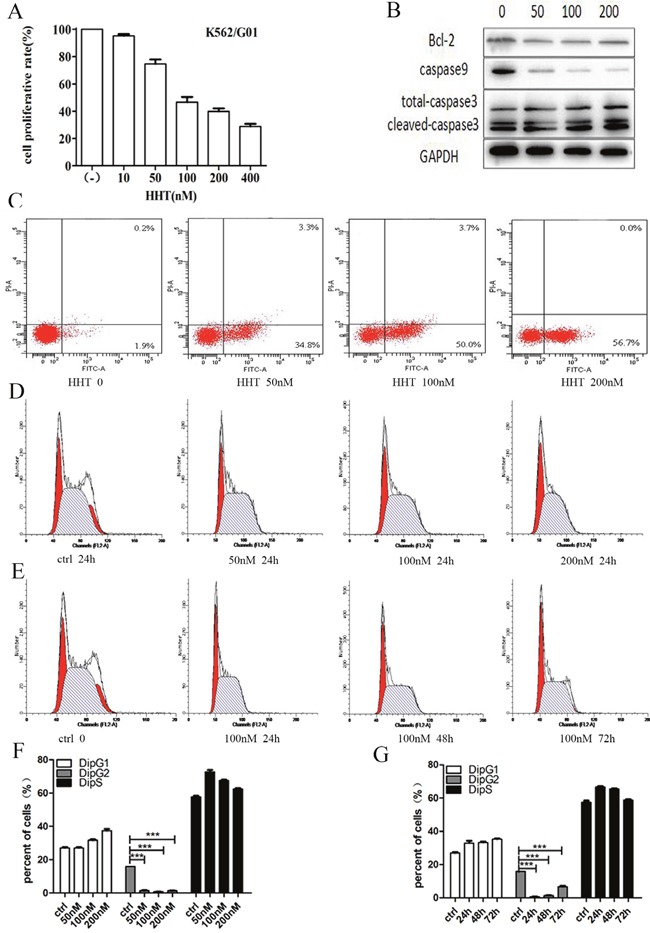
The anti-leukemic mechanism of homoharringtonine (HHT) differs from that of IM, and HHT is one of the most useful agents for use in patients with IM resistance or intolerance. The Bcl-6/p53 pathway has been shown to regulate the sensitivity of tumor cells to antitumor drugs. We tested whether HHT blocked the Bcl-6/p53 pathway in order to promote the apoptosis of IM-resistant cells in vitro and in vivo.
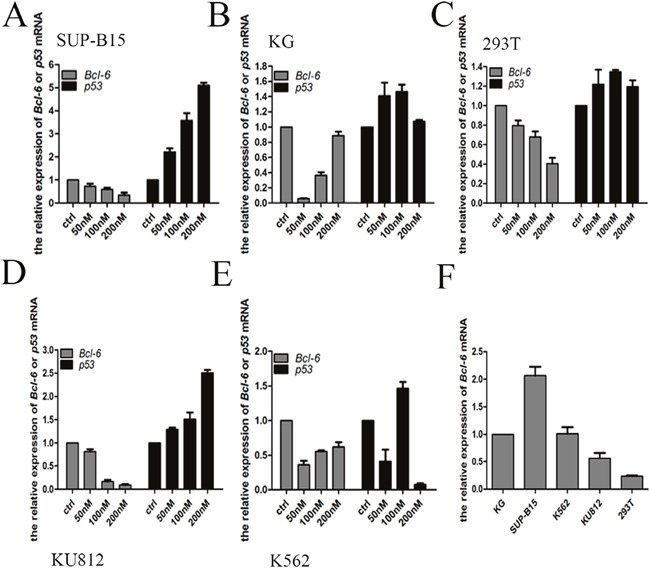
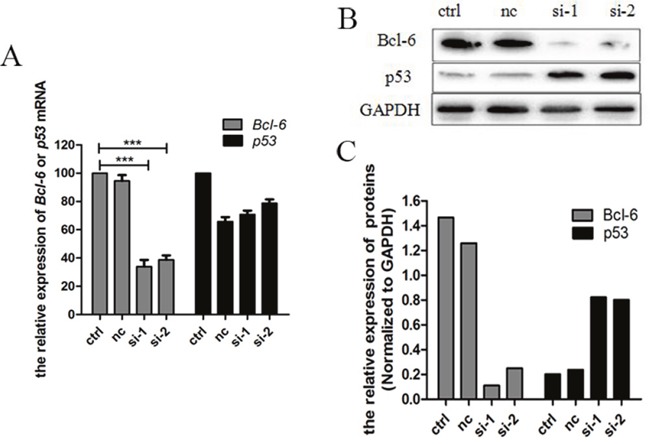
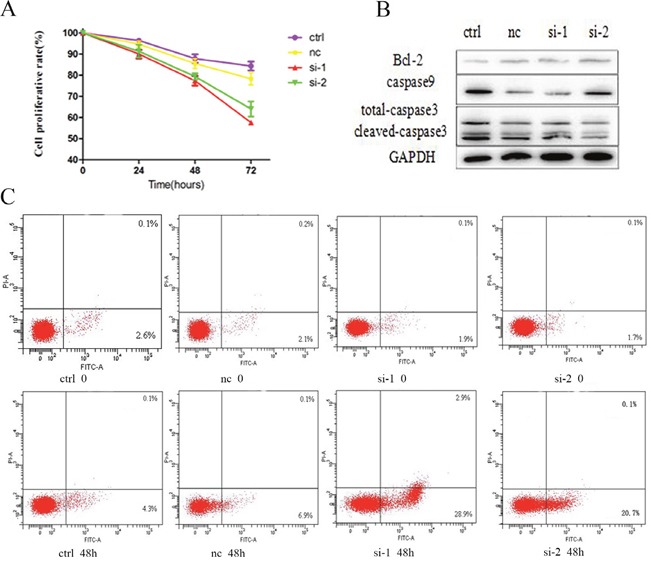
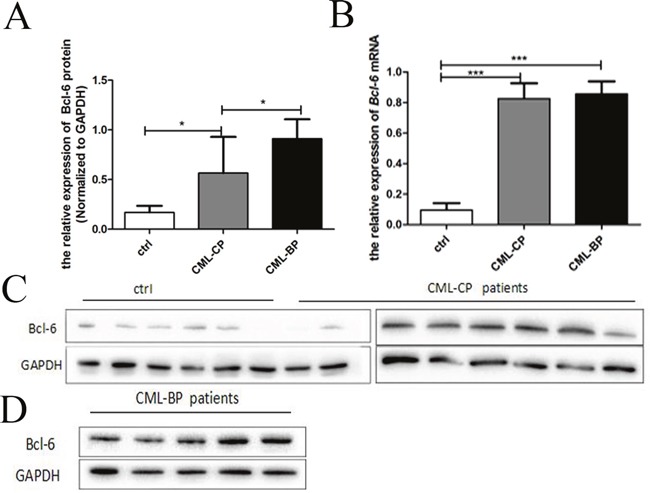
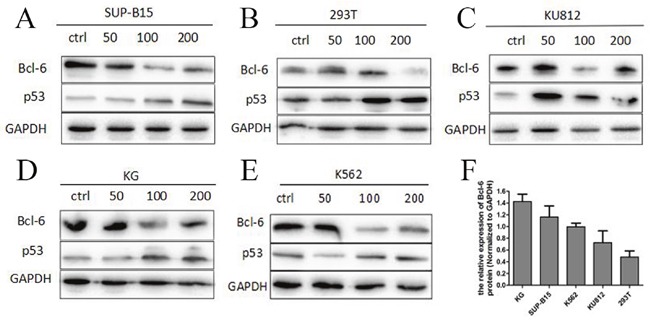
Ph+ acute lymphoblastic leukemia (ALL) cells and IM-resistant chronic myeloid leukemia (CML) cells showed high expression of Bcl-6 protein. Bcl-6 mediated the upregulation of p53, and and Bcl-6 induced growth inhibition of IM-resistant cells as well as its apoptosis by targeting p53. In addition, Bcl-6 was downregulated moderately after HHT treatment in different cells. The Bcl-6 expression was significantly increased in patients with CML when compared with healthy subjects. Furthermore, the expression of Bcl-6 was higher in patients with CML-blastic phase (CML-BP) than in those with CML-chronic phase (CML-CP).
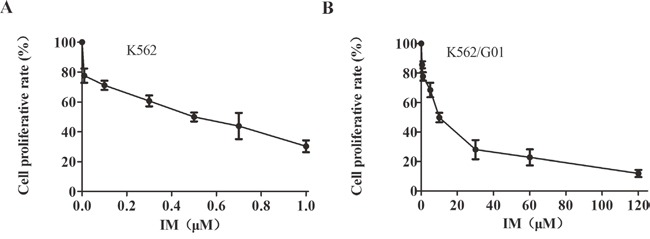
The inhibitory effect of drugs on cell growth was detected by Cell Counting Kit-8 (CCK-8), The apoptosis rate and the cell cycle were investigated by flow cytometry. The expression of Bcl-6, p53, Bcl-2, caspase9, and caspase3 proteins was assayed by western blot, Real- Time PCR (qPCR) detect Bcl-6 and p53 mRNA.
HHT can suppress the growth and induce apoptosis of IM-resistant cells, the mechanism of which is associated with blocking of the Bcl-6/p53 pathway. Our results could offer a theoretical explanation for HHT use in patients with IM resistance or intolerance.
高三尖杉酯碱(HHT)的抗白血病机制与伊马替尼(IM)不同,HHT是治疗IM耐药或不耐受患者最有效的药物之一。Bcl-6/p53信号通路已被证明可调节肿瘤细胞对抗肿瘤药物的敏感性。我们检测了HHT是否通过阻断Bcl-6/p53信号通路来促进体外和体内IM耐药细胞的凋亡。
Ph+急性淋巴细胞白血病(ALL)细胞和IM耐药慢性髓性白血病(CML)细胞均高表达Bcl-6蛋白。Bcl-6介导p53的上调,并且Bcl-6通过靶向p53诱导IM耐药细胞的生长抑制及其凋亡。此外,不同细胞经HHT处理后Bcl-6表达适度下调。与健康受试者相比,CML患者的Bcl-6表达显著增加。此外,CML急变期(CML-BP)患者的Bcl-6表达高于慢性期(CML-CP)患者。
采用细胞计数试剂盒-8(CCK-8)检测药物对细胞生长的抑制作用,通过流式细胞术检测细胞凋亡率和细胞周期。采用蛋白质免疫印迹法检测Bcl-6、p53、Bcl-2、caspase9和caspase3蛋白的表达,实时荧光定量聚合酶链反应(qPCR)检测Bcl-6和p53 mRNA。
HHT可抑制IM耐药细胞的生长并诱导其凋亡,其机制与阻断Bcl-6/p53信号通路有关。我们的结果可为HHT用于IM耐药或不耐受患者提供理论解释。