Wang Liming, Shen Hui, Feng Bei, Zhu Da, Yu Lan, Tian Xun, Ren Ci, Gao Chun, Li Xiaomin, Ma Ding, Hu Zheng, Wang Hui
Key Laboratory of Cancer Invasion and Metastasis of the Ministry of Education, Tongji Hospital, Tongji Medical College, Huazhong University of Science and Technology, Wuhan, Hubei, China.
Department of Obstetrics and Gynecology, Tongji Hospital, Tongji Medical College, Huazhong University of Science and Technology, Wuhan, Hubei, China.
PLoS One. 2017 Apr 17;12(4):e0175520. doi: 10.1371/journal.pone.0175520. eCollection 2017.
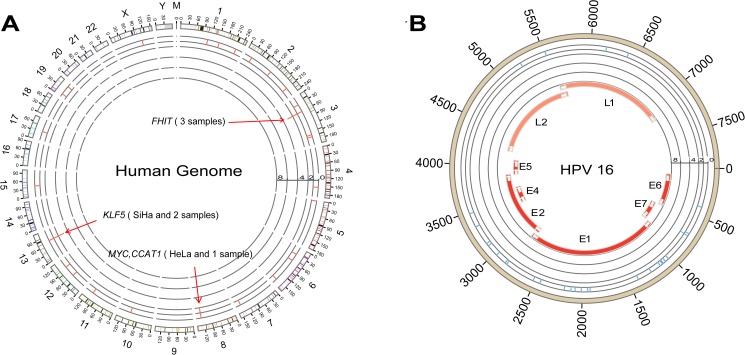
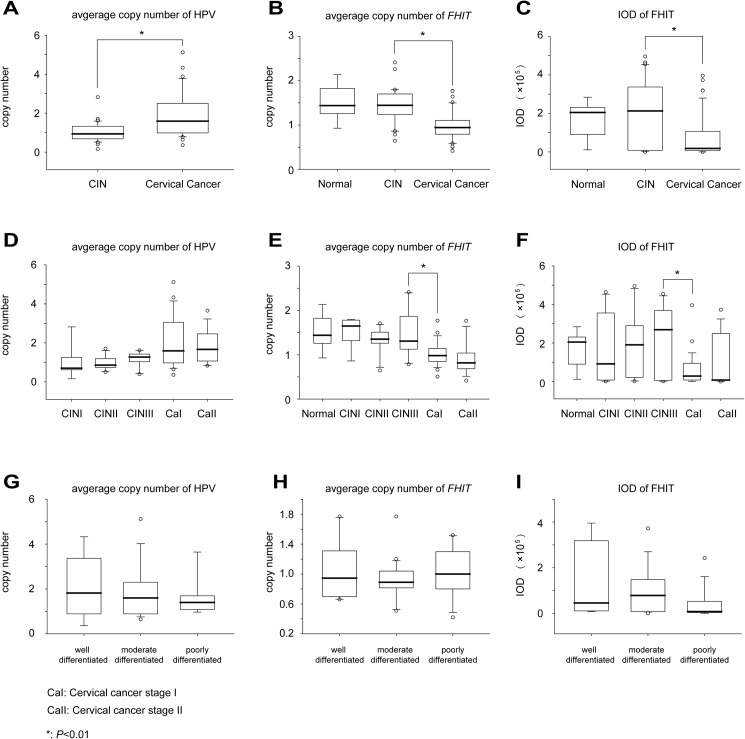
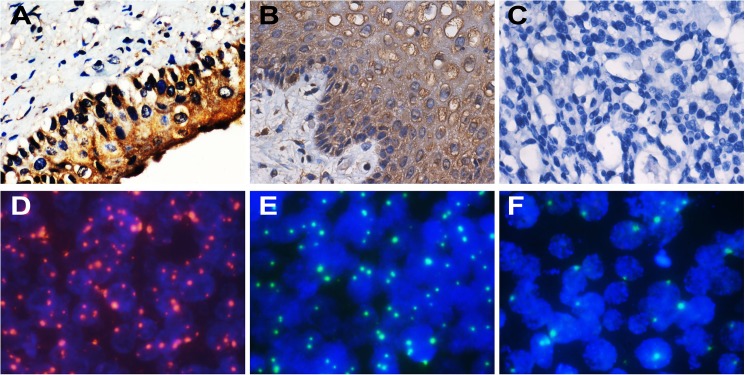
Cervical cancer is the second most common cancer and the third leading cause of cancer death in females worldwide, especially in developing countries. High risk human papillomavirus (HR-HPV) infection causes cervical cancer and precancerous cervical intraepithelial neoplasia (CIN). Integration of the HR-HPV genome into the host chromatin is an important step in cervical carcinogenesis. The detection of integrated papillomavirus sequences-PCR (DIPS-PCR) allowed us to explore HPV integration in the human genome and to determine the pattern of this integration. We performed DIPS-PCR for 4 cell lines including 3 cervical cancer cell lines and 40 tissue samples. Overall, 32 HR-HPV integration loci were detected in the clinical samples and the HeLa and SiHa cell lines. Among all the integration loci, we identified three recurrent integration loci: 3p14.2 (3 samples), 13q22.1 (2 samples and a SiHa cell line) and 8q24 (1 sample and a HeLa cell line). To further explore the effect of HR-HPV integration in the 3p14.2 locus, we used fluorescence in situ hybridization (FISH) to determine the copy number of the 3p14.2 locus and immunohistochemistry (IHC) to determine the protein expression levels of the related FHIT gene in the clinical samples. Both the 3p14.2 locus copy number and FHIT protein expression levels showed significant decreases when CIN transitioned to cervical cancer. HPV copy number was also evaluated in these clinical samples, and the copy number of HPV increased significantly between CIN and cervical cancer samples. Finally, we employed receiver operating characteristic curve (ROC curve) analysis to evaluate the potential of all these indexes in distinguishing CIN and cervical cancer, and the HPV copy number, FHIT copy number and FHIT protein expression levels have good diagnostic efficiencies.
宫颈癌是全球女性中第二常见的癌症,也是癌症死亡的第三大主要原因,在发展中国家尤为如此。高危型人乳头瘤病毒(HR-HPV)感染会导致宫颈癌和宫颈癌前上皮内瘤变(CIN)。HR-HPV基因组整合到宿主染色质中是宫颈癌发生过程中的重要一步。整合型乳头瘤病毒序列-PCR检测(DIPS-PCR)使我们能够探索HPV在人类基因组中的整合情况,并确定这种整合的模式。我们对4种细胞系(包括3种宫颈癌细胞系)和40个组织样本进行了DIPS-PCR检测。总体而言,在临床样本以及HeLa和SiHa细胞系中检测到了32个HR-HPV整合位点。在所有整合位点中,我们确定了三个反复出现的整合位点:3p14.2(3个样本)、13q22.1(2个样本和一个SiHa细胞系)以及8q24(1个样本和一个HeLa细胞系)。为了进一步探究HR-HPV整合到3p14.2位点的影响,我们使用荧光原位杂交(FISH)来确定3p14.2位点的拷贝数,并使用免疫组织化学(IHC)来确定临床样本中相关FHIT基因的蛋白表达水平。当CIN转变为宫颈癌时,3p14.2位点拷贝数和FHIT蛋白表达水平均显著下降。我们还对这些临床样本中的HPV拷贝数进行了评估,CIN样本和宫颈癌样本之间HPV拷贝数显著增加。最后,我们采用受试者工作特征曲线(ROC曲线)分析来评估所有这些指标区分CIN和宫颈癌的潜力,HPV拷贝数、FHIT拷贝数和FHIT蛋白表达水平具有良好的诊断效率。