Li Xiaoyang, Zhang Yingjie, Jiang Yuqi, Wu Jingde, Inks Elizabeth S, Chou C James, Gao Shuai, Hou Jinning, Ding Qinge, Li Jingyao, Wang Xue, Huang Yongxue, Xu Wenfang
Department of Medicinal Chemistry, School of Pharmacy, Shandong University, Ji'nan, Shandong, 250012, PR China; Department of Drug Discovery and Biomedical Sciences, South Carolina College of Pharmacy, Medical University of South Carolina, Charleston, SC, 29425, United States.
Department of Medicinal Chemistry, School of Pharmacy, Shandong University, Ji'nan, Shandong, 250012, PR China; Key Laboratory of Chemical Biology (Ministry of Education), School of Pharmaceutical Sciences, Shandong University, Ji'nan, Shandong, 250012, PR China.
Eur J Med Chem. 2017 Jul 7;134:185-206. doi: 10.1016/j.ejmech.2017.03.069. Epub 2017 Mar 30.
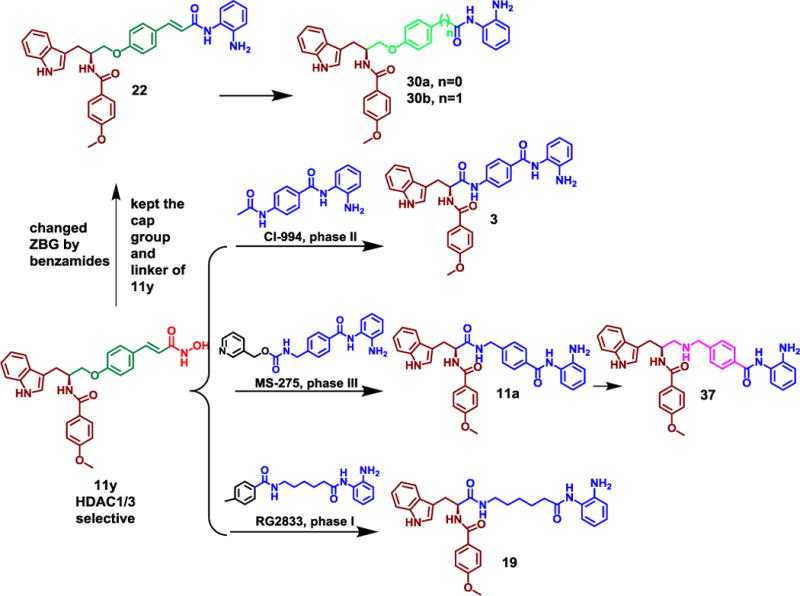
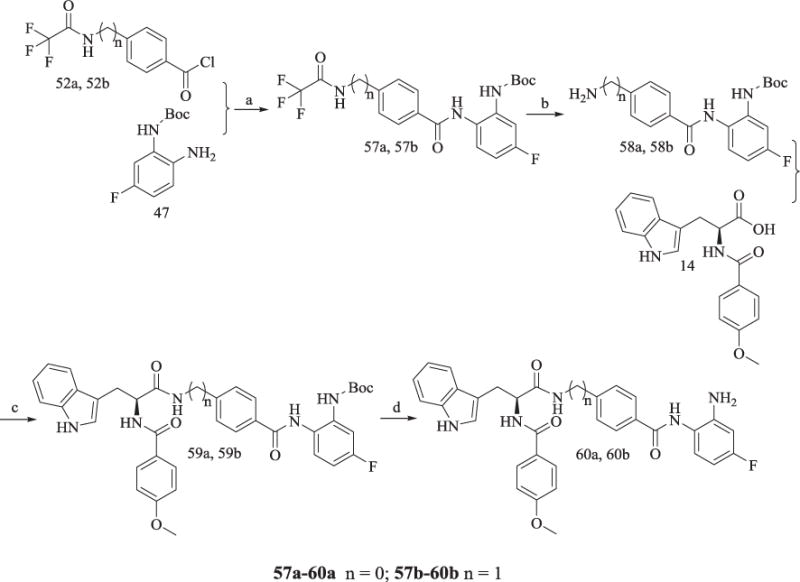
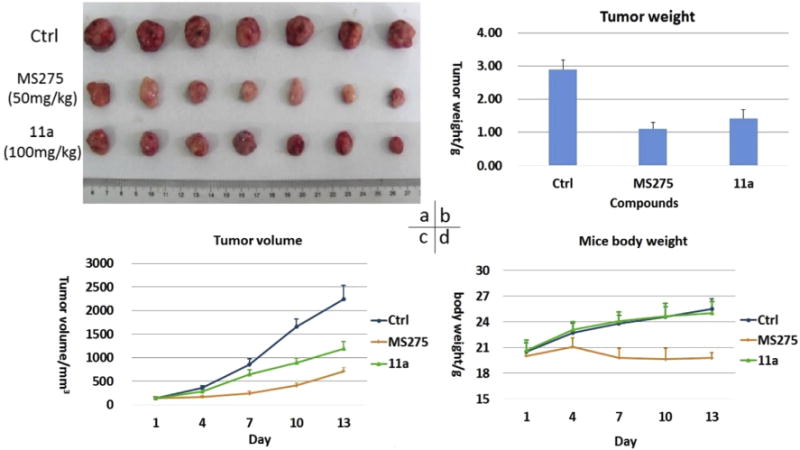
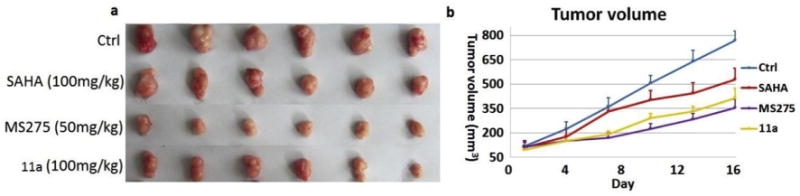
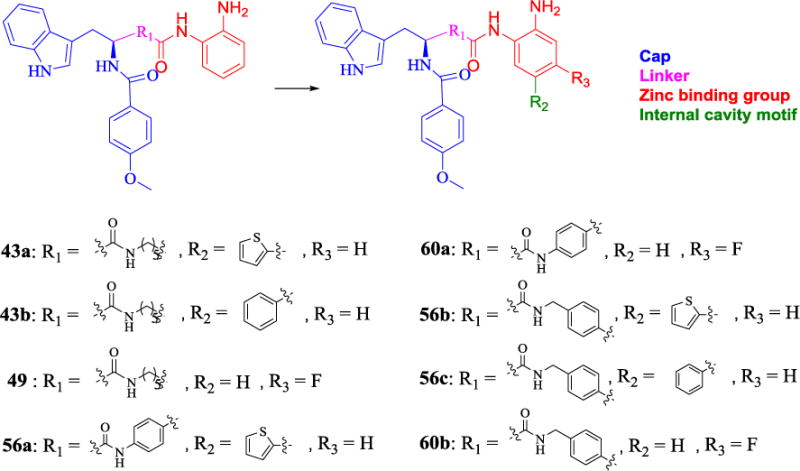
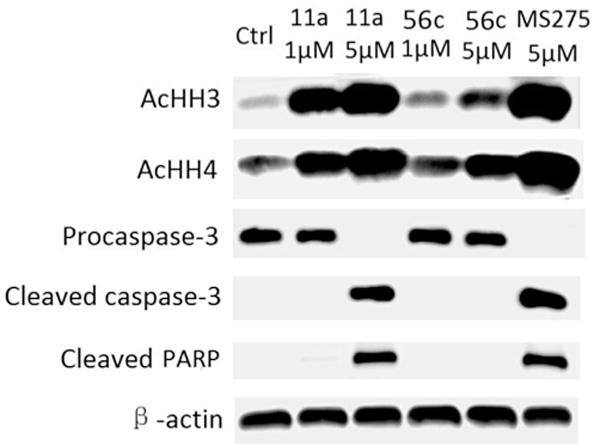
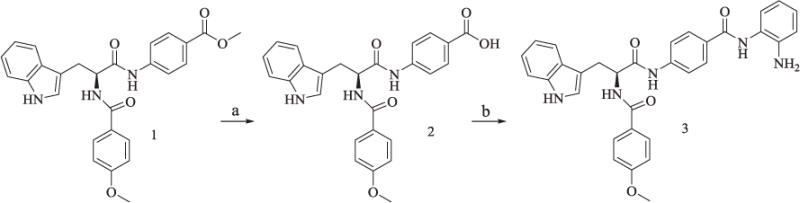
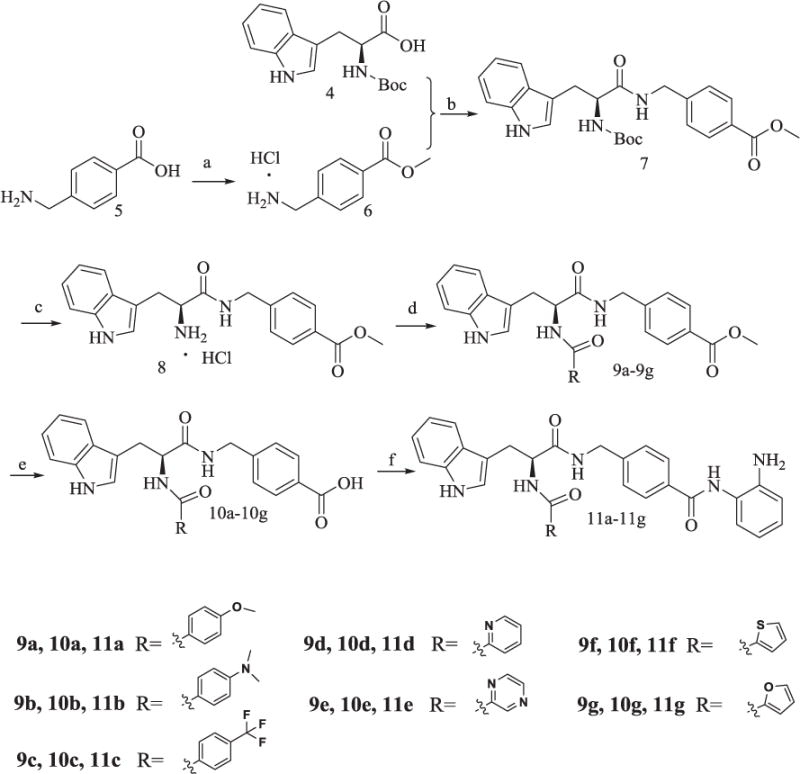
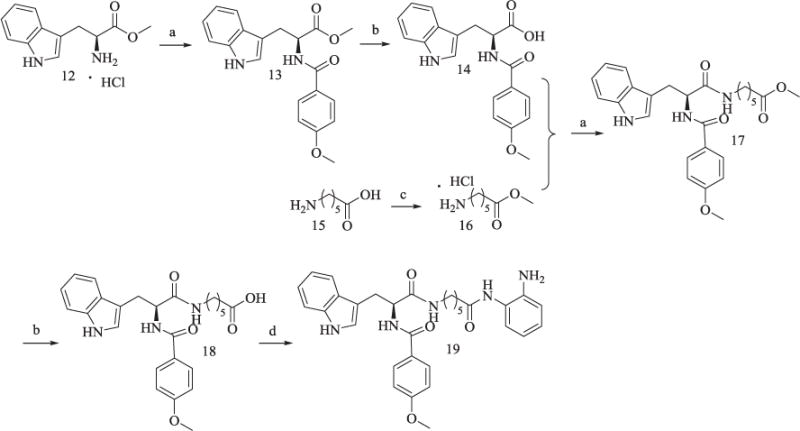
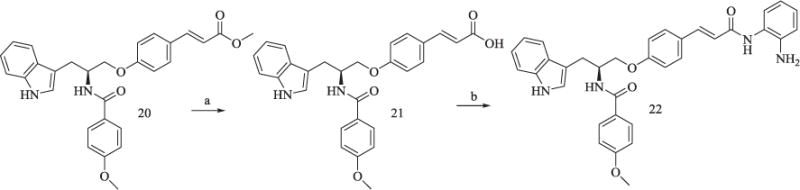
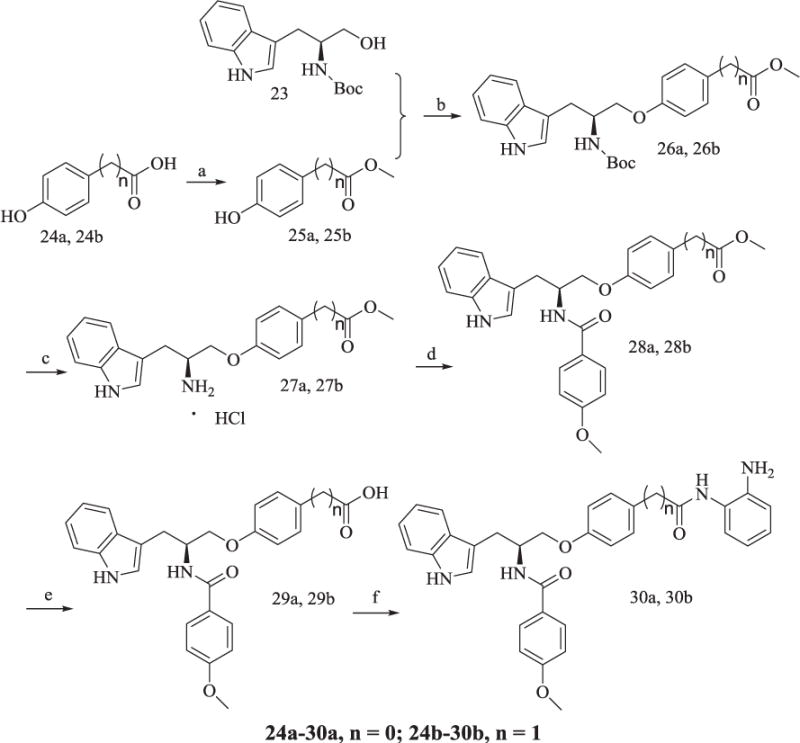
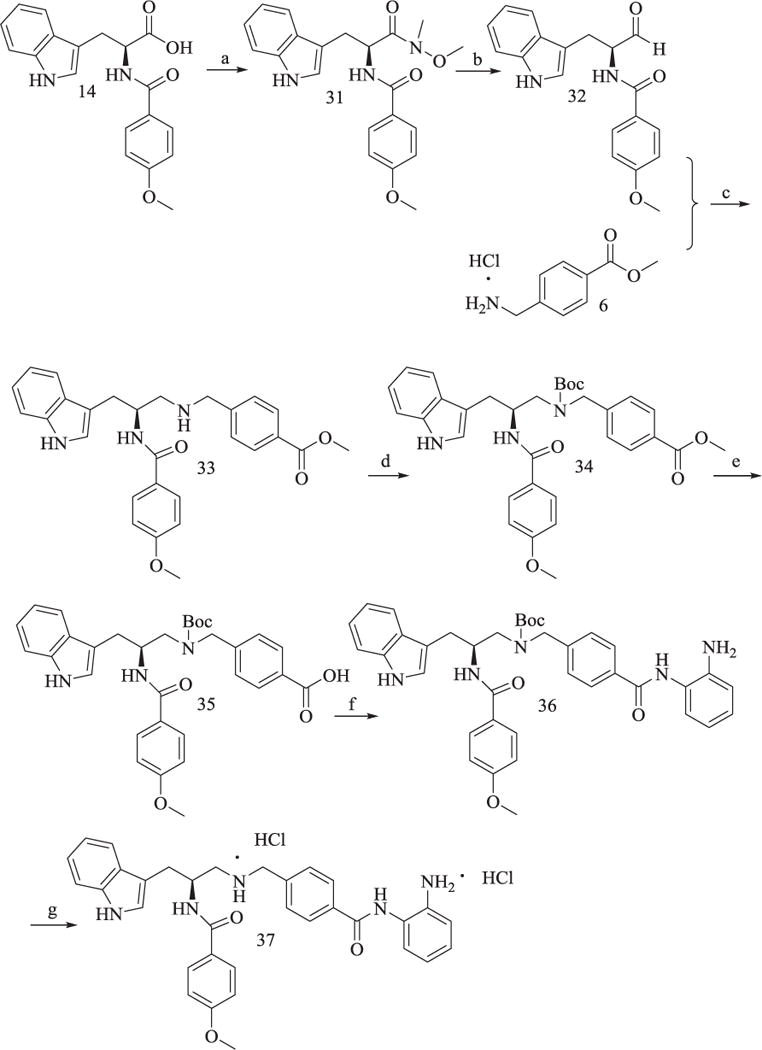
Previously, we reported the discovery of a series of N-hydroxycinnamamide-based HDAC inhibitors, among which compound 11y exhibited high HDAC1/3 selectivity. In this current study, structural derivatization of 11y led to a new series of benzamide based HDAC inhibitors. Most of the compounds exhibited high HDACs inhibitory potency. Compound 11a (with 4-methoxybenzoyl as N-substituent in the cap and 4-(aminomethyl) benzoyl as the linker group) exhibited selectivity against HDAC1 to some extent, and showed potent antiproliferative activity against several tumor cell lines. In vivo studies revealed that compound 11a displayed potent oral antitumor activity in both hematological tumor cell U937 xenograft model and solid tumor cell HCT116 xenograft model with no obvious toxicity. Further modification of benzamide 3, 11a and 19 afforded new thienyl and phenyl compounds (50a, 50b, 63a, 63b and 63c) with dramatic HDAC1 and HDAC2 dual selectivity, and the fluorine containing compound 56, with moderate HDAC3 selectivity.
此前,我们报道了一系列基于N-羟基肉桂酰胺的HDAC抑制剂的发现,其中化合物11y表现出对HDAC1/3的高选择性。在当前这项研究中,对11y进行结构衍生化得到了一系列基于苯甲酰胺的新型HDAC抑制剂。大多数化合物表现出较高的HDAC抑制活性。化合物11a(帽端的N-取代基为4-甲氧基苯甲酰基,连接基团为4-(氨甲基)苯甲酰基)在一定程度上表现出对HDAC1的选择性,并且对几种肿瘤细胞系显示出强大的抗增殖活性。体内研究表明,化合物11a在血液肿瘤细胞U937异种移植模型和实体肿瘤细胞HCT116异种移植模型中均表现出强大的口服抗肿瘤活性,且无明显毒性。对苯甲酰胺3、11a和19进行进一步修饰得到了具有显著HDAC1和HDAC2双重选择性的新型噻吩基和苯基化合物(50a、50b、63a、63b和63c),以及具有中等HDAC3选择性的含氟化合物56。