Srinivasan Mathangi, Bharali Dhruba J, Sudha Thangirala, Khedr Maha, Guest Ian, Sell Stewart, Glinsky Gennadi V, Mousa Shaker A
The Pharmaceutical Research Institute, Albany College of Pharmacy and Health Sciences, Rensselaer, NY, USA.
Division of Clinical Chemistry and Laboratory Medicine, Department of Clinical Pathology, Ain Shams University, Cairo, Egypt.
Oncotarget. 2017 Jun 13;8(24):38731-38742. doi: 10.18632/oncotarget.16317.
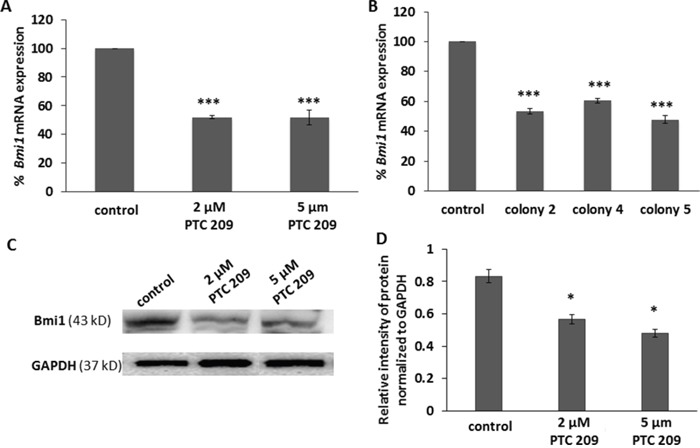
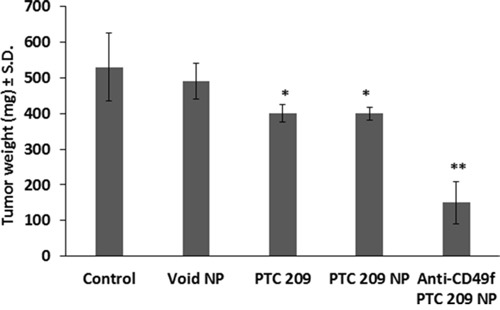
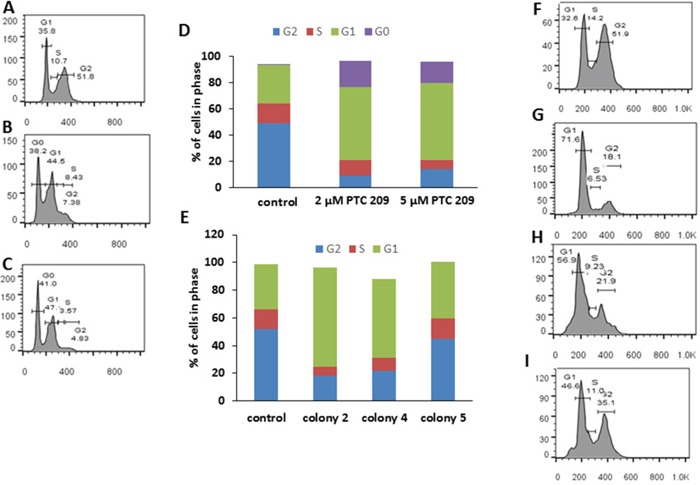
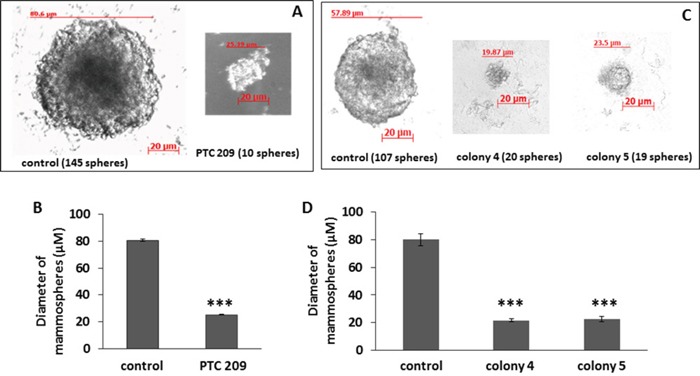
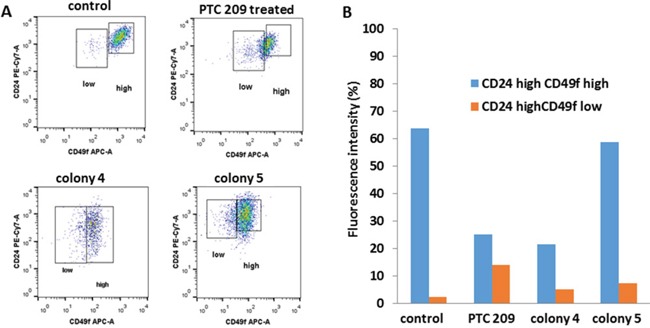
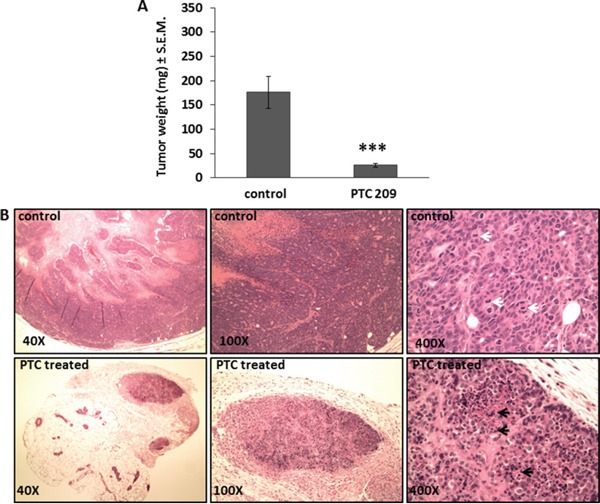
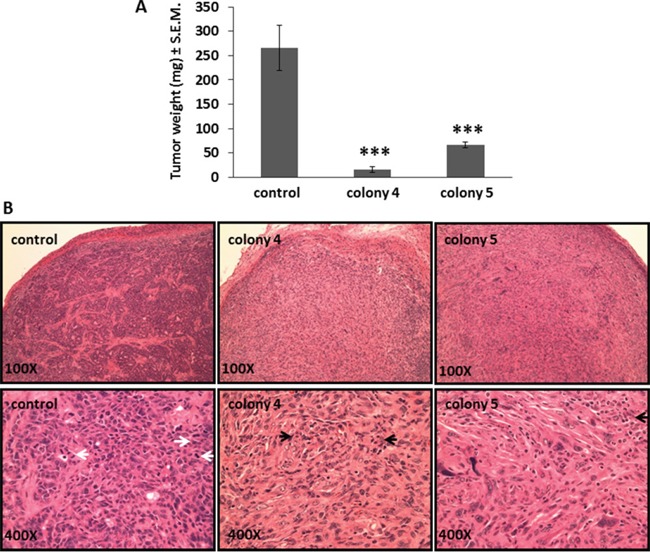
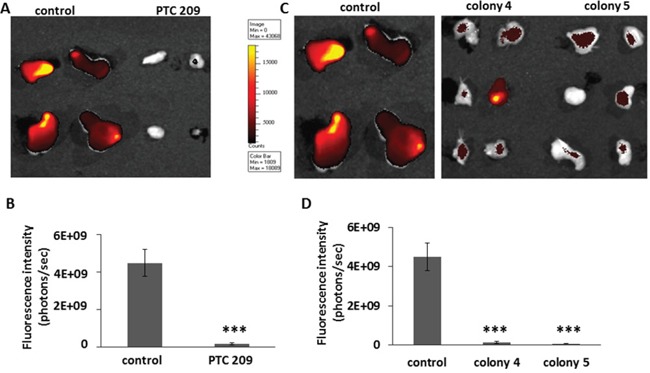
Targeting cancer stem cells during initial treatment is important to reduce incidence of recurrent disease. Bmi1 has been associated with cancer stem cell self-renewal and aggressive disease. The purpose of this study was to determine the effects of downregulation of Bmi1 in breast cancer stem cells in order to target and eliminate the stem cell population in the tumor mass. Bmi1 was downregulated using two approaches in the mouse breast cancer stem cell line FMMC 419II-a small molecule inhibitor (PTC 209) and stable transfection with a Bmi1 shRNA plasmid. The functional effect of Bmi1 downregulation was tested in vitro and in vivo. Each approach led to decreased Bmi1 expression that correlated with an inhibition of cancer stem cell properties in vitro including cell cycle arrest and reduced mammosphere forming potential, and a decrease in tumor mass in vivo after either intra-tumoral or systemic nanoparticle-targeted delivery of anti-Bmi1. These results show that inhibiting Bmi1 expression in breast cancer stem cells could be important for the complete elimination of tumor and potentially preventing disease relapse.
在初始治疗期间靶向癌症干细胞对于降低复发性疾病的发生率很重要。Bmi1与癌症干细胞的自我更新和侵袭性疾病有关。本研究的目的是确定下调Bmi1在乳腺癌干细胞中的作用,以便靶向并消除肿瘤块中的干细胞群体。在小鼠乳腺癌干细胞系FMMC 419II中使用两种方法下调Bmi1——一种小分子抑制剂(PTC 209)和用Bmi1 shRNA质粒进行稳定转染。在体外和体内测试了下调Bmi1的功能效果。每种方法都导致Bmi1表达降低,这与体外癌症干细胞特性的抑制相关,包括细胞周期停滞和乳腺球形成潜力降低,以及在瘤内或全身纳米颗粒靶向递送抗Bmi1后体内肿瘤块减小。这些结果表明,抑制乳腺癌干细胞中的Bmi1表达对于完全消除肿瘤并可能预防疾病复发可能很重要。