Max Planck Institute for Biophysical Chemistry, Research Group Molecular Physiology, Am Faßberg 11, D-37077 Göttingen, Germany.
Max Planck Institute for Biophysical Chemistry, Department of Molecular Developmental Biology, Am Faßberg 11, D-37077 Göttingen, Germany.
Sci Rep. 2017 Apr 19;7:46516. doi: 10.1038/srep46516.
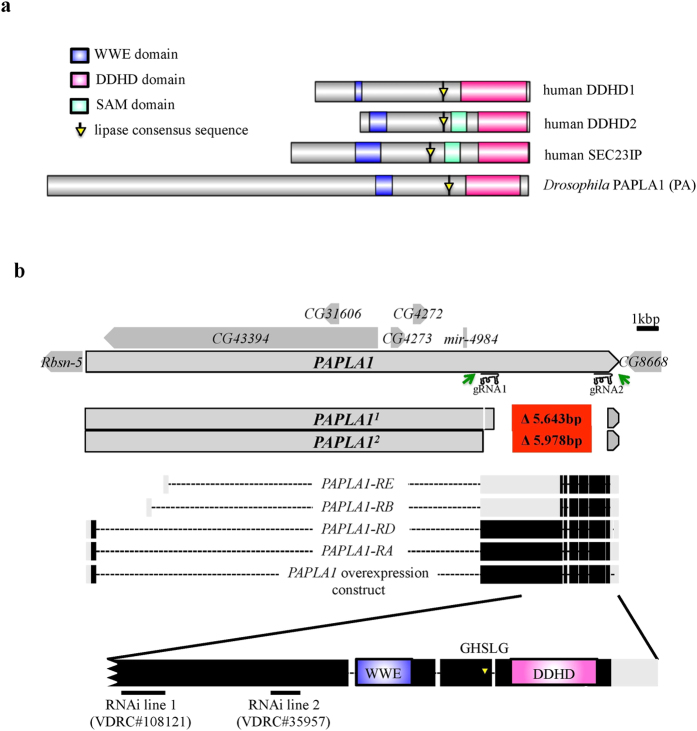
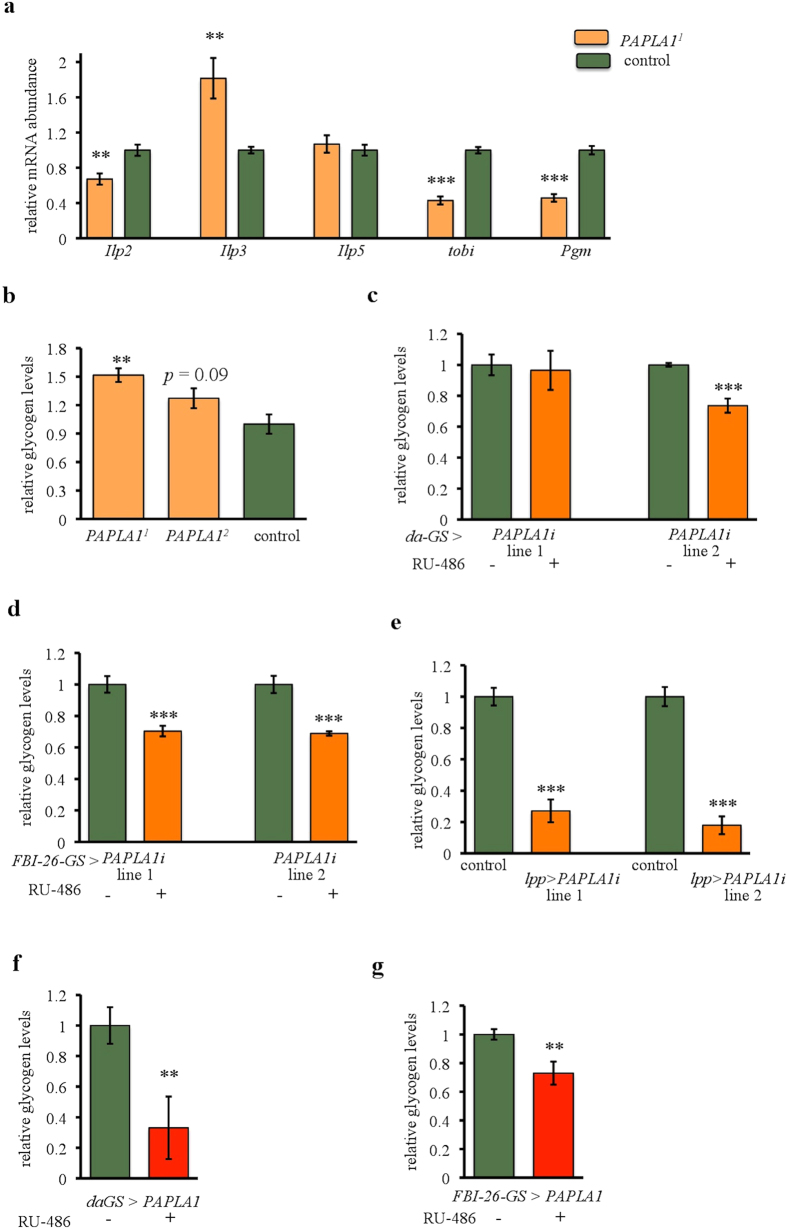
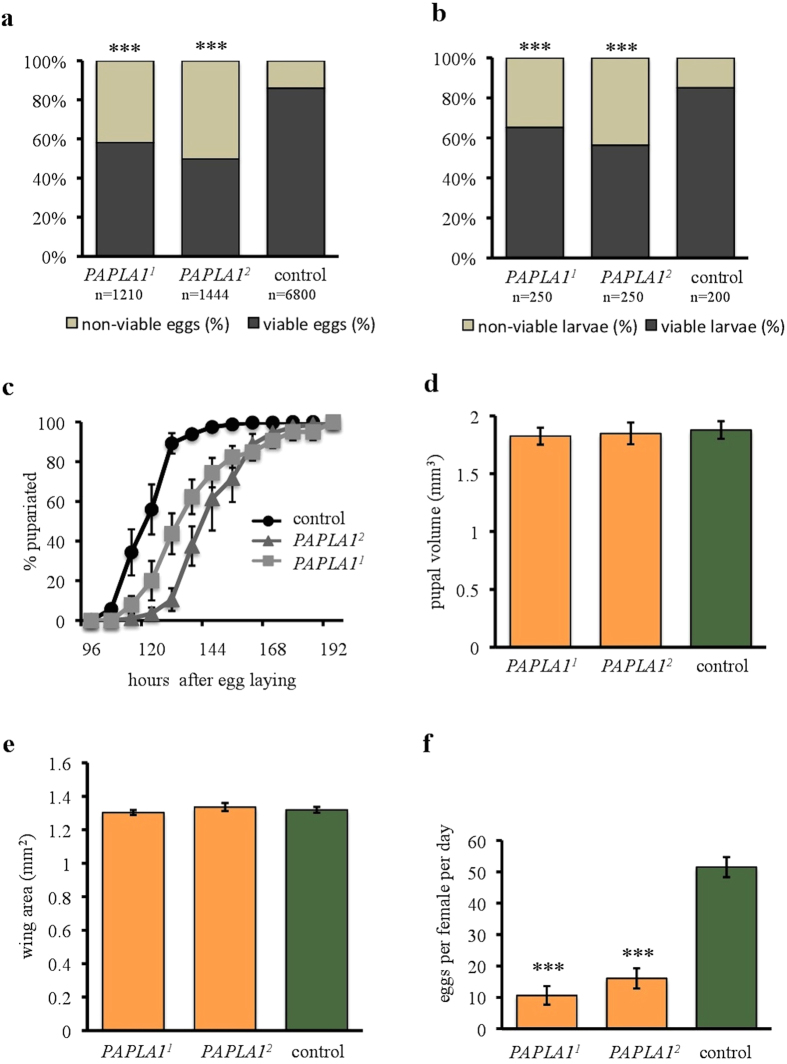
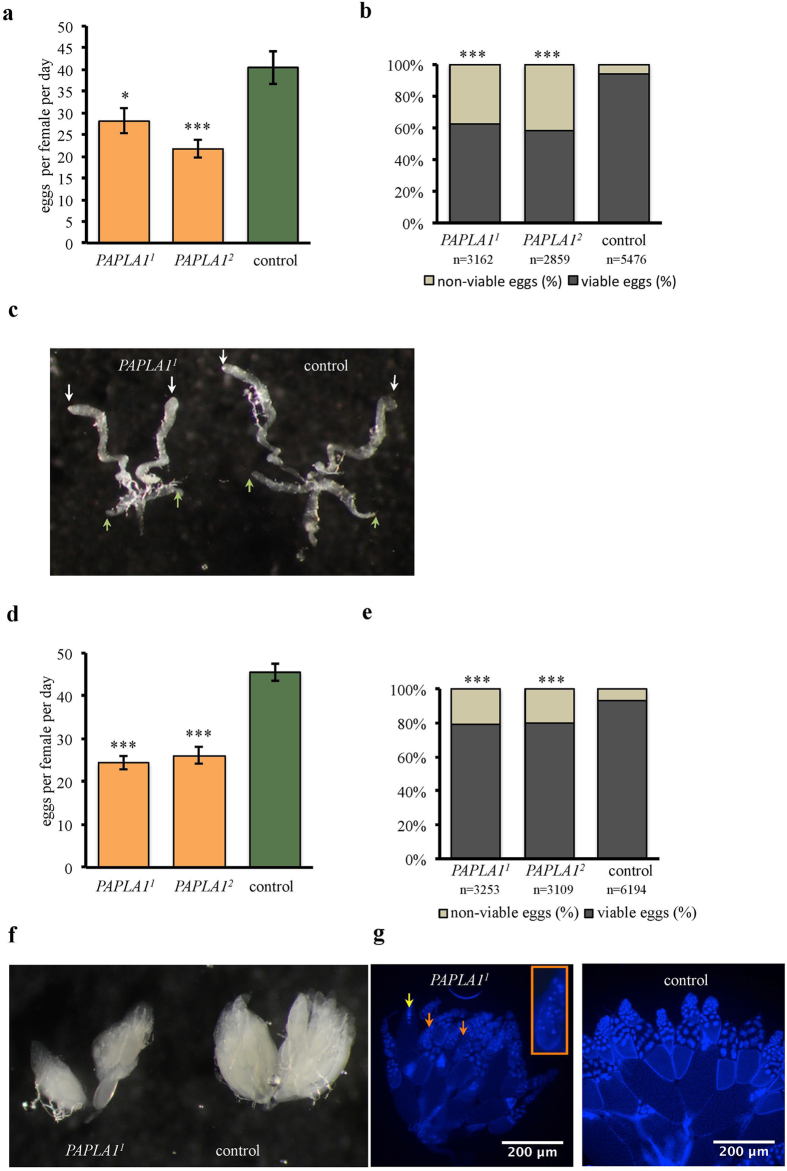
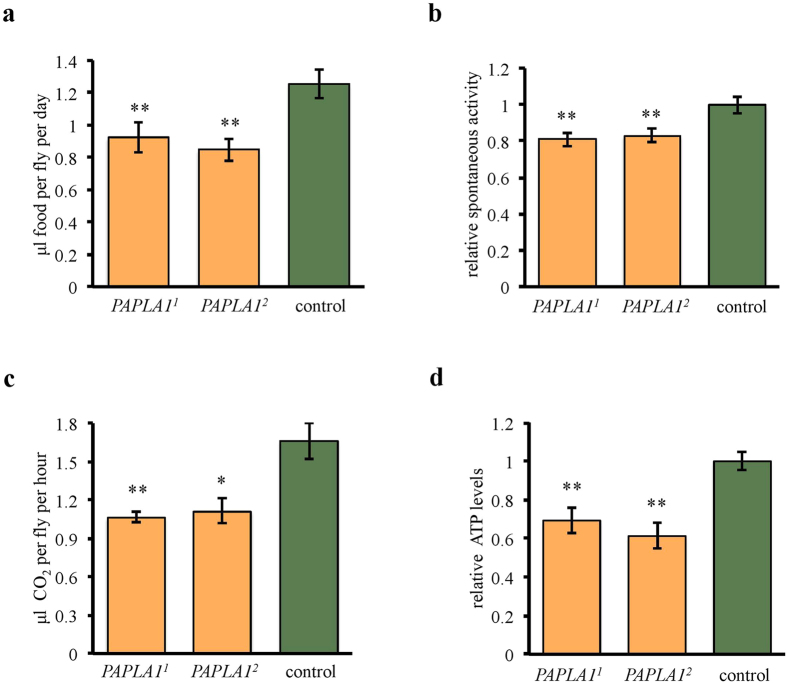
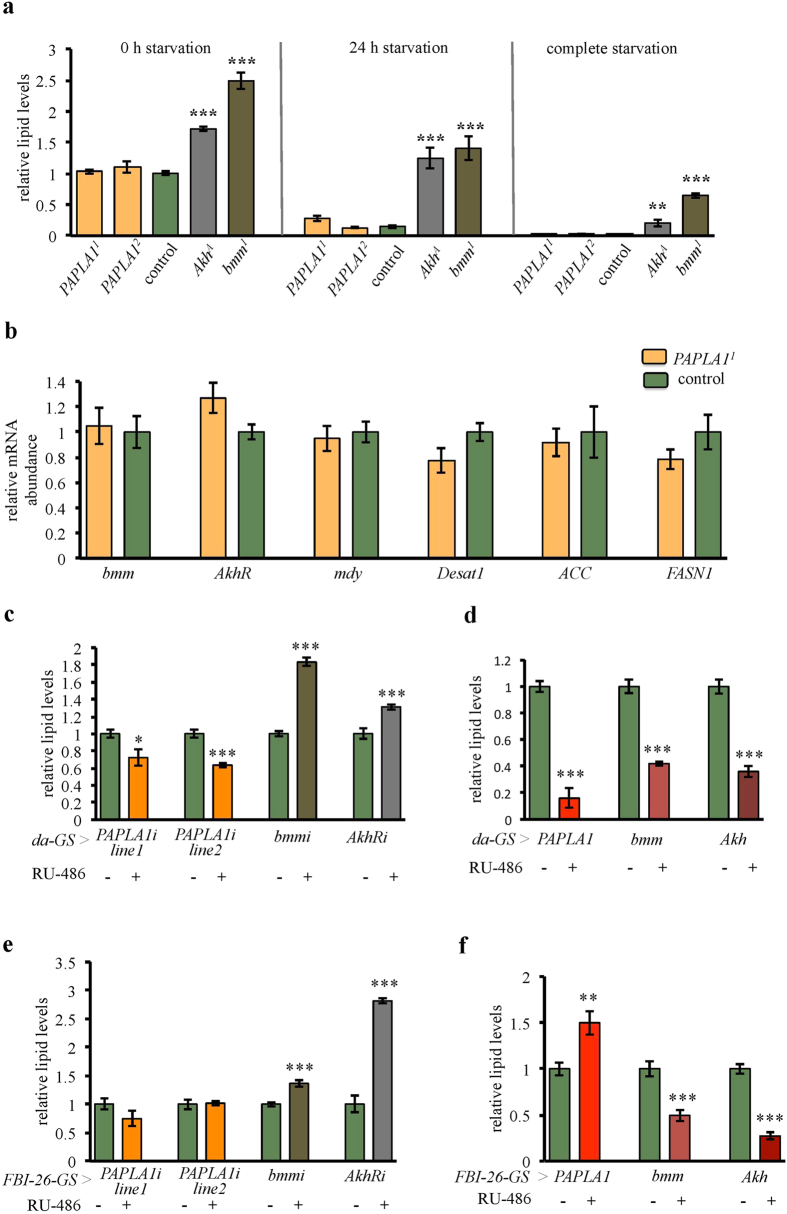
The human PAPLA1 phospholipase family is associated with hereditary spastic paraplegia (HSP), a neurodegenerative syndrome characterized by progressive spasticity and weakness of the lower limbs. Taking advantage of a new Drosophila PAPLA1 mutant, we describe here novel functions of this phospholipase family in fly development, reproduction, and energy metabolism. Loss of Drosophila PAPLA1 reduces egg hatchability, pre-adult viability, developmental speed, and impairs reproductive functions of both males and females. In addition, our work describes novel metabolic roles of PAPLA1, manifested as decreased food intake, lower energy expenditure, and reduced ATP levels of the mutants. Moreover, PAPLA1 has an important role in the glycogen metabolism, being required for expression of several regulators of carbohydrate metabolism and for glycogen storage. In contrast, global loss of PAPLA1 does not affect fat reserves in adult flies. Interestingly, several of the PAPLA1 phenotypes in fly are reminiscent of symptoms described in some HSP patients, suggesting evolutionary conserved functions of PAPLA1 family in the affected processes. Altogether, this work reveals novel physiological functions of PAPLA1, which are likely evolutionary conserved from flies to humans.
人类 PAPLA1 磷脂酶家族与遗传性痉挛性截瘫(HSP)有关,这是一种神经退行性综合征,其特征是下肢进行性痉挛和无力。利用一种新的果蝇 PAPLA1 突变体,我们在这里描述了这种磷脂酶家族在果蝇发育、繁殖和能量代谢中的新功能。果蝇 PAPLA1 的缺失降低了卵的孵化率、幼体存活率、发育速度,并损害了雌雄蝇的生殖功能。此外,我们的工作描述了 PAPLA1 的新的代谢作用,表现为食物摄入量减少、能量消耗降低以及突变体的 ATP 水平降低。此外,PAPLA1 在糖原代谢中起着重要作用,需要表达几种碳水化合物代谢调节剂和糖原储存。相比之下,PAPLA1 的缺失在成年果蝇中并不影响脂肪储备。有趣的是,果蝇中 PAPLA1 的几种表型与一些 HSP 患者描述的症状相似,这表明 PAPLA1 家族在受影响的过程中具有进化保守的功能。总之,这项工作揭示了 PAPLA1 的新的生理功能,这些功能可能在从果蝇到人类的进化过程中是保守的。