Zhang Kai, Lu Zipeng, Zhu Yi, Tian Lei, Zhang Jingjing, Xi Chunhua, Gao Wentao, Jiang Kuirong, Miao Yi
Pancreatic Center & Department of General Surgery, The First Affiliated Hospital of Nanjing Medical University, Nanjing 210029, Jiangsu, China.
Pancreas Institute of Nanjing Medical University, Nanjing 210029, Jiangsu, China.
Oncotarget. 2017 May 23;8(21):35154-35164. doi: 10.18632/oncotarget.16814.
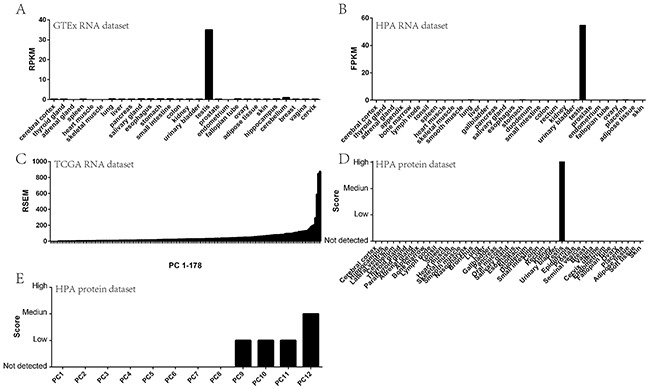
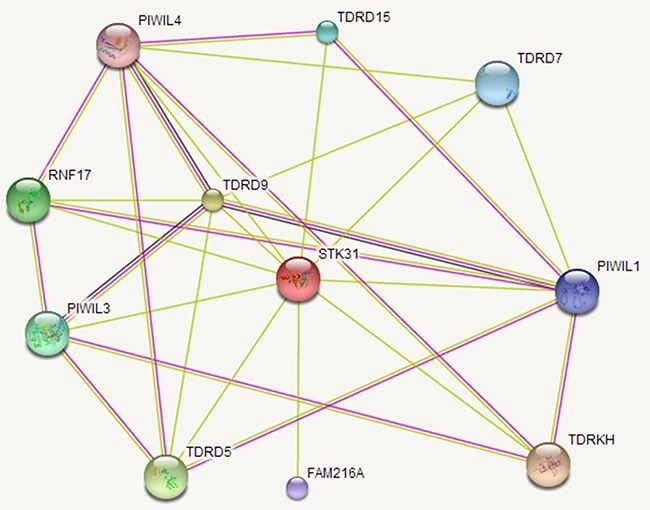
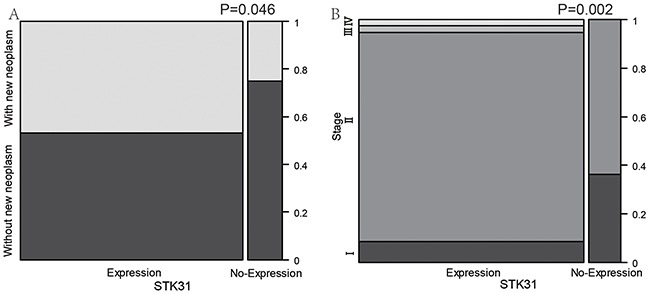
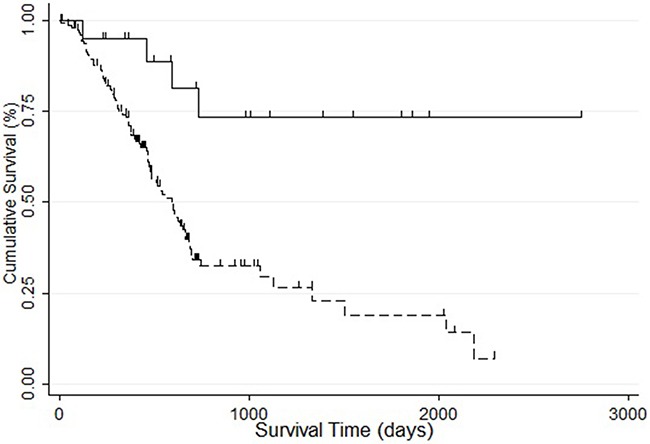
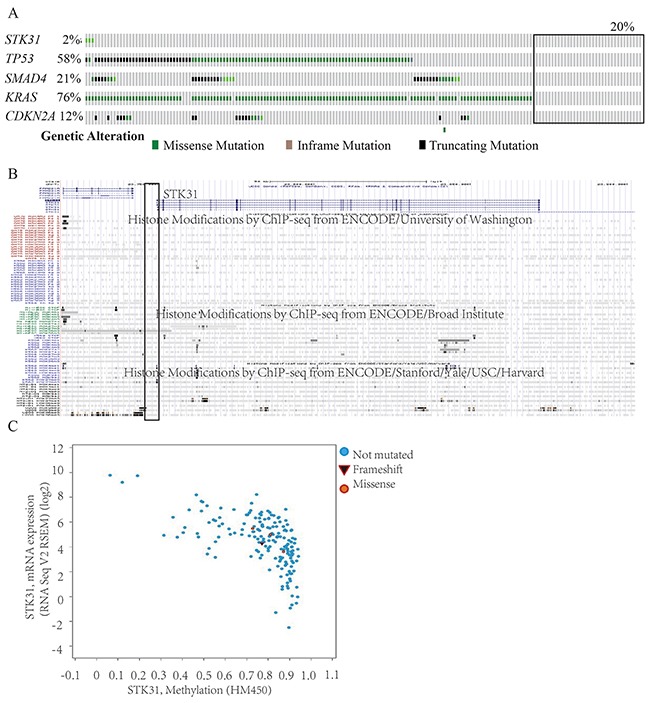
We aimed to identify STK31 as a cancer-testis (CT) gene and to explore its potential clinical value, regulatory mechanisms, and gene network in pancreatic cancer (PC). Gene expression data were generated from normal organ samples and pancreatic cancer samples from three public databases. STK31 expression patterns in normal and PC tissues were identified, and we explored its regulatory mechanisms. Gene ontology (GO) and pathway analyses of STK31-related genes were performed and an STK31 protein-protein interaction (PPI) network was constructed. STK31 was confirmed as a CT gene in PC and its expression was significantly higher in patients with new neoplasm compared with patients without new neoplasm (P = 0.046) and in more advanced pathologic stages than in earlier stages (P = 0.002); methylation level correlated negatively with STK31 expression. In total, 757 STK31-related genes were identified, and were significantly enriched in terms of polymorphisms and alternative splicings. The PPI network predicted that STK31 was physically associated with the PIWI (originally P-element Induced WImpy testis in Drosophila) and Tudor families.
我们旨在鉴定丝氨酸/苏氨酸蛋白激酶31(STK31)为一种癌-睾丸(CT)基因,并探索其在胰腺癌(PC)中的潜在临床价值、调控机制及基因网络。基因表达数据来自三个公共数据库中的正常器官样本和胰腺癌样本。确定了STK31在正常组织和胰腺癌组织中的表达模式,并探索了其调控机制。对与STK31相关的基因进行了基因本体(GO)和通路分析,并构建了STK31蛋白-蛋白相互作用(PPI)网络。STK31被确认为胰腺癌中的一种CT基因,与无新肿瘤患者相比,其在有新肿瘤患者中的表达显著更高(P = 0.046),且在病理分期较晚的患者中比早期患者更高(P = 0.002);甲基化水平与STK31表达呈负相关。总共鉴定出757个与STK31相关的基因,这些基因在多态性和可变剪接方面显著富集。PPI网络预测STK31与PIWI(最初在果蝇中为P-元件诱导的微小睾丸)和Tudor家族存在物理关联。