Department of Medical Laboratory Science BioTechnology, College of Medicine, National Cheng Kung University, Tainan, Taiwan; Department of Obstetrics and Gynecology, National Cheng-Kung University Hospital, Tainan, Taiwan.
Department of Medical Laboratory Science BioTechnology, College of Medicine, National Cheng Kung University, Tainan, Taiwan.
PLoS One. 2014 Mar 25;9(3):e93303. doi: 10.1371/journal.pone.0093303. eCollection 2014.
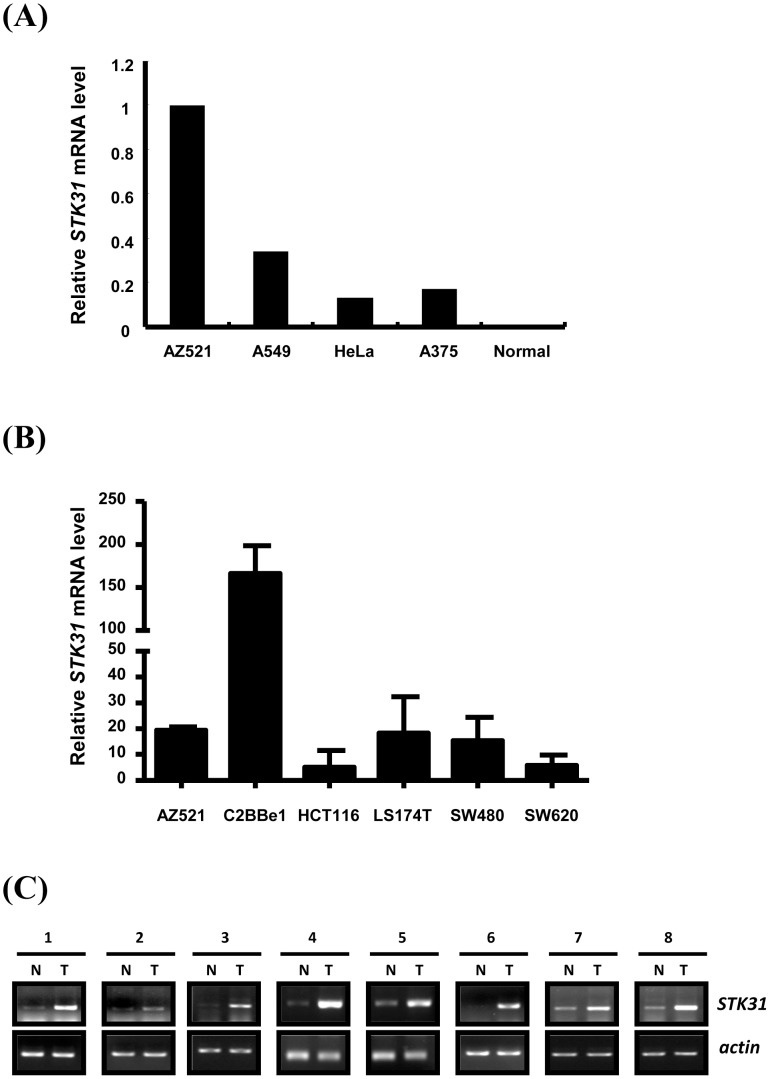
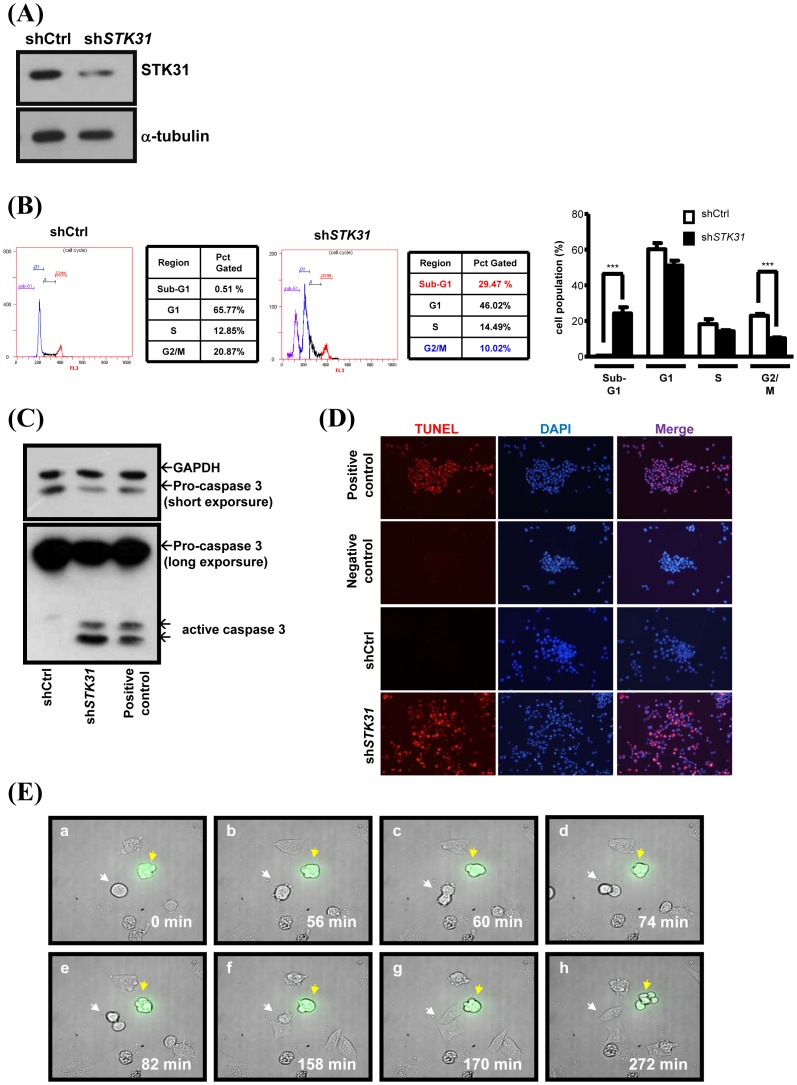
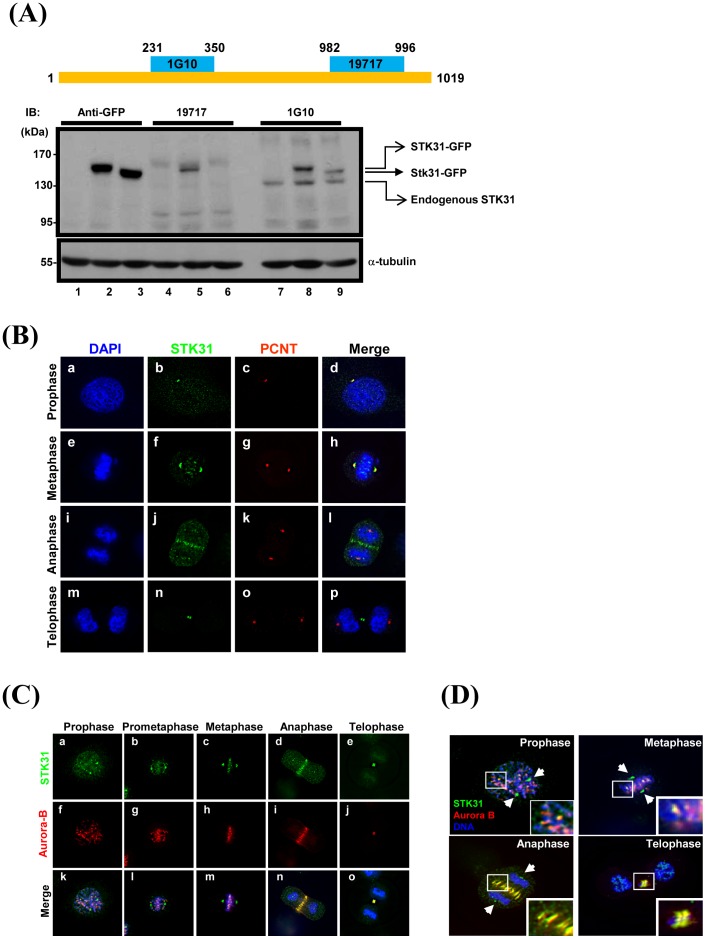
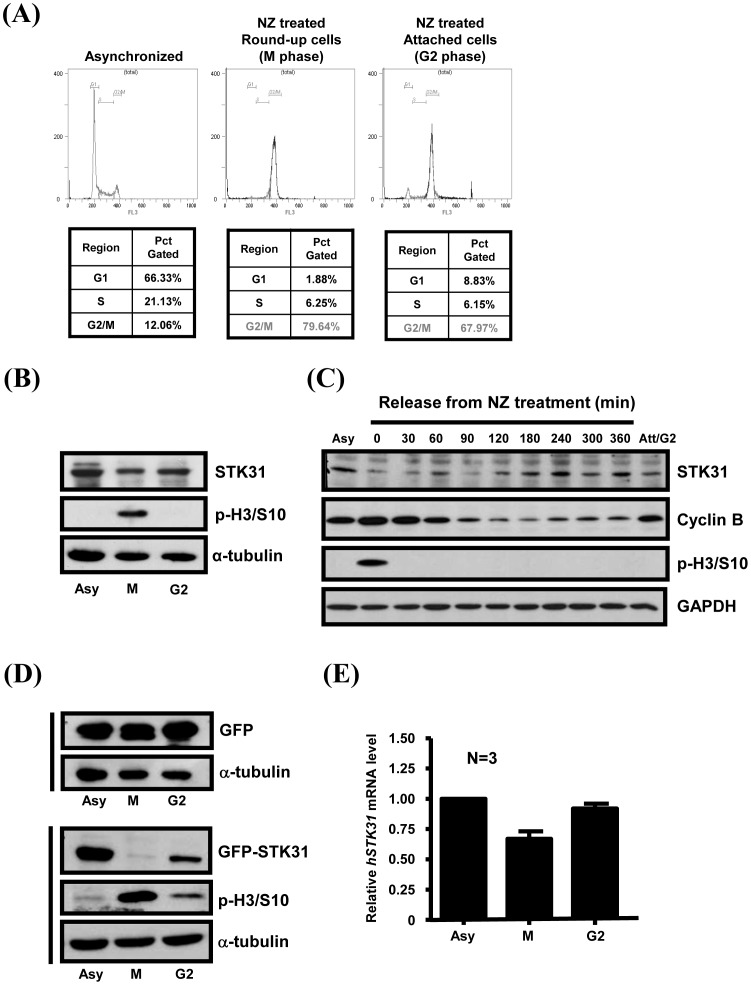
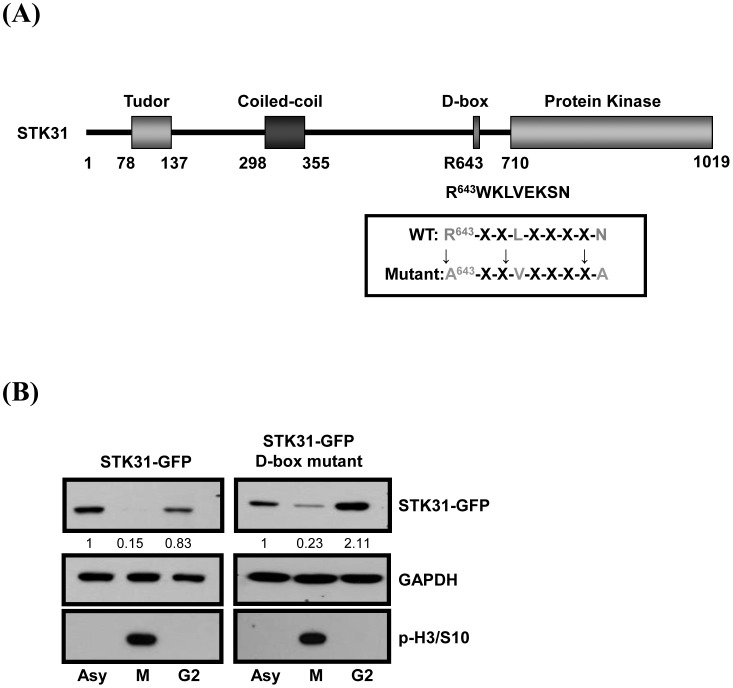
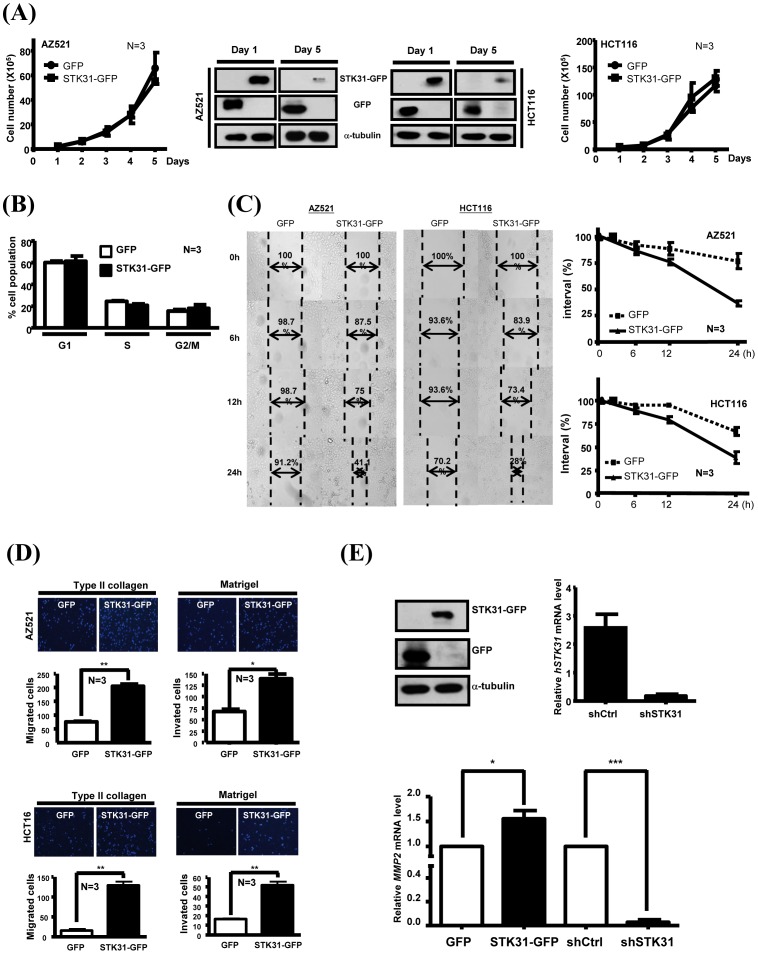
Serine/threonine kinase 31 (STK31) is one of the novel cancer/testis antigens for which its biological functions remain largely unclear. Here, we demonstrate that STK31 is overexpressed in many human colorectal cancer cell lines and tissues. STK31 co-localizes with pericentrin in the centrosomal region throughout all phases of the cell cycle. Interestingly, when cells undergo mitosis, STK31 also localizes to the centromeres, central spindle, and midbody. This localization behavior is similar to that of chromosomal passenger proteins, which are known to be the important players of the spindle assembly checkpoint. The expression of STK31 is cell cycle-dependent through the regulation of a putative D-box near its C-terminal region. Ectopically-expressed STK31-GFP increases cell migration and invasive ability without altering the proliferation rate of cancer cells, whereas the knockdown expression of endogenous STK31 by lentivirus-derived shRNA results in microtubule assembly defects that prolong the duration of mitosis and lead to apoptosis. Taken together, our results suggest that the aberrant expression of STK31 contributes to tumorigenicity in somatic cancer cells. STK31 might therefore act as a potential therapeutic target in human somatic cancers.
丝氨酸/苏氨酸激酶 31(STK31)是一种新型的癌症/睾丸抗原,其生物学功能尚不清楚。在这里,我们证明 STK31 在许多人结直肠癌细胞系和组织中过表达。STK31 在整个细胞周期的所有阶段都与中心体区域的中心粒共定位。有趣的是,当细胞进入有丝分裂时,STK31 也定位于着丝粒、中心纺锤体和中间体。这种定位行为类似于染色体乘客蛋白,已知它们是纺锤体组装检查点的重要参与者。通过调节其 C 末端附近的一个假定 D 盒,STK31 的表达具有细胞周期依赖性。过表达的 STK31-GFP 增加了癌细胞的迁移和侵袭能力,而不会改变癌细胞的增殖率,而慢病毒衍生的 shRNA 敲低内源性 STK31 的表达导致微管组装缺陷,延长有丝分裂时间并导致细胞凋亡。总之,我们的结果表明,STK31 的异常表达有助于体细胞癌细胞的肿瘤发生。因此,STK31 可能成为人类体细胞癌症的潜在治疗靶点。