
基于多胺的纳米载体Nano11047抗癌潜力的生化评估
Biochemical evaluation of the anticancer potential of the polyamine-based nanocarrier Nano11047.
作者信息
Murray-Stewart Tracy, Ferrari Elena, Xie Ying, Yu Fei, Marton Laurence J, Oupicky David, Casero Robert A
机构信息
The Sidney Kimmel Comprehensive Cancer Center at Johns Hopkins University, Baltimore, Maryland, United States of America.
Center for Drug Delivery and Nanomedicine, Department of Pharmaceutical Sciences, University of Nebraska Medical Center, Omaha, Nebraska, United States of America.
出版信息
PLoS One. 2017 Apr 19;12(4):e0175917. doi: 10.1371/journal.pone.0175917. eCollection 2017.
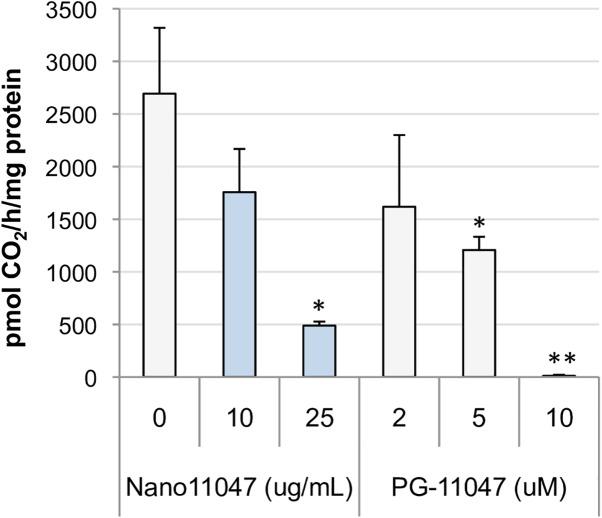
Synthesizing polycationic polymers directly from existing drugs overcomes the drug-loading limitations often associated with pharmacologically inert nanocarriers. We recently described nanocarriers formed from a first-generation polyamine analogue, bis(ethyl)norspermine (BENSpm), that could simultaneously target polyamine metabolism while delivering therapeutic nucleic acids. In the current study, we describe the synthesis and evaluation of self-immolative nanocarriers derived from the second-generation polyamine analogue PG-11047. Polyamines are absolutely essential for proliferation and their metabolism is frequently dysregulated in cancer. Through its effects on polyamine metabolism, PG-11047 effectively inhibits tumor growth in cancer cell lines of multiple origins as well as in human tumor mouse xenografts. Promising clinical trials have been completed verifying the safety and tolerance of this rotationally restricted polyamine analogue. We therefore used PG-11047 as the basis for Nano11047, a biodegradable, prodrug nanocarrier capable of targeting polyamine metabolism. Following exposure of lung cancer cell lines to Nano11047, uptake and intracellular degradation into the parent compound PG-11047 was observed. The release of PG-11047 highly induced the polyamine catabolic enzyme activities of spermidine/spermine N1-acetyltransferase (SSAT) and spermine oxidase (SMOX). By contrast, the activity of ornithine decarboxylase (ODC), a rate-limiting enzyme in polyamine biosynthesis and a putative oncogene, was decreased. Consequently, intracellular levels of the natural polyamines were depleted concurrent with tumor cell growth inhibition. This availability of Nano11047 as a novel drug form and potential nucleic acid delivery vector will potentially benefit and encourage future clinical studies.
直接从现有药物合成聚阳离子聚合物克服了通常与药理惰性纳米载体相关的载药限制。我们最近描述了由第一代多胺类似物双(乙基)去甲精胺(BENSpm)形成的纳米载体,它可以在递送治疗性核酸的同时靶向多胺代谢。在当前的研究中,我们描述了源自第二代多胺类似物PG - 11047的自毁型纳米载体的合成与评估。多胺对于细胞增殖绝对至关重要,并且它们的代谢在癌症中经常失调。通过其对多胺代谢的影响,PG - 11047有效抑制多种来源的癌细胞系以及人肿瘤小鼠异种移植模型中的肿瘤生长。已经完成了有前景的临床试验,验证了这种旋转受限多胺类似物的安全性和耐受性。因此,我们将PG - 11047用作Nano11047的基础,Nano11047是一种能够靶向多胺代谢的可生物降解前药纳米载体。肺癌细胞系暴露于Nano11047后,观察到其摄取并在细胞内降解为母体化合物PG - 11047。PG - 11047的释放高度诱导了亚精胺/精胺N1 - 乙酰转移酶(SSAT)和精胺氧化酶(SMOX)的多胺分解代谢酶活性。相比之下,鸟氨酸脱羧酶(ODC)的活性降低,ODC是多胺生物合成中的限速酶和假定的癌基因。因此,随着肿瘤细胞生长受到抑制,天然多胺的细胞内水平降低。Nano11047作为一种新型药物形式和潜在核酸递送载体的可用性可能会使未来的临床研究受益并受到鼓励。


 Zotero 插件