Department of Dermatology, University Medical Center of the Johannes Gutenberg-University Mainz, Langenbeckstraße 1, 55131 Mainz, Germany.
Institute of Molecular Biology (IMB), Ackermannweg 4, 55128 Mainz, Germany.
Biomolecules. 2023 Jul 6;13(7):1085. doi: 10.3390/biom13071085.
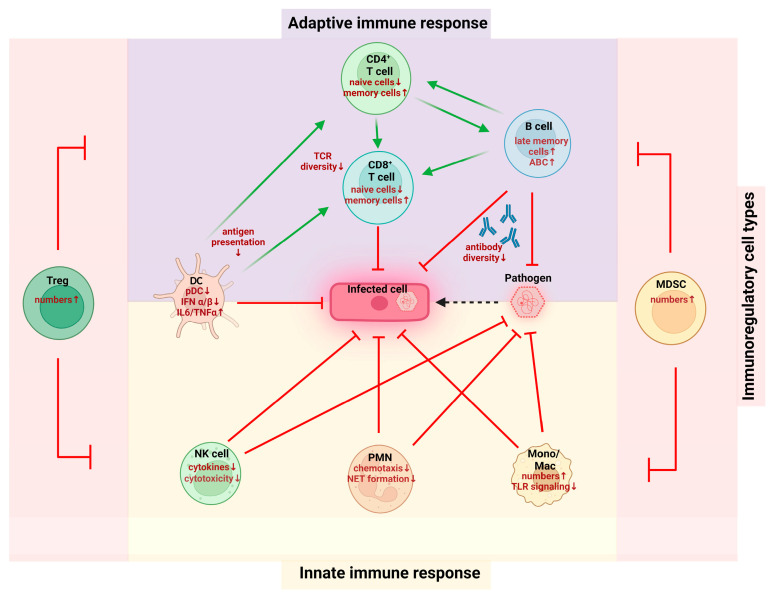
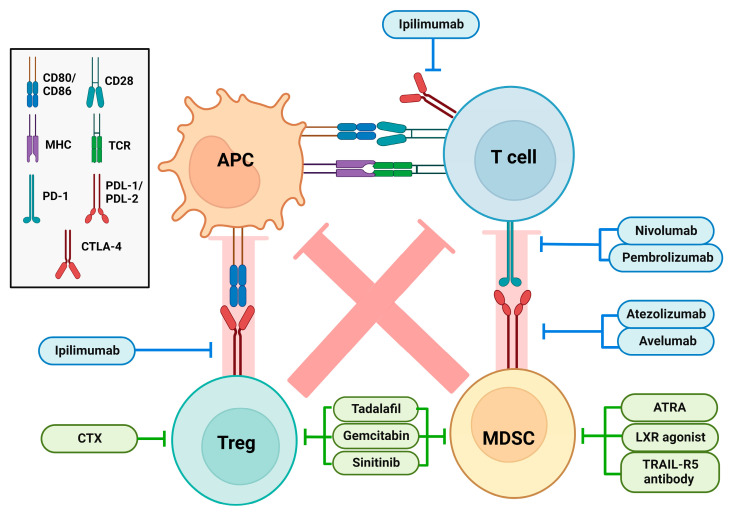
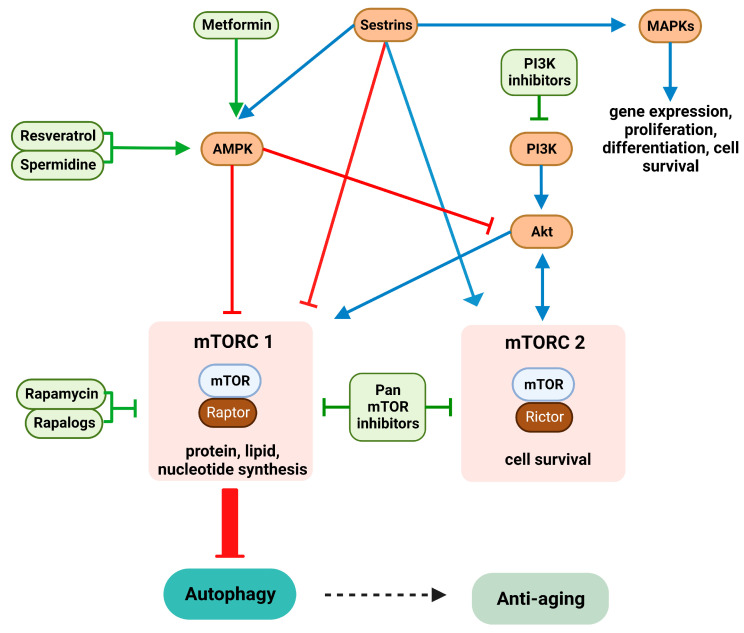
Aging attenuates the overall responsiveness of the immune system to eradicate pathogens. The increased production of pro-inflammatory cytokines by innate immune cells under basal conditions, termed inflammaging, contributes to impaired innate immune responsiveness towards pathogen-mediated stimulation and limits antigen-presenting activity. Adaptive immune responses are attenuated as well due to lowered numbers of naïve lymphocytes and their impaired responsiveness towards antigen-specific stimulation. Additionally, the numbers of immunoregulatory cell types, comprising regulatory T cells and myeloid-derived suppressor cells, that inhibit the activity of innate and adaptive immune cells are elevated. This review aims to summarize our knowledge on the cellular and molecular causes of immunosenescence while also taking into account senescence effects that constitute immune evasion mechanisms in the case of chronic viral infections and cancer. For tumor therapy numerous nanoformulated drugs have been developed to overcome poor solubility of compounds and to enable cell-directed delivery in order to restore immune functions, e.g., by addressing dysregulated signaling pathways. Further, nanovaccines which efficiently address antigen-presenting cells to mount sustained anti-tumor immune responses have been clinically evaluated. Further, senolytics that selectively deplete senescent cells are being tested in a number of clinical trials. Here we discuss the potential use of such drugs to improve anti-aging therapy.
衰老大体上削弱了免疫系统清除病原体的整体反应能力。固有免疫细胞在基础条件下产生过多的促炎细胞因子,称为炎症衰老,这有助于固有免疫对病原体介导的刺激的反应受损,并限制抗原呈递活性。适应性免疫反应也会减弱,因为幼稚淋巴细胞数量减少,它们对抗原特异性刺激的反应能力受损。此外,抑制固有和适应性免疫细胞活性的免疫调节细胞类型(包括调节性 T 细胞和髓系来源的抑制细胞)的数量增加。本综述旨在总结我们对免疫衰老的细胞和分子原因的认识,同时也考虑到衰老效应,这些效应构成了慢性病毒感染和癌症情况下的免疫逃避机制。为了进行肿瘤治疗,已经开发了许多纳米制剂药物来克服化合物的溶解度差,并实现细胞定向递送来恢复免疫功能,例如通过解决失调的信号通路。此外,纳米疫苗能够有效地将抗原呈递细胞靶向以产生持续的抗肿瘤免疫反应,已在临床上进行了评估。此外,正在多项临床试验中测试选择性消耗衰老细胞的衰老细胞消除剂。在这里,我们讨论了这些药物在改善抗衰老治疗中的潜在用途。