Shanshan Yu, Beibei Jiang, Li Tan, Minna Gao, Shipeng Lei, Li Peng, Yong Zhao
Department of Pathology, Chongqing Medical UniversityChongqing, China.
Molecular Medical Laboratory, Chongqing Medical UniversityChongqing, China.
Front Cell Neurosci. 2017 Apr 5;11:99. doi: 10.3389/fncel.2017.00099. eCollection 2017.
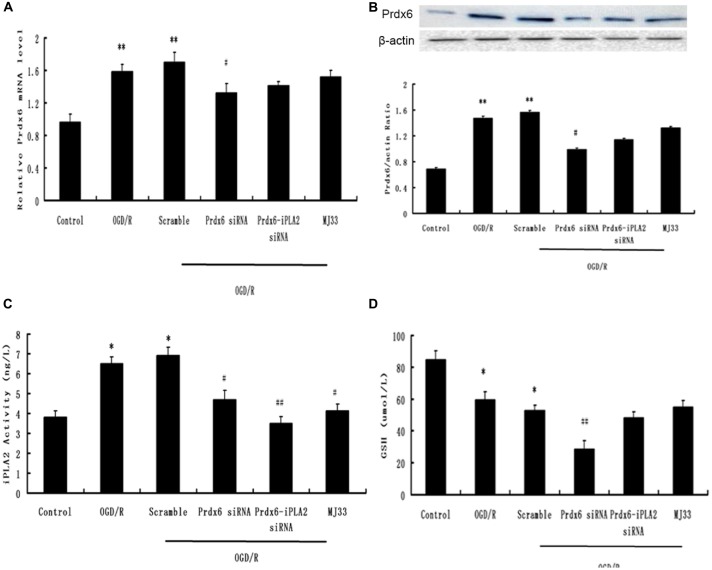
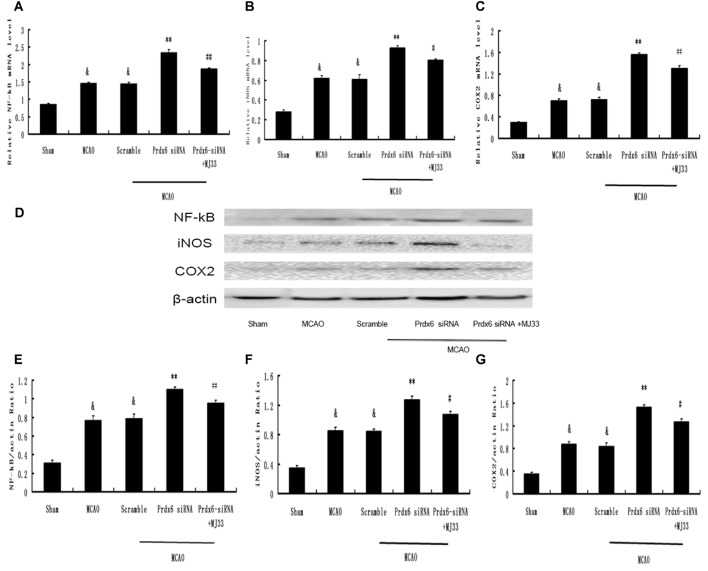
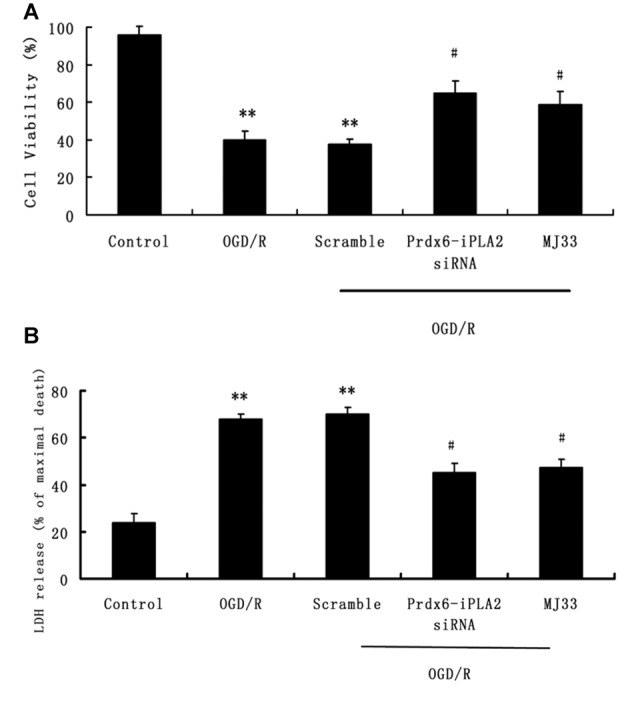
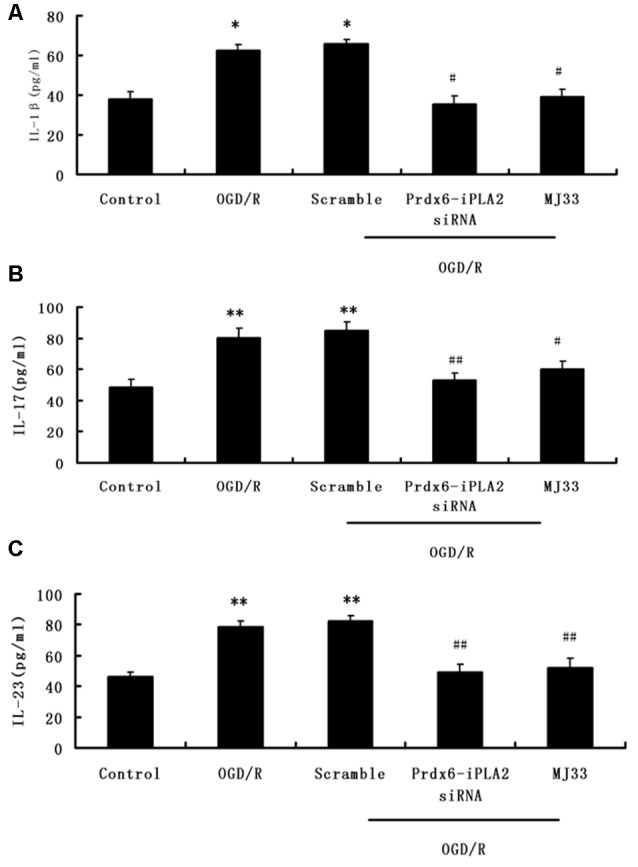
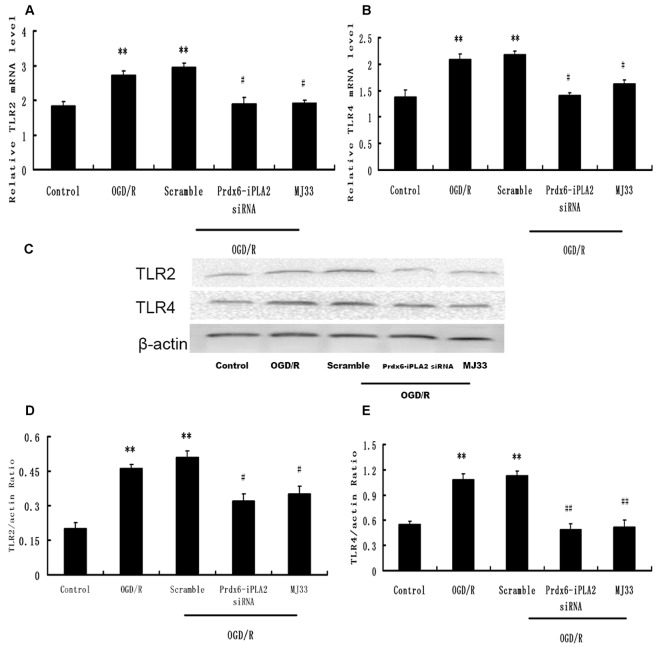
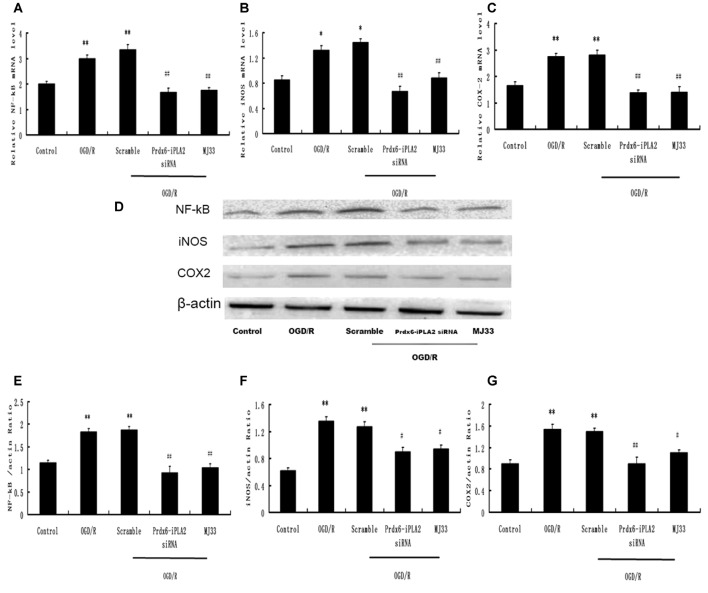
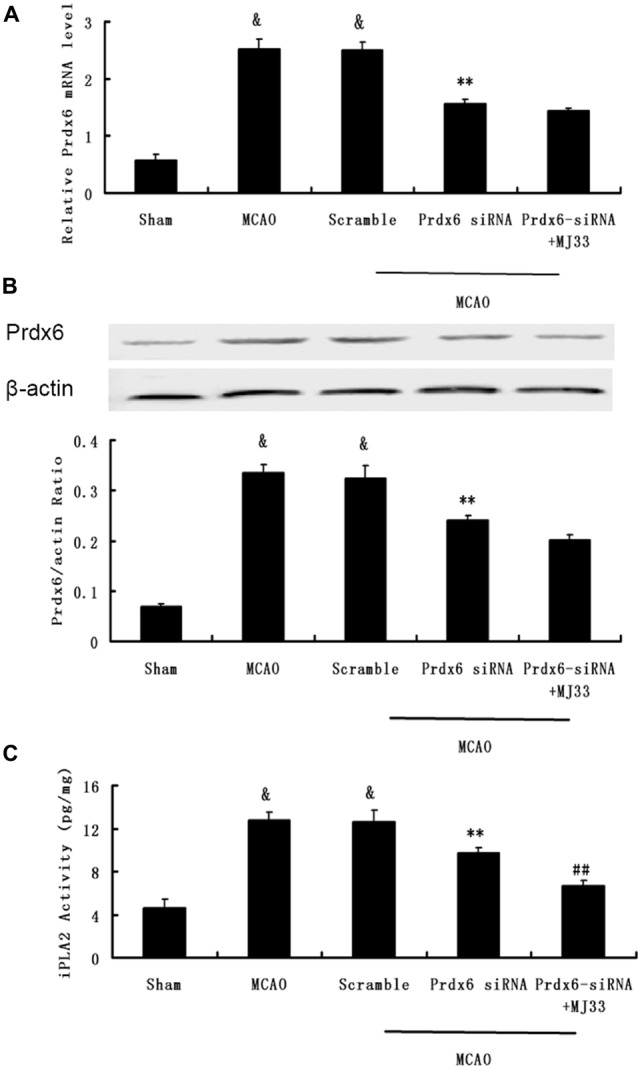
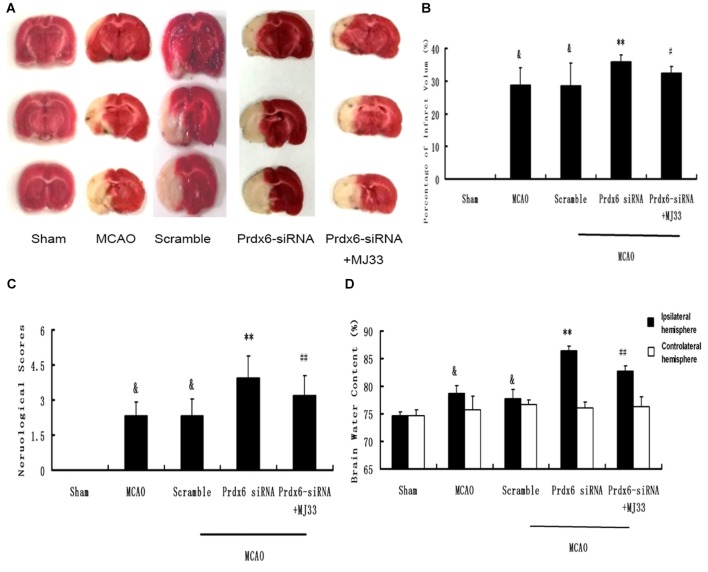
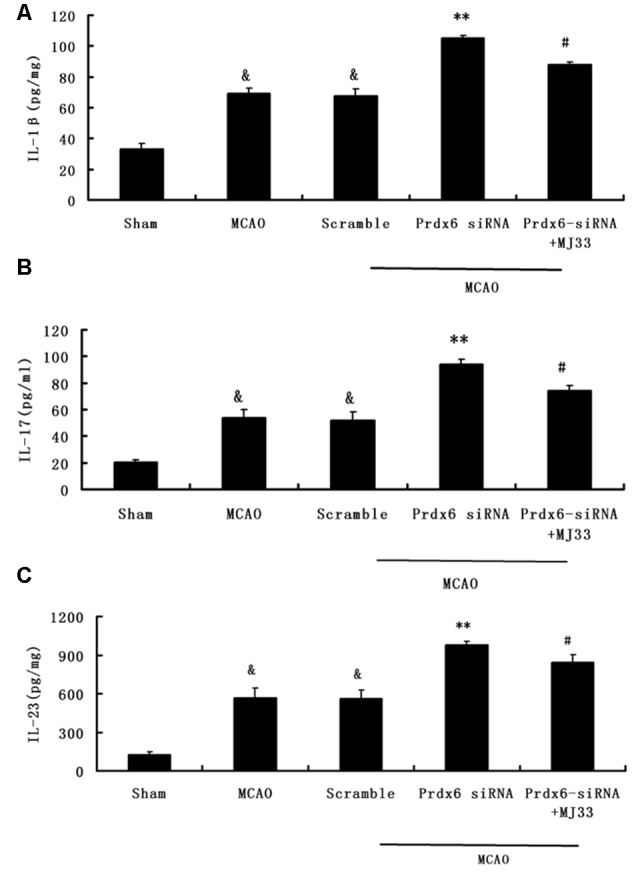
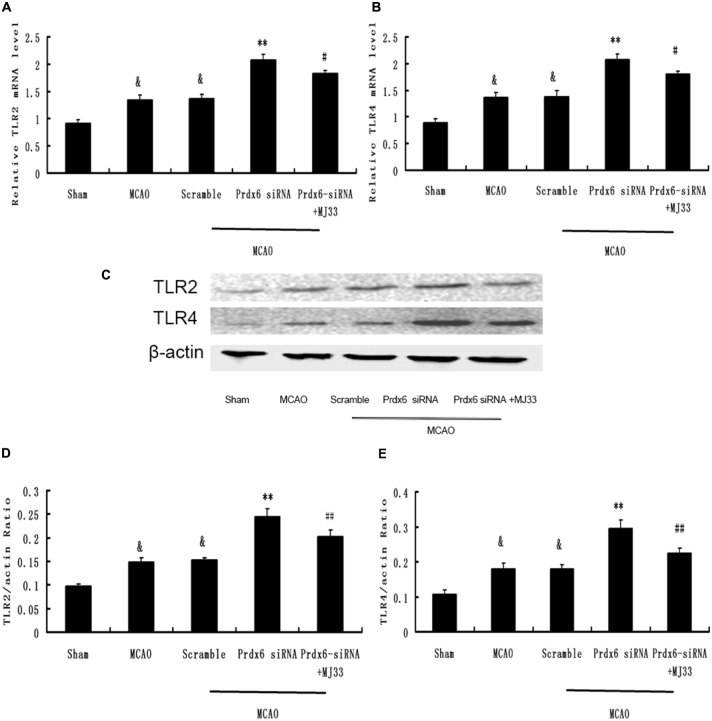
Microglia-mediated inflammation is an important step in the progression of cerebral ischemia/reperfusion injury and the associated production of receptors of immunomoudulation, including Toll-like receptors (TLRs). Peroxiredoxin 6 (Prdx6) has been demonstrated as the endogenous antioxidant protein for its peroxidase properties. However, the role of the independent phospholipase A2 (iPLA2) activity of Prdx6 in stroke has not been well studied. In this study, we evaluated whether blocking the calcium-iPLA2 activity of Prdx6 using siRNA and inhibitors (1-hexadecyl-3-(trifluoroethgl)-sn-glycerol-2 phosphomethanol, MJ33) would have a critical effect on inflammatory brain damage. We conducted oxygen-glucose deprivation (OGD)/recovery (R) and middle cerebral artery occlusion (MCAO) in a microglia/neuron co-culture system and in rats. , we found that Prdx6-iPLA2 activity was associated with the secretion of neurotoxic inflammatory mediators interleukin1β (IL-1β), interleukin-17 (IL-17) and interleukin-23 (IL-23) and elevated expression of Toll-like receptor 2/4 (TLR2/4), leading to the formation of nuclear factor-kappa B (NF-κB), inducible nitric oxide synthase (iNOS) and cyclooxygenase-2 (COX-2) in microglial cells. , combined treatment with Prdx6-iPLA2 activity inhibitor MJ33 showed a greater diminution in neurologic deficits, cerebral infarction, brain water content and inflammatory molecules than Prdx6-siRNA treatment alone. Our findings provide new insight into Prdx6-iPLA2 function in the brain. Inhibition of Prdx6-iPLA2 activity by gene therapy and/or pharmacology may constitute a promising new therapeutic approach to the treatment of stroke.
小胶质细胞介导的炎症是脑缺血/再灌注损伤进展以及包括Toll样受体(TLR)在内的免疫调节受体产生的重要步骤。过氧化物酶体增殖物激活受体6(Prdx6)因其过氧化物酶特性已被证明是内源性抗氧化蛋白。然而,Prdx6的独立磷脂酶A2(iPLA2)活性在中风中的作用尚未得到充分研究。在本研究中,我们评估了使用小干扰RNA(siRNA)和抑制剂(1-十六烷基-3-(三氟乙基)-sn-甘油-2-磷酸甲醇,MJ33)阻断Prdx6的钙-iPLA2活性是否会对炎性脑损伤产生关键影响。我们在小胶质细胞/神经元共培养系统和大鼠中进行了氧-葡萄糖剥夺(OGD)/恢复(R)和大脑中动脉闭塞(MCAO)实验。我们发现,Prdx6-iPLA2活性与神经毒性炎性介质白细胞介素1β(IL-1β)、白细胞介素-17(IL-17)和白细胞介素-23(IL-23)的分泌以及小胶质细胞中Toll样受体2/4(TLR2/4)的表达升高有关,导致核因子-κB(NF-κB)、诱导型一氧化氮合酶(iNOS)和环氧化酶-2(COX-2)的形成。此外,与单独使用Prdx6-siRNA治疗相比,Prdx6-iPLA2活性抑制剂MJ33联合治疗在神经功能缺损、脑梗死、脑含水量和炎性分子方面的减少更为显著。我们的研究结果为Prdx6-iPLA2在大脑中的功能提供了新的见解。通过基因治疗和/或药理学抑制Prdx6-iPLA2活性可能构成一种有前景的中风治疗新方法。