Zanato Silvia, Traverso Annalisa, Tremolada Marta, Sinatora Francesco, Porreca Alessio, Pozziani Giorgio, Di Florio Nicoletta, Capello Fabia, Marzollo Antonio, Tumino Manuela, Cattelan Chiara, Basso Giuseppe, Messina Chiara
Psychiatric Unit, Department of Women's and Children's Health, University Hospital of PaduaPadua, Italy.
Department of Developmental and Social Psychology, University of PaduaPadua, Italy.
Front Psychol. 2017 Apr 5;8:272. doi: 10.3389/fpsyg.2017.00272. eCollection 2017.
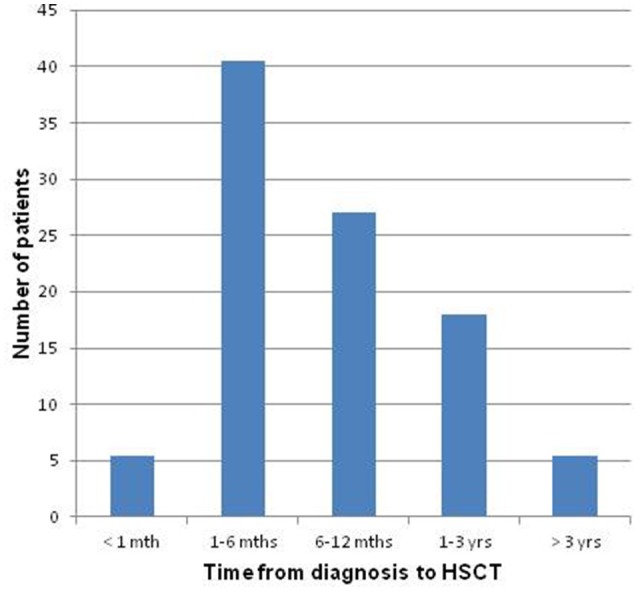
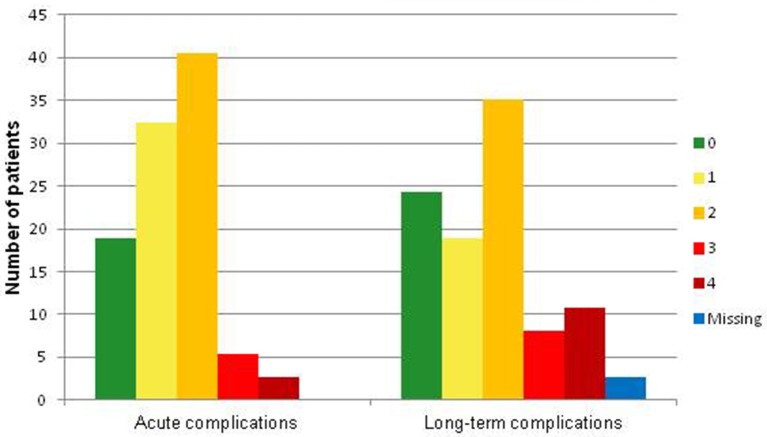
Data about psychosocial sequelae of childhood Hematopoietic Stem Cell Transplantation (HSCT) are limited and the association with a specific donor type or other medical factors is largely unknown (Chang et al., 2012). The aim of the present study was to compare the psychological aspects of pediatric HSCT survivors with healthy peers. A secondary aim was to detect whether parents and children differed in the perception of mental health status. The influence of medical factors on psychological status was also examined. Thirty seven HSCT survivors (23 males) with a mean age of 14.4 years ( = 3.03; range 8.16-18.33) were recruited. Twenty-six patients underwent an allogenic HSCT (matched unrelated donor, = 20; matched sibling donor, = 6) and 11 patients received an autologous HSCT. The children psychological aspects were assessed using the Youth Self Report (YSR) (Achenbach and Rescorla, 2001) and compared to a group of matched healthy peers. At the same time, parents were requested to complete the Child Behavior Checklist 6-18 (Achenbach and Rescorla, 2001). Medical and socio-demographic data were also collected. HSCT survivors reported significantly higher levels of somatic complains ( = 3.14; = 0.004; mean = 3.1) when compared to healthy peers (mean = 1.5). The parent CBCL scores on "child total competence" exceeded the normative clinical cutoff in 48.6% cases. Inter-rater agreement between parent and patient reports was present only in three scales: total competence score ( = 0.06, = 0.002), somatic complaints ( = 0.21, = 0.003) and attention problems ( = 0.13; = 0.02). According to Ancova models, internalizing problems were more frequent in HSCT from family donors ( = 3.13; = 0.06) or in the presence of acute complications ( = 11.95; = 0.003). In contrast to the perception of parents, pediatric HSCT survivors reported good psychological health. However, they complained about more somatic problems as compared with healthy peers. Medical aspects such as donor source and the presence of acute complications should be taken into consideration for the psychological approach in order to improve pediatric HSCT survivor care.
关于儿童造血干细胞移植(HSCT)心理社会后遗症的数据有限,且与特定供体类型或其他医学因素的关联在很大程度上尚不清楚(Chang等人,2012年)。本研究的目的是比较儿科HSCT幸存者与健康同龄人在心理方面的差异。第二个目的是检测父母和孩子在心理健康状况认知上是否存在差异。还研究了医学因素对心理状态的影响。招募了37名HSCT幸存者(23名男性),平均年龄为14.4岁(标准差 = 3.03;范围8.16 - 18.33)。26名患者接受了异基因HSCT(匹配的无关供体,n = 20;匹配的同胞供体,n = 6),11名患者接受了自体HSCT。使用青少年自我报告(YSR)(Achenbach和Rescorla,2001年)评估儿童的心理方面,并与一组匹配的健康同龄人进行比较。同时,要求父母完成儿童行为检查表6 - 18(Achenbach和Rescorla,2001年)。还收集了医学和社会人口统计学数据。与健康同龄人(平均值 = 1.5)相比,HSCT幸存者报告的躯体不适水平显著更高(平均值 = 3.14;t = 3.1;p = 0.004)。父母CBCL在“儿童总体能力”上的得分在48.6%的病例中超过了正常临床临界值。父母和患者报告之间的评分者间一致性仅在三个量表上存在:总体能力得分(r = 0.06,p = 0.002)、躯体不适(r = 0.21,p = 0.003)和注意力问题(r = 0.13;p = 0.02)。根据协方差分析模型,来自家庭供体的HSCT(F = 3.13;p = 0.06)或存在急性并发症(F = 11.95;p = 0.003)时,内化问题更常见。与父母的认知相反,儿科HSCT幸存者报告心理健康状况良好。然而,与健康同龄人相比,他们抱怨的躯体问题更多。为了改善儿科HSCT幸存者的护理,在心理治疗方法中应考虑供体来源和急性并发症等医学因素。