Saghafipour Abedin, Vatandoost Hassan, Zahraei-Ramazani Ali Reza, Yaghoobi-Ershadi Mohammad Reza, Rassi Yavar, Karami Jooshin Moharram, Shirzadi Mohammad Reza, Akhavan Amir Ahmad
Department of Medical Entomology and Vector Control, School of Public Health, International Campus (IC -TUMS), Tehran University of Medical Sciences, Tehran, Iran.
Department of Medical Entomology and Vector Control, School of Public Health, Tehran University of Medical Sciences, Tehran, Iran.
PLoS One. 2017 Apr 20;12(4):e0173558. doi: 10.1371/journal.pone.0173558. eCollection 2017.
Attractive Toxic Sugar Baits (ATSB) is a new vector control method that meets Integrated Vector Management (IVM) goals. In an experimental design, this study aimed to determine effects of ATSB on control of Phlebotomus papatasi, as a main vector of Zoonotic Cutaneous Leishmaniasis (ZCL), in Qom Province, center of Iran.
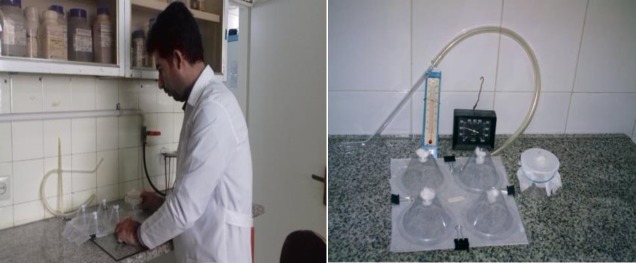
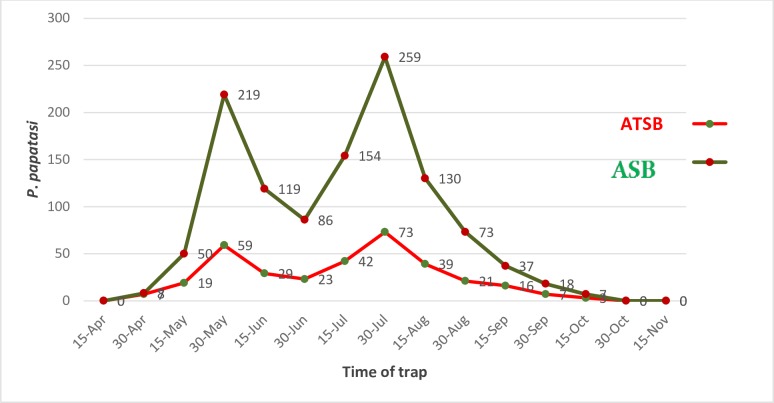
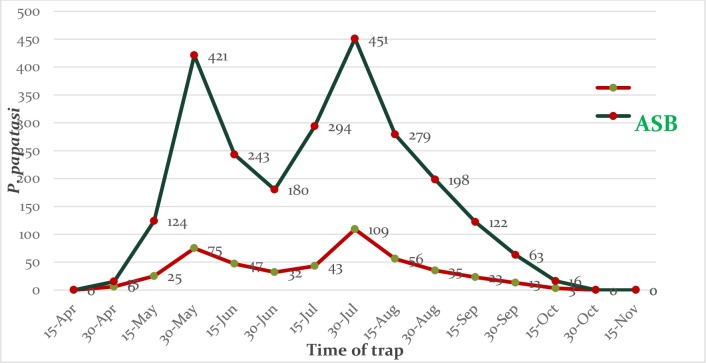
In a cross-sectional design, boric acid was mixed with brown sugar solution and tested as toxic baits for P. papatasi. Two methods were utilized to use the baits: (a) spraying ATSB on vegetation, bushes, and shrubs; and (b) setting ATSB-treated barrier fences in front of colonies at 500 m distance from the houses in outskirts of villages. In order to examine the residual efficacy rate of ATSB-treated barrier fences, the bioassay test was used. Density of P. papatasi sandflies was measured using sticky and light traps biweekly. For data analysis, Mann-Whitney U Test and Kruskal-Wallis were used. Results ATSB-treated barrier fences led to 3 times reduction in P. papatasi population. Besides that, ATSB spraying on plants led to more than 5 times reduction in P. papatasi population.
Comparing the incidence of leishmaniasis in treated villages before and after the study showed that the incidence was statistically reduced. Therefore, ATSB is an effective method to control vectors and prevent leishmaniasis.
诱人毒性糖饵(ATSB)是一种符合综合病媒管理(IVM)目标的新型病媒控制方法。在一项实验设计中,本研究旨在确定ATSB对伊朗中部库姆省作为皮肤利什曼病(ZCL)主要传播媒介的巴氏白蛉的控制效果。
在横断面设计中,将硼酸与红糖溶液混合,作为巴氏白蛉的毒性诱饵进行测试。使用了两种投放诱饵的方法:(a)将ATSB喷洒在植被、灌木丛和矮树上;(b)在村庄郊区距离房屋500米处的虫群前设置经ATSB处理过的屏障围栏。为了检测经ATSB处理的屏障围栏的残留效力,采用了生物测定试验。每两周使用粘性陷阱和灯光陷阱测量巴氏白蛉的密度。数据分析采用曼-惠特尼U检验和克鲁斯卡尔-沃利斯检验。结果经ATSB处理的屏障围栏使巴氏白蛉数量减少了3倍。此外,在植物上喷洒ATSB使巴氏白蛉数量减少了5倍多。
比较研究前后处理过的村庄中利什曼病的发病率,结果显示发病率在统计学上有所降低。因此,ATSB是控制病媒和预防利什曼病的有效方法。