Peters M, Scharmga A, de Jong J, van Tubergen A, Geusens P, Arts J J, Loeffen D, Weijers R, van Rietbergen B, van den Bergh J
Department of Internal Medicine, Division of Rheumatology, Maastricht University Medical Centre, Maastricht, the Netherlands.
CAPHRI, School for Public Health and Primary Care, Maastricht University, Maastricht, the Netherlands.
PLoS One. 2017 Apr 20;12(4):e0175829. doi: 10.1371/journal.pone.0175829. eCollection 2017.
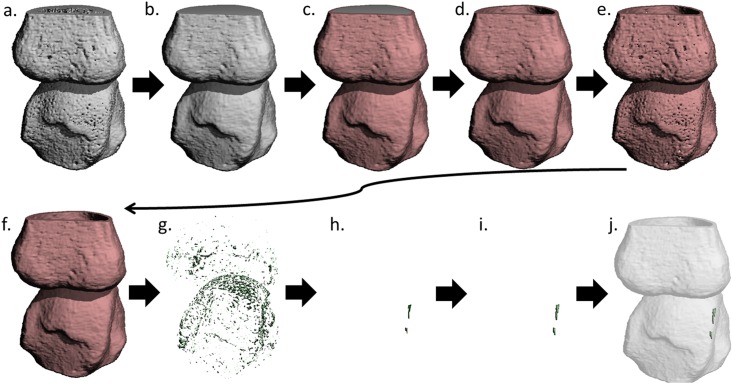
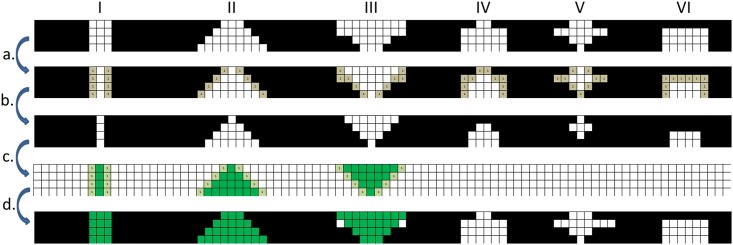
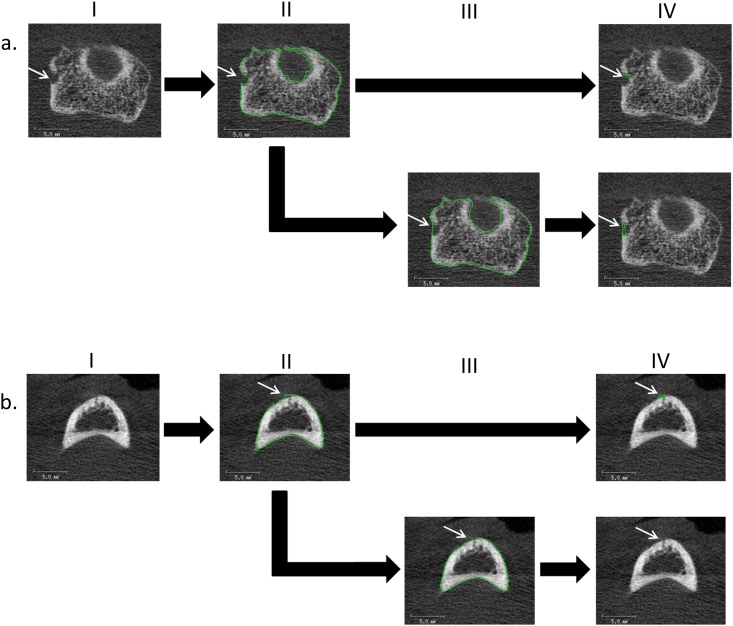
To introduce a fully-automated algorithm for the detection of small cortical interruptions (≥0.246mm in diameter) on high resolution peripheral quantitative computed tomography (HR-pQCT) images, and to investigate the additional value of manual correction of the automatically obtained contours (semi-automated procedure).
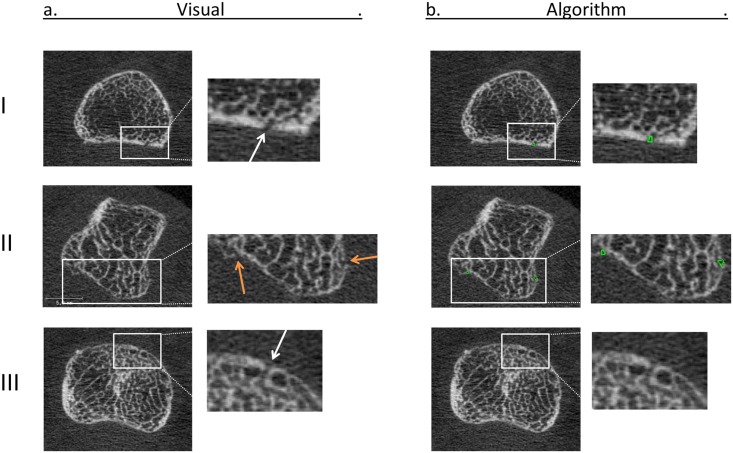
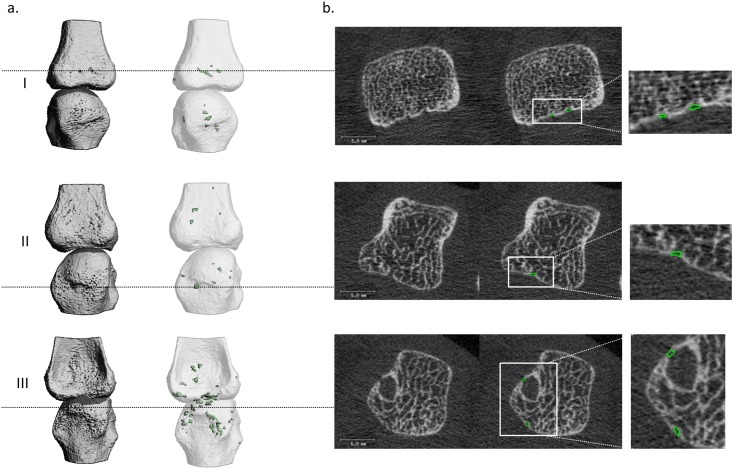
Ten metacarpophalangeal joints from seven patients with rheumatoid arthritis (RA) and three healthy controls were imaged with HR-pQCT. The images were evaluated by an algorithm according to the fully- and semi-automated procedure for the number and surface of interruptions per joint. Reliability between the fully- and semi-automated procedure and between two independent operators was tested using intra-class correlation coefficient (ICC) and the proportion of matching interruptions. Validity of single interruptions detected was tested by comparing it to visual scoring, as gold standard. The positive predictive value (PPV) and sensitivity were calculated.
The median number of interruptions per joint was 14 (range 2 to 59) and did not significantly differ between the fully- and semi-automated procedure (p = 0.37). The median interruption surface per joint was significantly higher with the fully- vs. semi-automated procedure (respectively, 8.6mm2 vs. 5.8mm2 and 6.1mm2, p = 0.01). Reliability was almost perfect between the fully- and semi-automated procedure for both the number and surface of interruptions (ICC≥0.95) and the proportion of matching interruptions was high (≥76%). Also the inter-operator reliability was almost perfect (ICC≥0.97, proportion of matching interruptions 92%). The PPV ranged from 27.6% to 29.9%, and sensitivity from 69.7% to 76.3%. Most interruptions detected with the algorithm, did show an interruption on a 2D grayscale image. However, this interruption did not meet the criteria of an interruption with visual scoring.
The algorithm for HR-pQCT images detects cortical interruptions, and its interruption surface. Reliability and validity was comparable for the fully- and semi-automated procedures. However, we advise the use of the semi-automated procedure to assure quality. The algorithm is a promising tool for a sensitive and objective assessment of cortical interruptions in finger joints assessed by HR-pQCT.
介绍一种用于在高分辨率外周定量计算机断层扫描(HR-pQCT)图像上检测小皮质中断(直径≥0.246mm)的全自动算法,并研究对自动获取的轮廓进行手动校正(半自动程序)的附加价值。
对7例类风湿性关节炎(RA)患者和3例健康对照者的10个掌指关节进行HR-pQCT成像。根据全自动和半自动程序,通过算法评估每个关节中断的数量和表面积。使用组内相关系数(ICC)和匹配中断的比例测试全自动和半自动程序之间以及两名独立操作人员之间的可靠性。将检测到的单个中断与作为金标准的视觉评分进行比较,测试其有效性。计算阳性预测值(PPV)和敏感性。
每个关节中断的中位数为14(范围2至59),全自动和半自动程序之间无显著差异(p = 0.37)。与半自动程序相比,全自动程序每个关节的中断表面积显著更高(分别为8.6mm²对5.8mm²和6.1mm²,p = 0.01)。对于中断的数量和表面积,全自动和半自动程序之间的可靠性几乎完美(ICC≥0.95),匹配中断的比例很高(≥76%)。操作人员之间的可靠性也几乎完美(ICC≥0.97,匹配中断的比例为92%)。PPV范围为27.6%至29.9%,敏感性范围为69.7%至76.3%。算法检测到的大多数中断在二维灰度图像上确实显示出中断。然而,这种中断不符合视觉评分中断的标准。
HR-pQCT图像算法可检测皮质中断及其中断表面积。全自动和半自动程序的可靠性和有效性相当。然而,我们建议使用半自动程序以确保质量。该算法是一种有前途的工具,可用于通过HR-pQCT对手指关节皮质中断进行敏感和客观的评估。