Hughes Katie R, Waters Andy P
Wellcome Centre for Molecular Parasitology, Institute of Infection, Immunity and Inflammation, College of Medical Veterinary & Life Sciences, University of Glasgow, Glasgow, G12 8TA, UK.
Wellcome Open Res. 2017 Mar 14;2:18. doi: 10.12688/wellcomeopenres.11005.1.
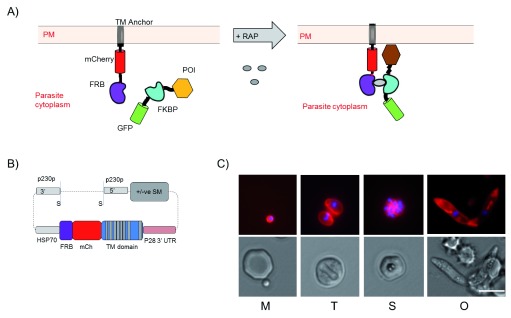
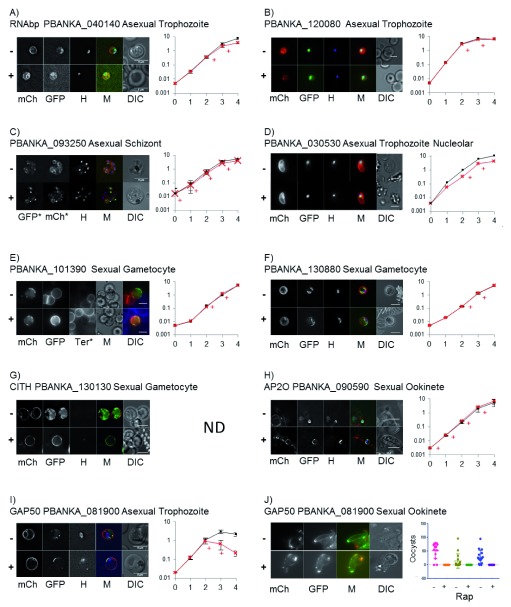
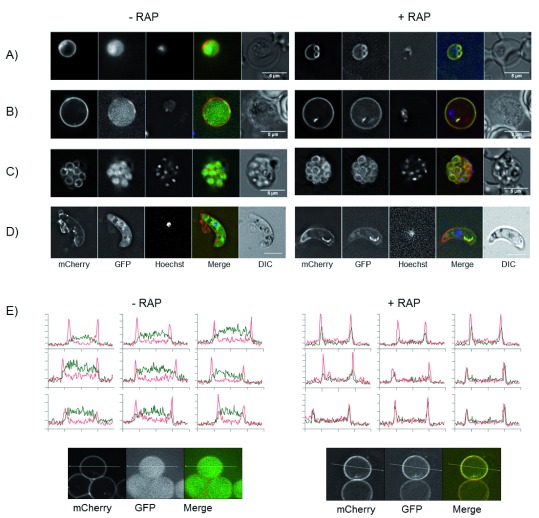
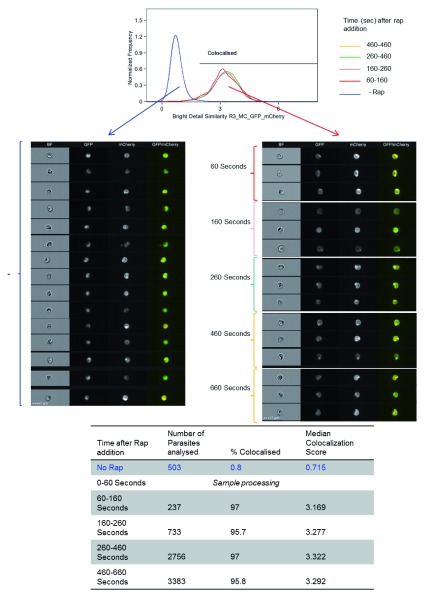
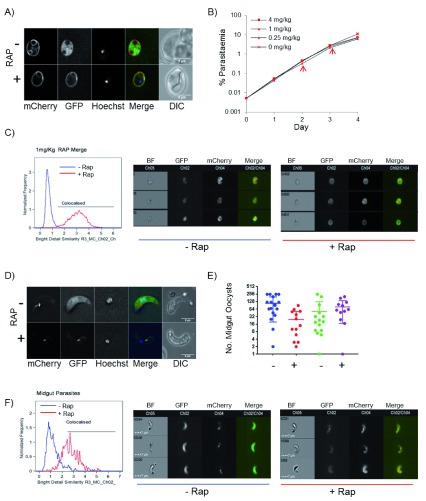
A deeper understanding of the biology of the parasite is essential in order to identify targets for interventions, with the ultimate aim of eliminating malaria. Determining the function(s) of essential proteins in has, until recently, been hampered by the lack of efficient conditional systems to abrogate proteins. We report the adaptation of a conditional technology, knocksideways (KS), for use in which can potentially rapidly inactivate proteins of interest through relocalisation. The system is induced using rapamycin, which allows for KS both and and is effective more rapidly than any other reported system. KS utilises pairs of fluorescent tags that facilitate live imaging and allows for rapid confirmation of efficient protein redistribution on live parasites, allowing for streamlined workflows. We demonstrate the characteristics of the system using transgenically expressed cytoplasmic GFP and provide proof of principle by inducibly redistributing a number of proteins with different native, subcellular locations. We also demonstrate that KS can be applied to both mammalian and insect stages of . KS expands the range of (conditional) technologies for genetic manipulation of malaria parasites and offers the potential to be further developed for medium throughput phenotype screens.
为了确定干预靶点以最终消除疟疾,深入了解疟原虫的生物学特性至关重要。直到最近,由于缺乏有效的条件性系统来消除蛋白质,确定疟原虫中必需蛋白质的功能一直受到阻碍。我们报道了一种条件性技术——侧向敲除(KS)在疟原虫中的应用,该技术可通过重新定位潜在地快速使感兴趣的蛋白质失活。该系统使用雷帕霉素诱导,这使得KS在疟原虫的无性繁殖期和有性繁殖期均有效,且比任何其他报道的系统起效更快。KS利用荧光标签对来促进活细胞成像,并能快速确认活疟原虫上蛋白质的有效重新分布,从而实现简化的工作流程。我们利用转基因表达的细胞质绿色荧光蛋白(GFP)展示了该系统的特性,并通过可诱导地重新分布多种具有不同天然亚细胞定位的蛋白质提供了原理证明。我们还证明KS可应用于疟原虫的哺乳动物阶段和昆虫阶段。KS扩展了疟原虫基因操作(条件性)技术的范围,并为进一步开发用于中等通量表型筛选提供了潜力。