Carroll Mark J, Brown Nicholas, Goodall Craig, Downs Alexandra M, Sheenan Timothy H, Anderson Kirk E
Carl Hayden Bee Research Center USDA-ARS, Tucson, Arizona, United States of America.
Department of Entomology, University of Arizona, Tucson, Arizona, United States of America.
PLoS One. 2017 Apr 21;12(4):e0175933. doi: 10.1371/journal.pone.0175933. eCollection 2017.
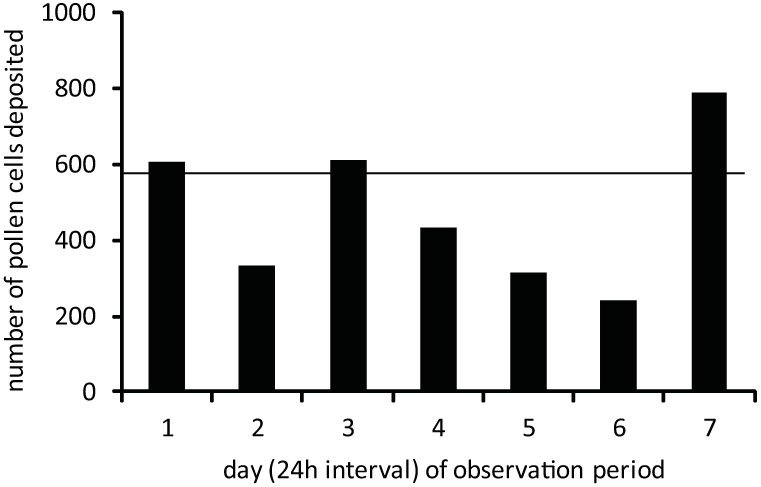
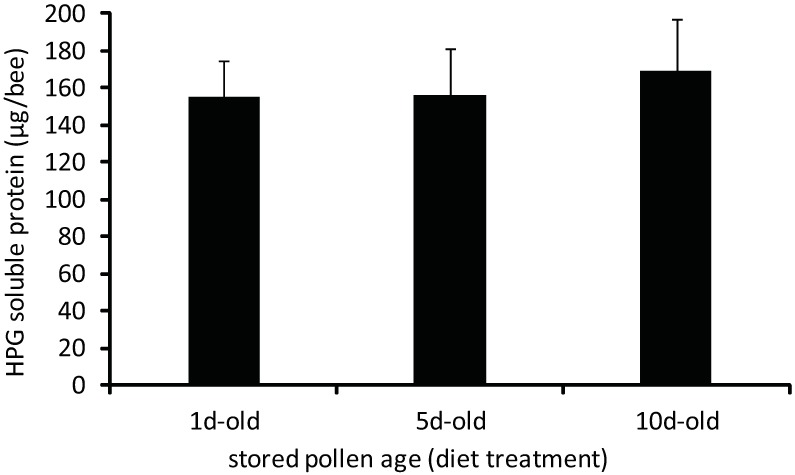
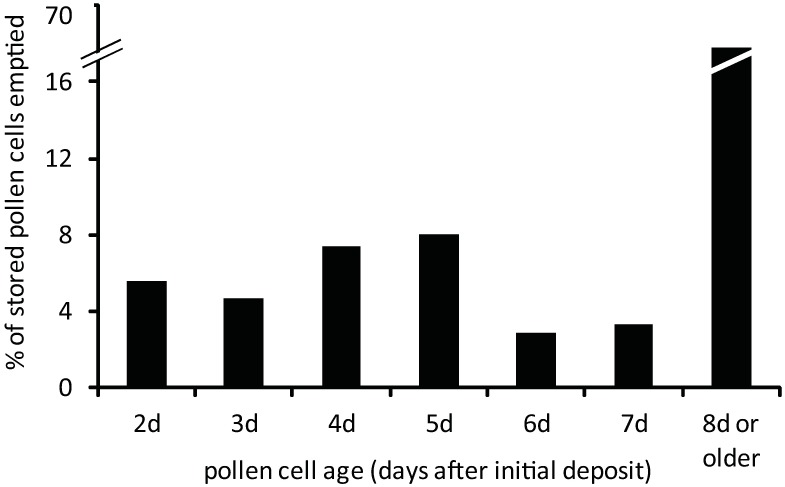
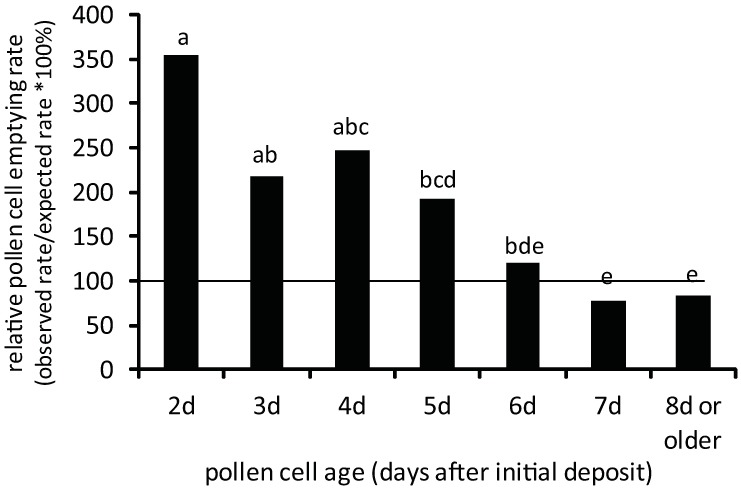
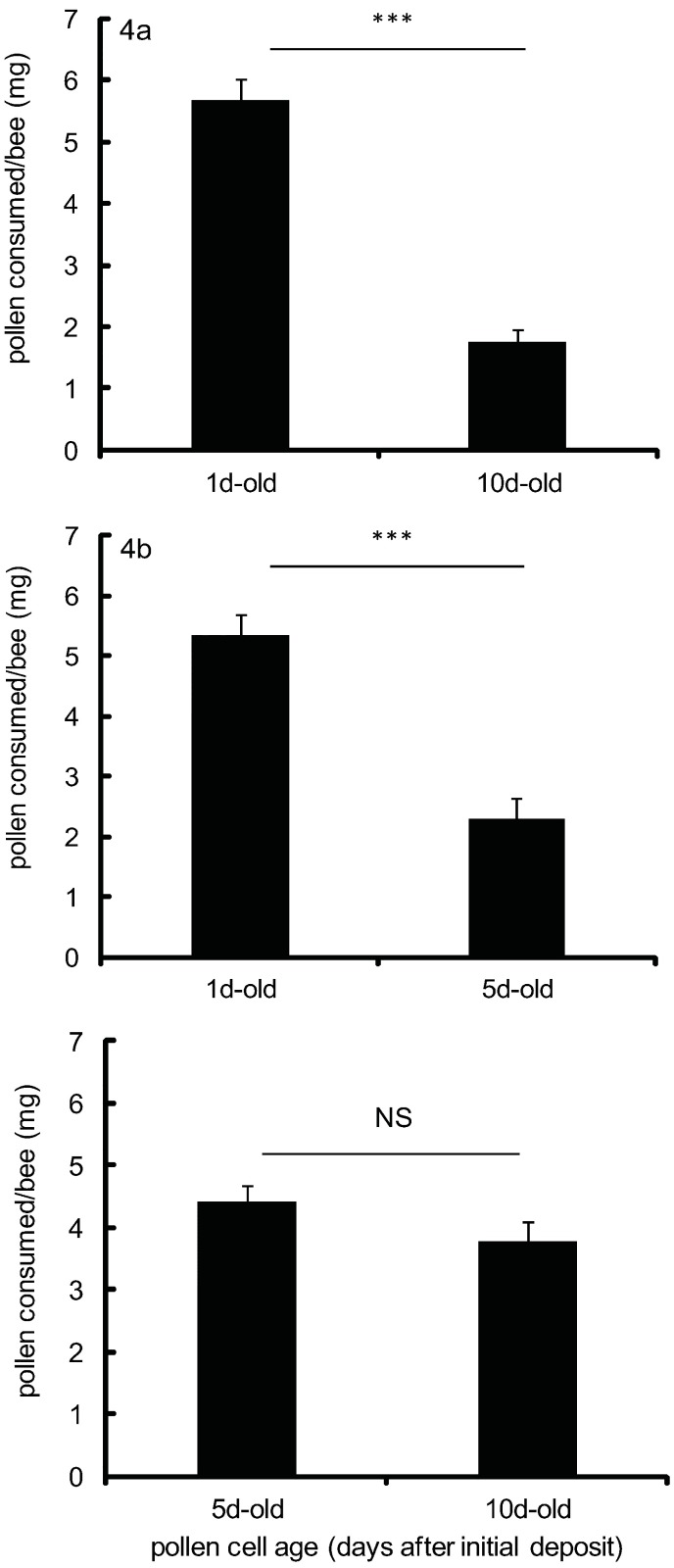
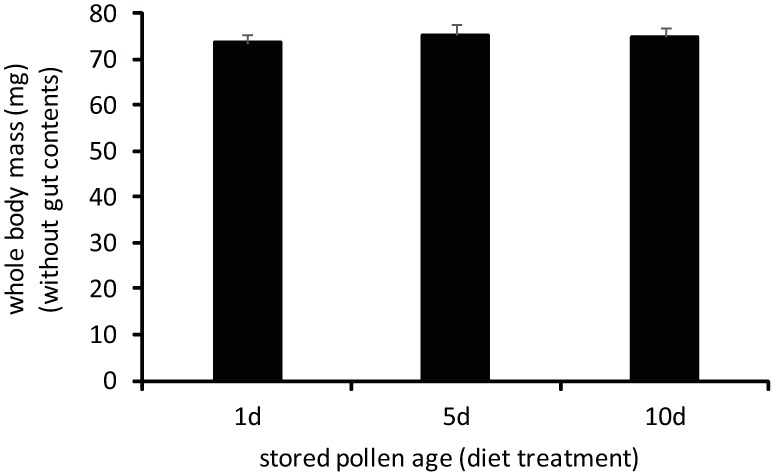
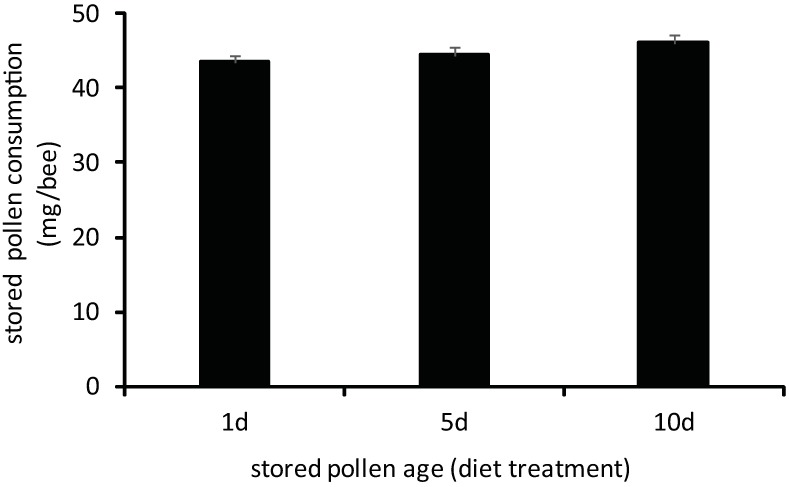
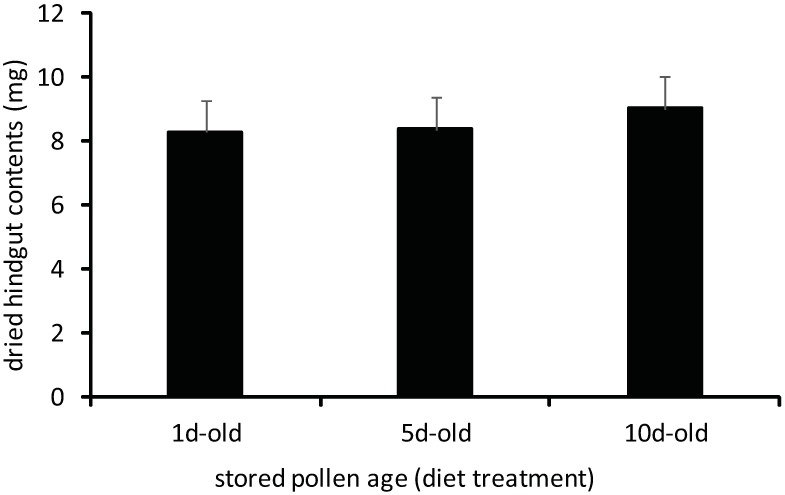
Honey bees (Apis mellifera) collect and store both honey and pollen in preserved forms. Pollen storage involves the addition of honey or nectar and oral secretions to pollen granules. It is controversial whether the duration of pollen storage alters the palatability or nutritive value of the pollen storage medium. We examined how bees utilize different-aged stored pollen during an extended pollen flow. The deposition of pollen into wax cells and subsequent consumption were monitored daily on 18 brood frames from 6 colonies over an 8d observation period. Despite a greater abundance of older stored pollen cells on brood frames, bees showed a marked preference for the consumption of freshly-stored pollen. Two to four day-old pollen cell contents were significantly more likely to be consumed, while pollen cell contents more than seven days old were eaten at much lower rates. Similar experiments that controlled for cell abundance and spatial effects using cage assays yielded the same result. One day-old stored pollen was consumed approximately three times more often than 10d-old stored pollen, and two times more often than 5d-old stored pollen. These consumption preferences for freshly-stored pollen occurred despite a lack of clear developmental advantages. Young adult workers reared for 7 days on 1d-, 5d-, or 10d-old stored pollen showed no difference in body mass, stored pollen consumption, hindgut fecal material accumulation, or hypopharyngeal gland (HPG) protein titers, suggesting that different-aged pollen stores did not vary in their nutritional value to adult bees. These findings are inconsistent with the hypothesis promoting a period of microbially-mediated, "beebread maturation" that results in greater palatability or nutritive value for aged pollen stores. Rather, stored pollen that is not eaten in the first few days accumulates as excess stores preserved in a less preferred, but nutritionally-similar state.
蜜蜂(西方蜜蜂)以保存的形式采集和储存蜂蜜和花粉。花粉储存涉及向花粉颗粒中添加蜂蜜或花蜜以及口腔分泌物。花粉储存的持续时间是否会改变花粉储存介质的适口性或营养价值存在争议。我们研究了在长时间的花粉流期间蜜蜂如何利用不同储存时间的花粉。在8天的观察期内,每天监测6个蜂群的18个育虫框上花粉沉积到蜡质巢房以及随后的消耗情况。尽管育虫框上储存时间较长的花粉巢房数量更多,但蜜蜂对新鲜储存的花粉表现出明显的偏好。两到四天龄的花粉巢房内容物被消耗的可能性显著更高,而超过七天龄的花粉巢房内容物被食用的比例则低得多。使用笼养试验控制巢房数量和空间效应的类似实验也得到了相同的结果。一天龄储存的花粉被消耗的频率大约是十天龄储存花粉的三倍,是五天龄储存花粉的两倍。尽管缺乏明显的发育优势,但对新鲜储存花粉的这种消耗偏好依然存在。在1天、5天或10天龄储存的花粉上饲养7天的年轻成年工蜂,在体重、储存花粉的消耗量、后肠粪便物质积累或下咽腺(HPG)蛋白滴度方面没有差异,这表明不同储存时间的花粉对成年蜜蜂的营养价值没有差异。这些发现与促进微生物介导的“蜂粮成熟”时期的假设不一致,该假设认为蜂粮成熟会使储存时间较长的花粉具有更高的适口性或营养价值。相反,在最初几天没有被食用的储存花粉会作为多余的储存物积累起来,以一种不太受欢迎但营养相似的状态保存。