ARS-USDA Carl Hayden Bee Research Center, 2000 E. Allen Rd., Tucson, AZ, 85719, USA.
ARS-USDA Honey Bee Breeding Genetics and Physiology Research, Baton Rouge, LA, 70820, USA.
Microb Ecol. 2023 May;85(4):1498-1513. doi: 10.1007/s00248-022-02025-5. Epub 2022 May 2.
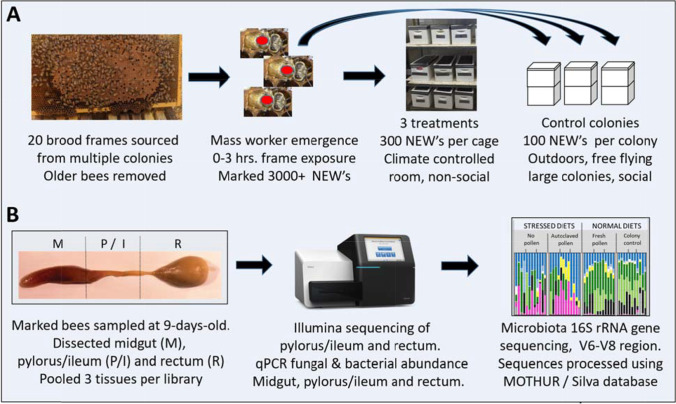
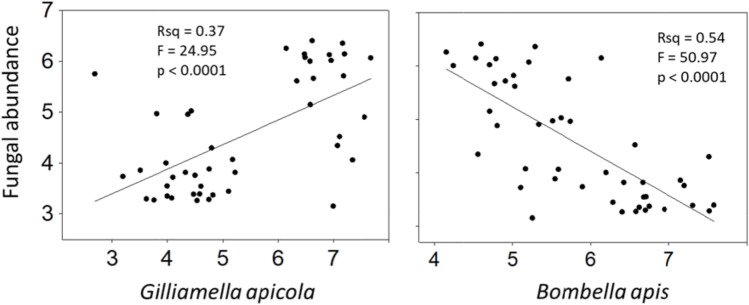
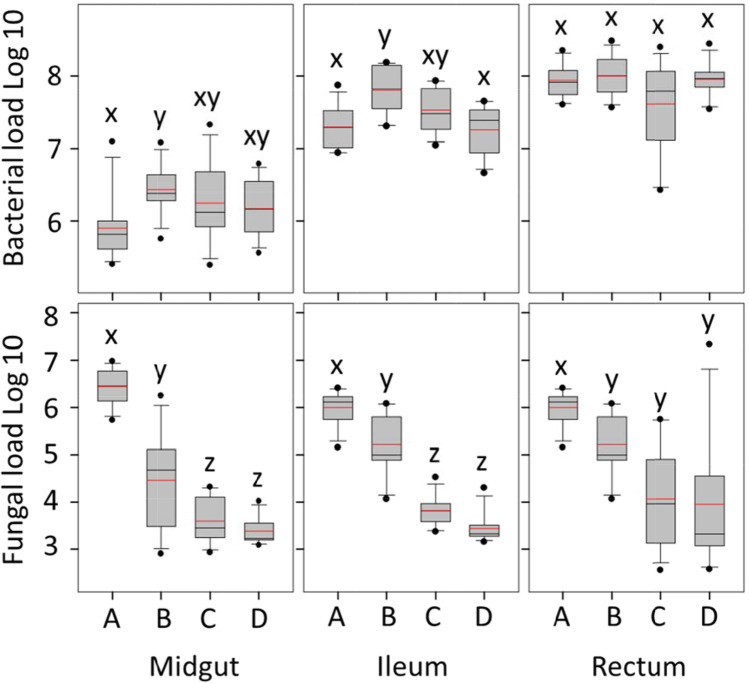
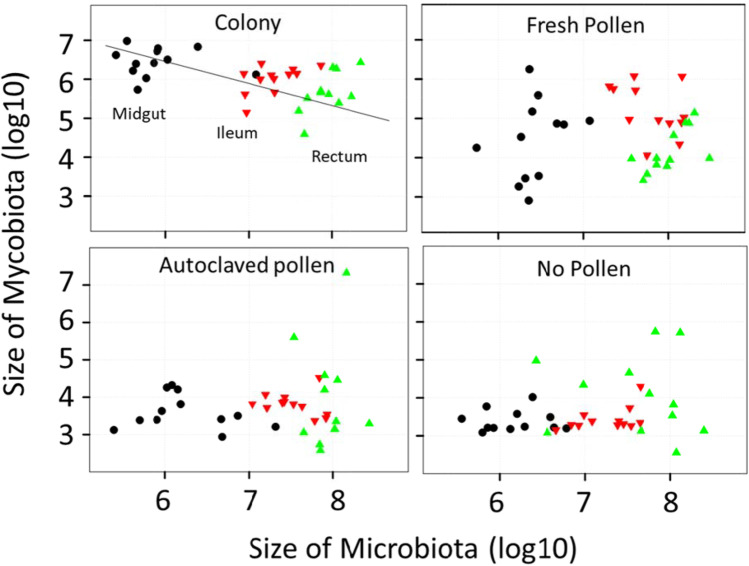
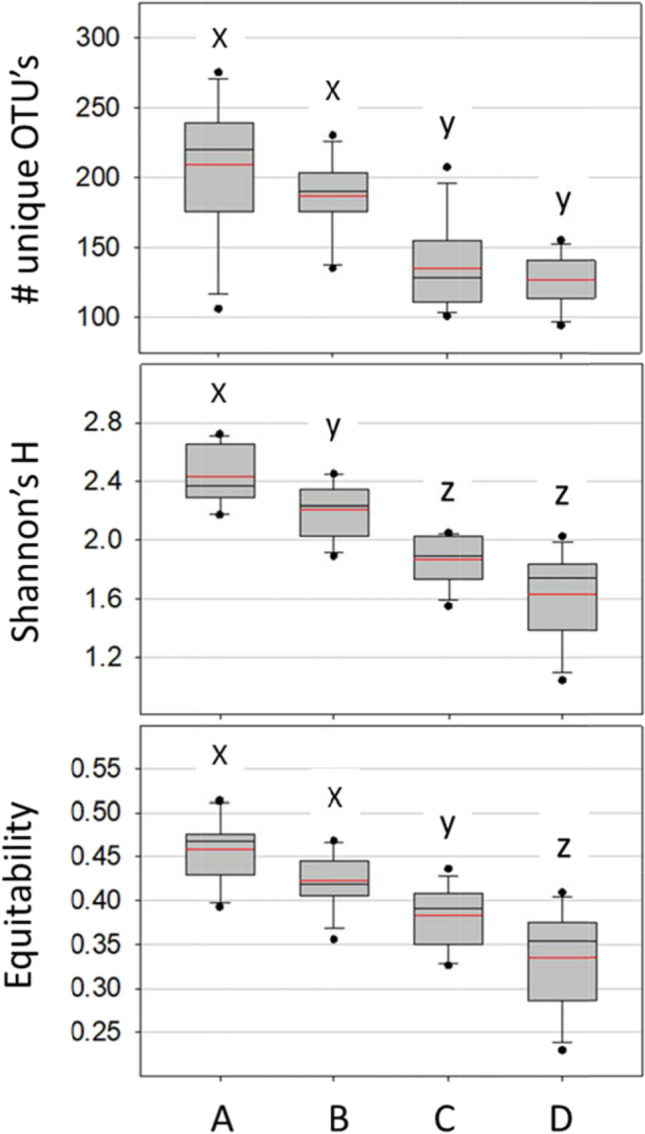
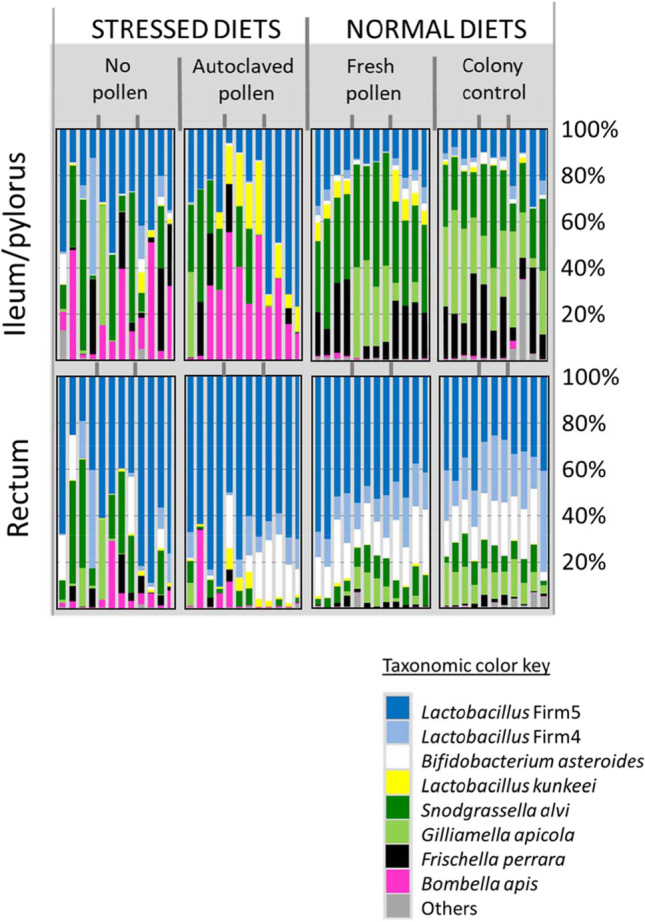
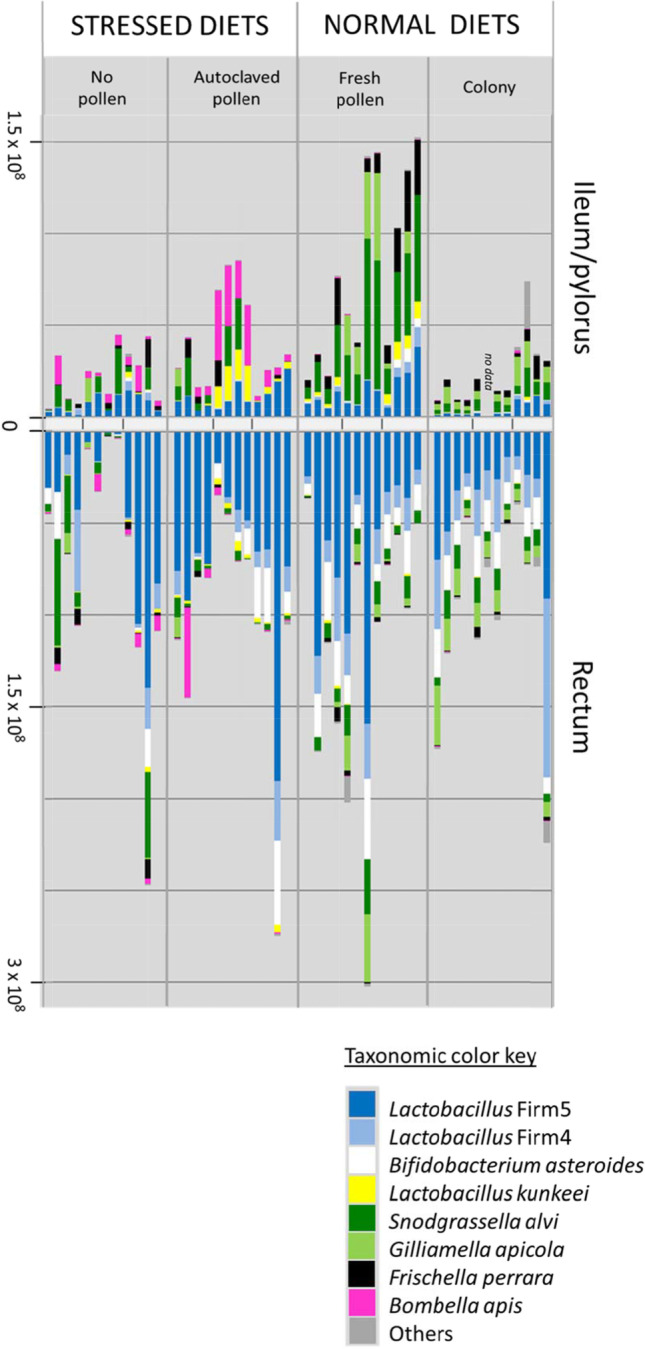
Honey bees are a model for host-microbial interactions with experimental designs evolving towards conventionalized worker bees. Research on gut microbiome transmission and assembly has examined only a fraction of factors associated with the colony and hive environment. Here, we studied the effects of diet and social isolation on tissue-specific bacterial and fungal colonization of the midgut and two key hindgut regions. We found that both treatment factors significantly influenced early hindgut colonization explaining similar proportions of microbiome variation. In agreement with previous work, social interaction with older workers was unnecessary for core hindgut bacterial transmission. Exposure to natural eclosion and fresh stored pollen resulted in gut bacterial communities that were taxonomically and structurally equivalent to those produced in the natural colony setting. Stressed diets of no pollen or autoclaved pollen in social isolation resulted in decreased fungal abundance and bacterial diversity, and atypical microbiome structure and tissue-specific variation of functionally important core bacteria. Without exposure to the active hive environment, the abundance and strain diversity of keystone ileum species Gilliamella apicola was markedly reduced. These changes were associated with significantly larger ileum microbiotas suggesting that extended exposure to the active hive environment plays an antibiotic role in hindgut microbiome establishment. We conclude that core hindgut microbiome transmission is facultative horizontal with 5 of 6 core hindgut species readily acquired from the built hive structure and natural diet. Our findings contribute novel insights into factors influencing assembly and maintenance of honey bee gut microbiota and facilitate future experimental designs.
蜜蜂是研究宿主-微生物相互作用的模式生物,其实验设计逐渐向常规化的工蜂方向发展。关于肠道微生物组传播和组装的研究仅检查了与群体和蜂巢环境相关的部分因素。在这里,我们研究了饮食和社会隔离对中肠和两个关键后肠区域组织特异性细菌和真菌定殖的影响。我们发现,这两个处理因素都显著影响了后肠的早期定植,解释了微生物组变异的相似比例。与之前的工作一致,与老年工蜂的社会互动对于核心后肠细菌的传播是不必要的。接触自然羽化和新鲜储存的花粉导致肠道细菌群落在分类学和结构上与在自然群体环境中产生的群落相同。在社会隔离中,没有花粉或高压灭菌花粉的应激饮食导致真菌丰度和细菌多样性降低,以及微生物组结构和功能重要的核心细菌的组织特异性变异不典型。如果没有暴露在活跃的蜂巢环境中,关键回肠物种 Gilliamella apicola 的丰度和菌株多样性显著降低。这些变化与明显更大的回肠微生物群有关,这表明延长暴露于活跃的蜂巢环境在后肠微生物组建立中起着抗生素的作用。我们得出结论,核心后肠微生物组的传播是兼性水平的,6 种核心后肠物种中有 5 种可以从建筑蜂巢结构和天然饮食中轻易获得。我们的研究结果为影响蜜蜂肠道微生物组组装和维持的因素提供了新的见解,并为未来的实验设计提供了便利。