Qi Hongyi, Jiang Zhuyun, Wang Chengqiang, Yang Yi, Li Li, He Hui, Yu Zanyang
College of Pharmaceutical Sciences, Southwest University, Beibei District, Chongqing 400716, China.
Oncotarget. 2017 Apr 25;8(17):29300-29317. doi: 10.18632/oncotarget.16832.
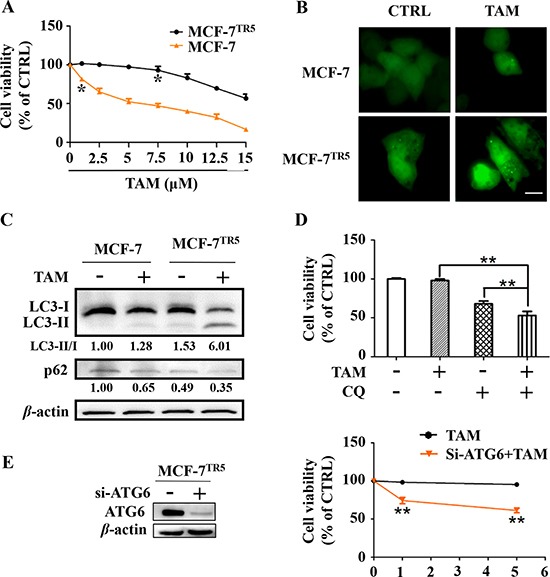
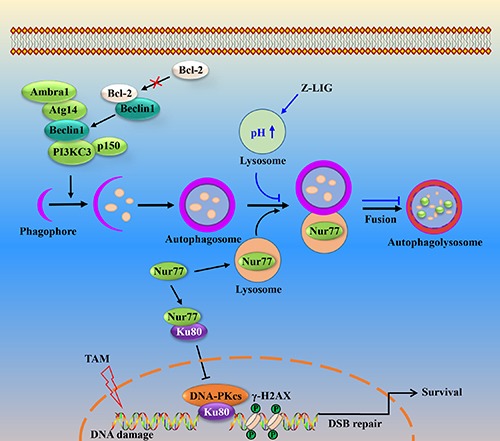
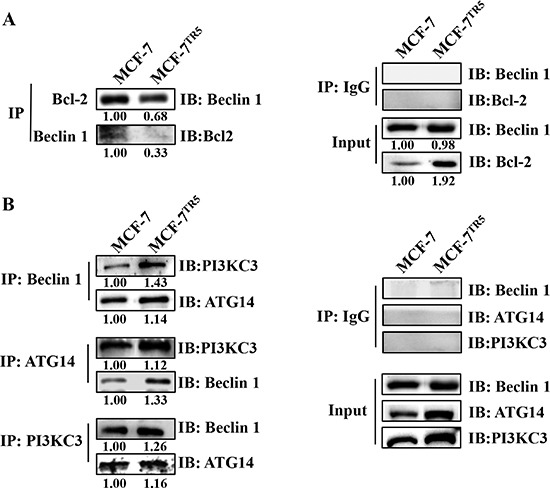
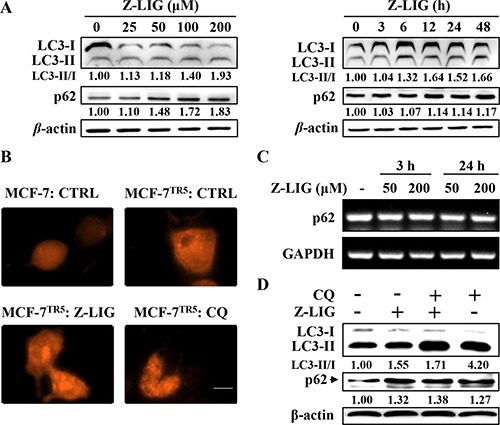
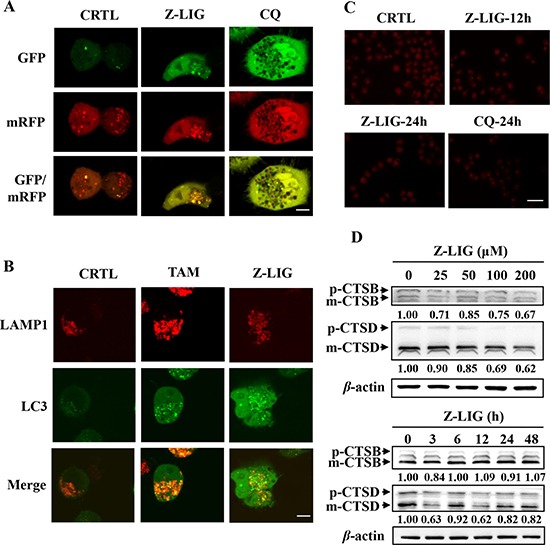
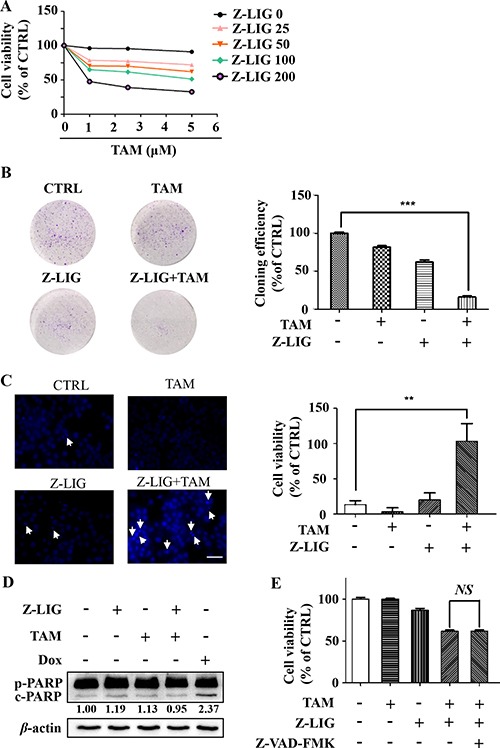
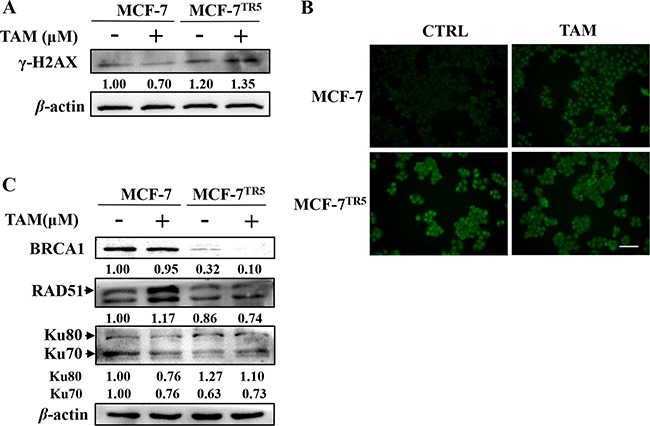
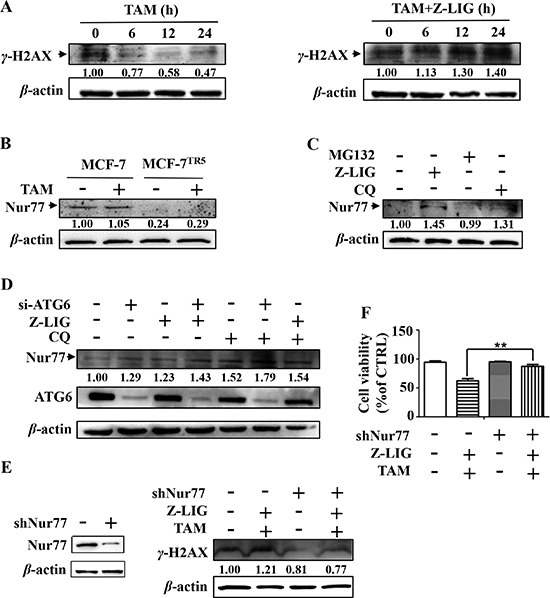
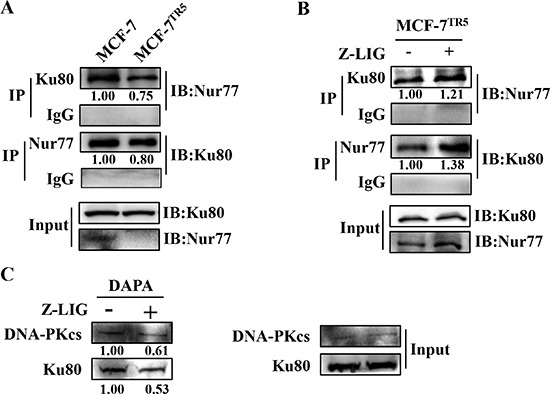
Autophagy plays a pro-survival role in the tamoxifen-resistant breast cancer cells. Herein we found that autophagy was concomitantly induced in tamoxifen-resistant MCF-7 (MCF-7TR5) cells through the dissociation of Bcl-2 from Beclin 1 and subsequent enhancement of interaction among the ATG14-Beclin1-PI3KC3 complex. Moreover, higher level of DNA damage was observed in MCF-7TR5 cells with the decreased BRCA1 and RAD51 level and the increased Ku80 level. Interestingly, Nur77 was selectively degraded by autophagy, which causes the release of Ku80 from the Nur77-Ku80 complex, resulting in the increase of the DNA binding of Ku80 and DNA-PKcs. Meanwhile, Z-ligustilide, a phthalide compound from Radix Angelica sinensis, was shown to inhibit the autophagic flux by blocking the autophagosome-lysosome fusion. Importantly, Z-ligustilide-mediated autophagy inhibition restored Nur77 expression in MCF-7TR5 cells. Furthermore, Z-ligustilide promoted the interaction of Nur77 with Ku80 and thereby abolished the association of DNA-PKcs with DNA ends. Moreover, Z-ligustilide sensitized MCF-7TR5 cells in a caspase-independent cell death and enhanced the DNA damage caused by tamoxifen, which was found to be attenuated by shNur77. Together, these findings not only provide important insights into the formation of tamoxifen resistance in breast cancer cells, but also suggest Z-ligustilide may function as a novel autophagy inhibitor to overcome chemoresistance.
自噬在他莫昔芬耐药的乳腺癌细胞中发挥促生存作用。在此我们发现,在他莫昔芬耐药的MCF-7(MCF-7TR5)细胞中,自噬通过Bcl-2与Beclin 1的解离以及随后ATG14-Beclin1-PI3KC3复合物之间相互作用的增强而被同时诱导。此外,在MCF-7TR5细胞中观察到更高水平的DNA损伤,同时BRCA1和RAD51水平降低,Ku80水平升高。有趣的是,Nur77被自噬选择性降解,这导致Ku80从Nur77-Ku80复合物中释放,从而导致Ku80与DNA-PKcs的DNA结合增加。同时,当归中的一种苯酞化合物Z-藁本内酯被证明可通过阻断自噬体-溶酶体融合来抑制自噬流。重要的是,Z-藁本内酯介导的自噬抑制恢复了MCF-7TR5细胞中Nur77的表达。此外,Z-藁本内酯促进了Nur77与Ku80的相互作用,从而消除了DNA-PKcs与DNA末端的结合。此外,Z-藁本内酯使MCF-7TR5细胞对非半胱天冬酶依赖性细胞死亡敏感,并增强了他莫昔芬引起的DNA损伤,而shNur77可减弱这种损伤。总之,这些发现不仅为乳腺癌细胞中他莫昔芬耐药的形成提供了重要见解,还表明Z-藁本内酯可能作为一种新型自噬抑制剂来克服化疗耐药性。