Translational Medicine Research Center, Ruijin Hospital North, Shanghai Jiao Tong University School of Medicine, Shanghai 201821, PR China.
Biliary Tract Surgery Department I, Eastern Hepatobiliary Surgery Hospital, Secondary Military Medical University, Shanghai 200433, PR China; Diagnosis and Treatment Center of Malignant Biliary Tract Diseases, Secondary Military Medical University, Shanghai 200433, PR China.
EBioMedicine. 2017 May;19:18-30. doi: 10.1016/j.ebiom.2017.04.014. Epub 2017 Apr 12.
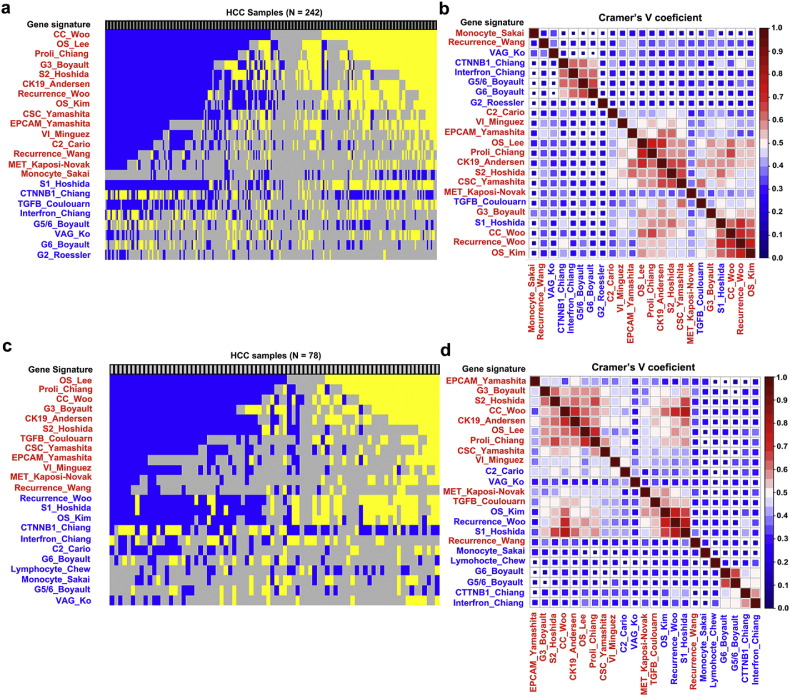
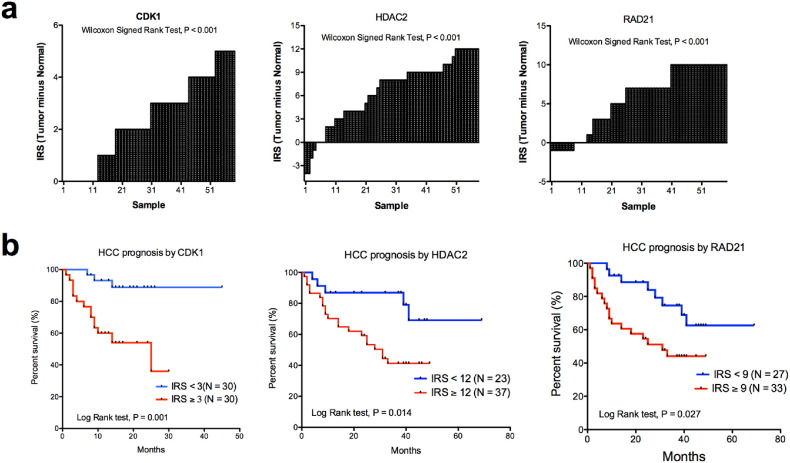
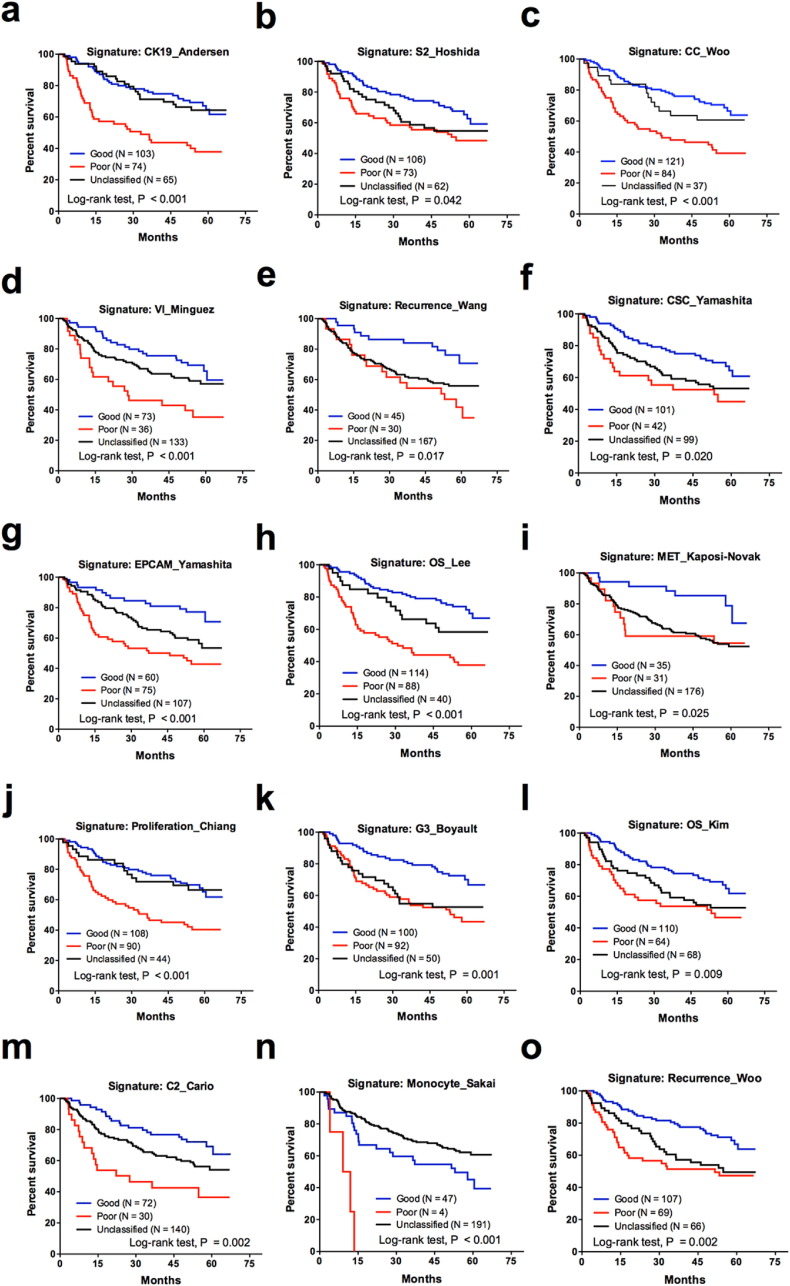
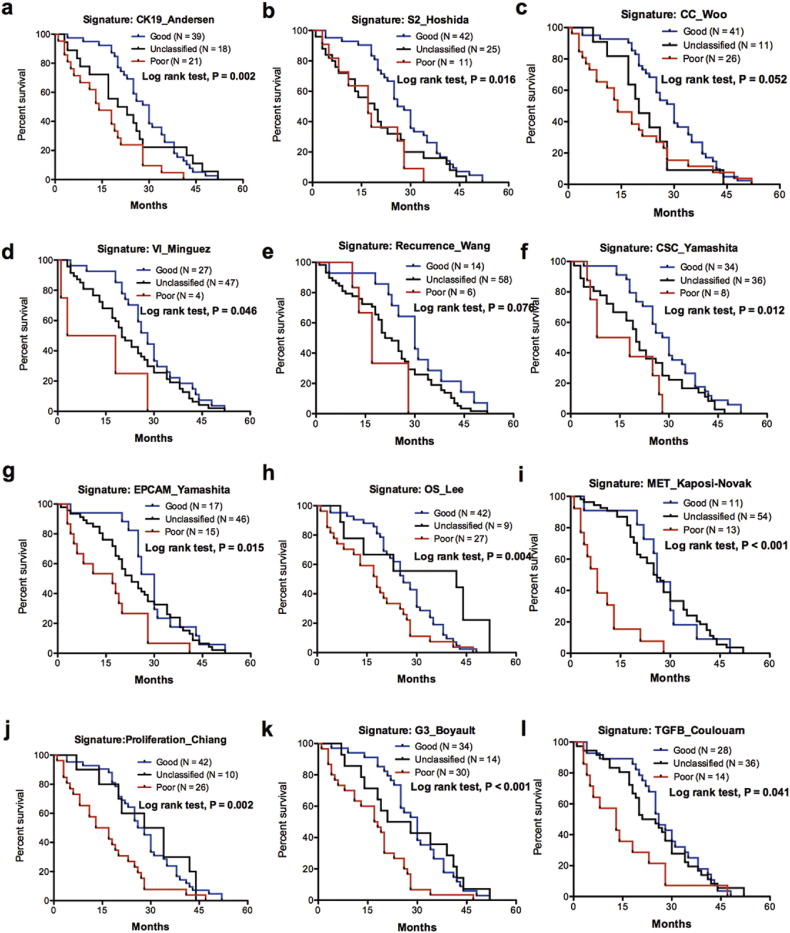
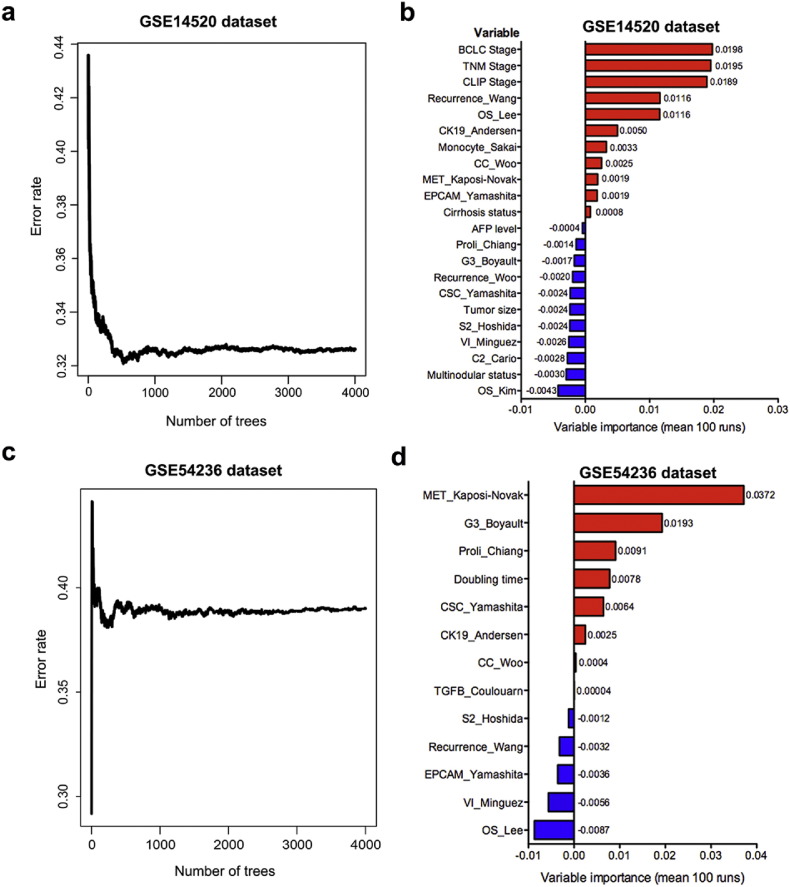
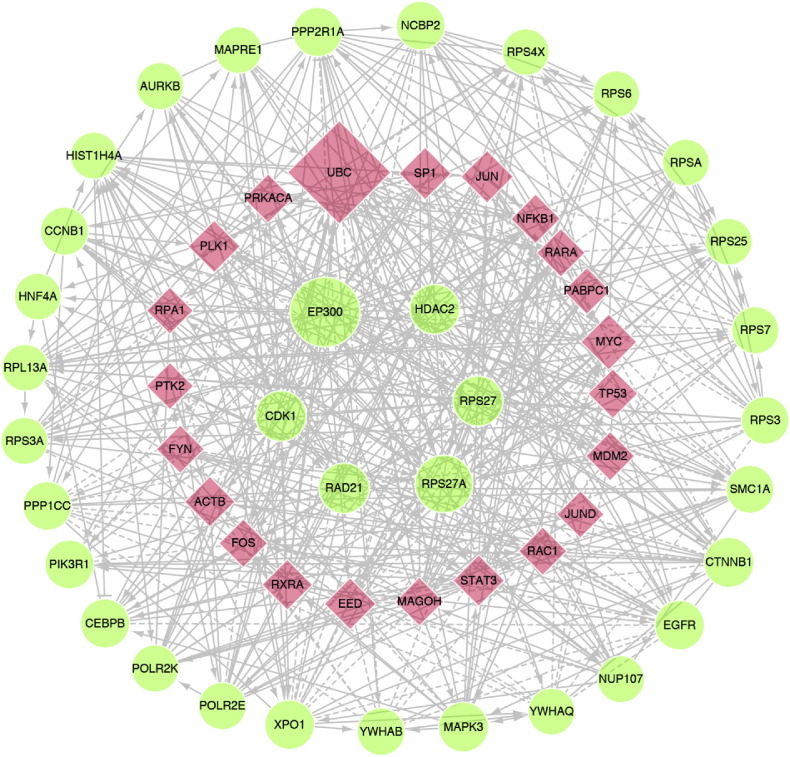
Many molecular classification and prognostic gene signatures for hepatocellular carcinoma (HCC) patients have been established based on genome-wide gene expression profiling; however, their generalizability is unclear. Herein, we systematically assessed the prognostic effects of these gene signatures and identified valuable prognostic biomarkers by integrating these gene signatures. With two independent HCC datasets (GSE14520, N=242 and GSE54236, N=78), 30 published gene signatures were evaluated, and 11 were significantly associated with the overall survival (OS) of postoperative HCC patients in both datasets. The random survival forest models suggested that the gene signatures were superior to clinical characteristics for predicting the prognosis of the patients. Based on the 11 gene signatures, a functional protein-protein interaction (PPI) network with 1406 nodes and 10,135 edges was established. With tissue microarrays of HCC patients (N=60), we determined the prognostic values of the core genes in the network and found that RAD21, CDK1, and HDAC2 expression levels were negatively associated with OS for HCC patients. The multivariate Cox regression analyses suggested that CDK1 was an independent prognostic factor, which was validated in an independent case cohort (N=78). In cellular models, inhibition of CDK1 by siRNA or a specific inhibitor, RO-3306, reduced cellular proliferation and viability for HCC cells. These results suggest that the prognostic predictive capacities of these gene signatures are reproducible and that CDK1 is a potential prognostic biomarker or therapeutic target for HCC patients.
许多基于全基因组基因表达谱分析的肝癌 (HCC) 患者分子分类和预后基因标志物已经建立;然而,它们的通用性尚不清楚。在此,我们通过整合这些基因标志物,系统地评估了这些基因标志物的预后作用,并确定了有价值的预后生物标志物。使用两个独立的 HCC 数据集 (GSE14520,N=242 和 GSE54236,N=78),评估了 30 个已发表的基因标志物,其中 11 个与两个数据集的术后 HCC 患者的总生存期 (OS) 显著相关。随机生存森林模型表明,基因标志物在预测患者预后方面优于临床特征。基于这 11 个基因标志物,建立了一个具有 1406 个节点和 10135 条边的功能蛋白质-蛋白质相互作用 (PPI) 网络。使用 HCC 患者的组织微阵列 (N=60),我们确定了网络中核心基因的预后价值,并发现 RAD21、CDK1 和 HDAC2 的表达水平与 HCC 患者的 OS 呈负相关。多变量 Cox 回归分析表明 CDK1 是一个独立的预后因素,这在一个独立的病例队列 (N=78) 中得到了验证。在细胞模型中,siRNA 或特异性抑制剂 RO-3306 抑制 CDK1 可降低 HCC 细胞的细胞增殖和活力。这些结果表明,这些基因标志物的预后预测能力具有可重复性,并且 CDK1 是 HCC 患者的潜在预后生物标志物或治疗靶点。