Kim Mi-Ju, Kim Min-Sun, Kim Sung Joo, An Soyeon, Park Jin, Park Hosub, Lee Jae Hoon, Song Ki-Byung, Hwang Dae Wook, Chang Suhwan, Kim Kyu-Pyo, Jeong Seong-Yun, Kim Song Cheol, Hong Seung-Mo
Asan Institute for Life Sciences, Asan Medical Center, University of Ulsan College of Medicine, Seoul, South Korea.
Department of Pathology, Asan Medical Center, University of Ulsan College of Medicine, 88, Olympic-ro 43-gil, Songpa-gu, Seoul, 05505 Republic of Korea.
Cancer Cell Int. 2017 Apr 20;17:47. doi: 10.1186/s12935-017-0416-8. eCollection 2017.
Pancreatic ductal adenocarcinomas are among the most malignant neoplasms and have very poor prognosis. Our understanding of various cancers has recently improved the survival of patients with cancer, except for pancreatic cancers. Establishment of primary cancer cell lines of pancreatic ductal adenocarcinomas will be useful for understanding the molecular mechanisms of this disease.
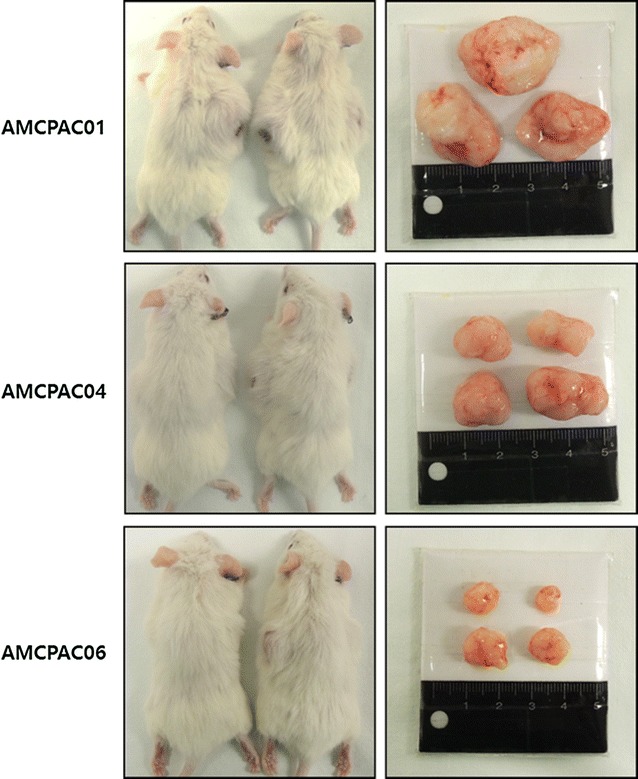
Eighty-one surgically resected pancreatic ductal adenocarcinomas were collected. Six novel pancreatic cancer cell lines, AMCPAC01-06, were established and histogenetic characteristics were compared with their matched tissues. The clinicopathologic and molecular characteristics of the cell lines were investigated by and sequencing or SMAD4 and p53 immunohistochemistry. Xenografts using AMCPAC cell lines were established.
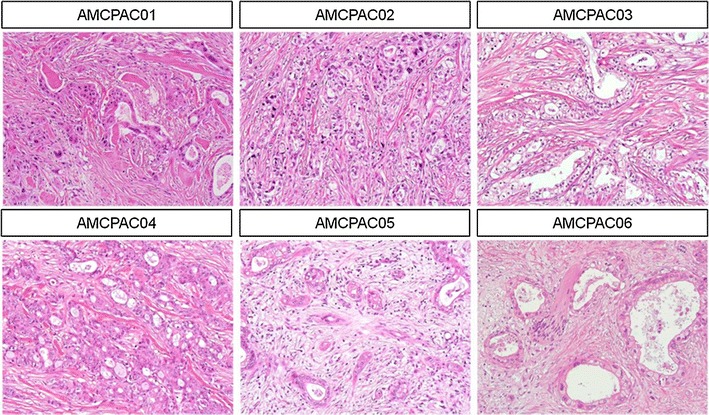
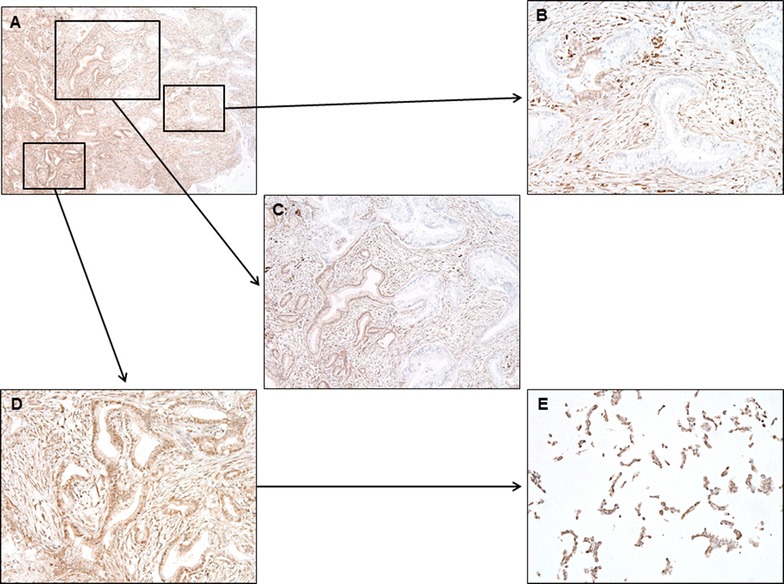
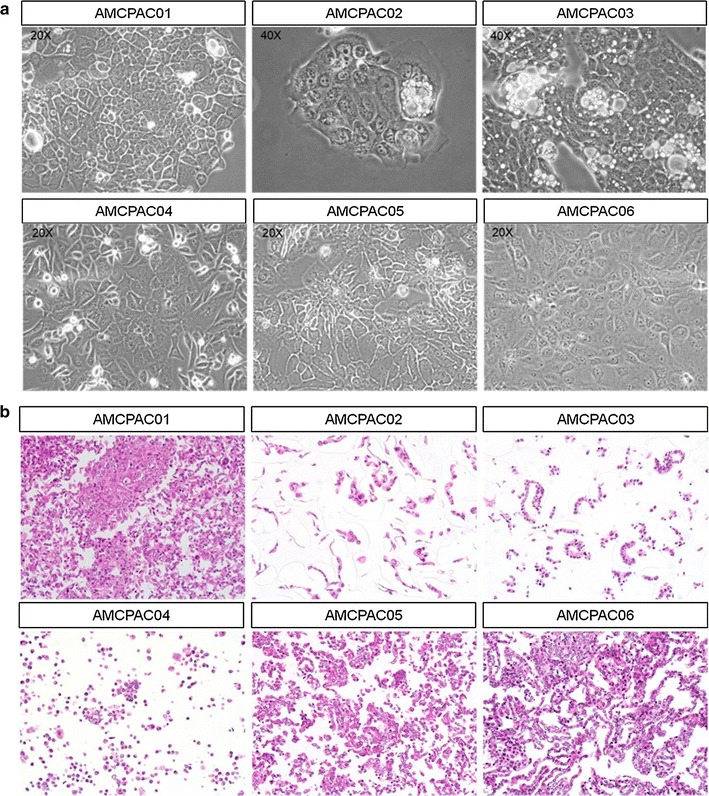
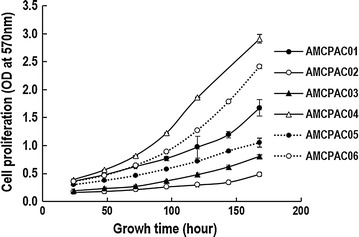
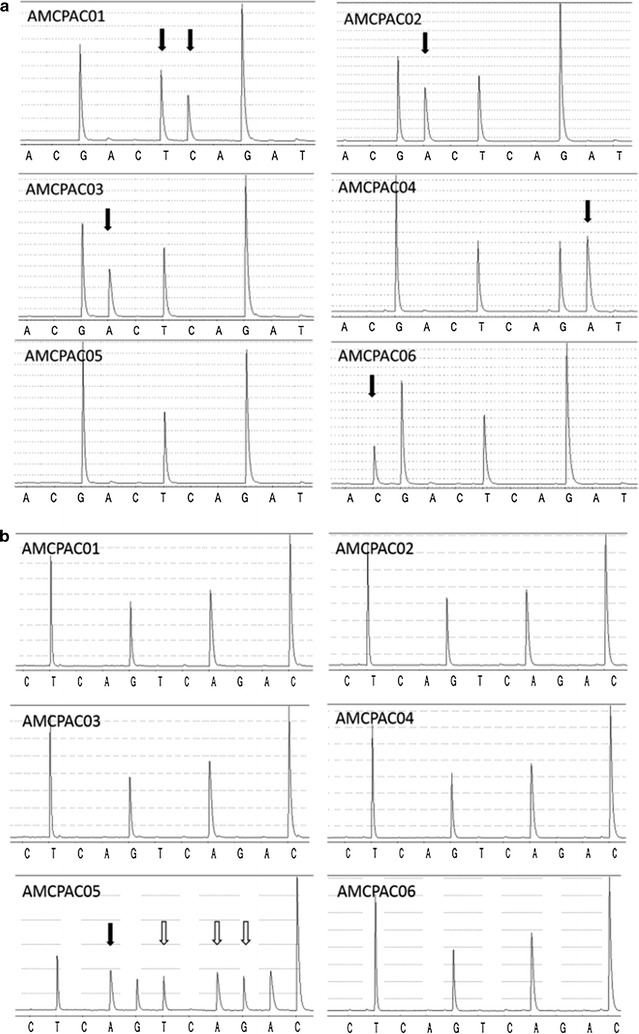
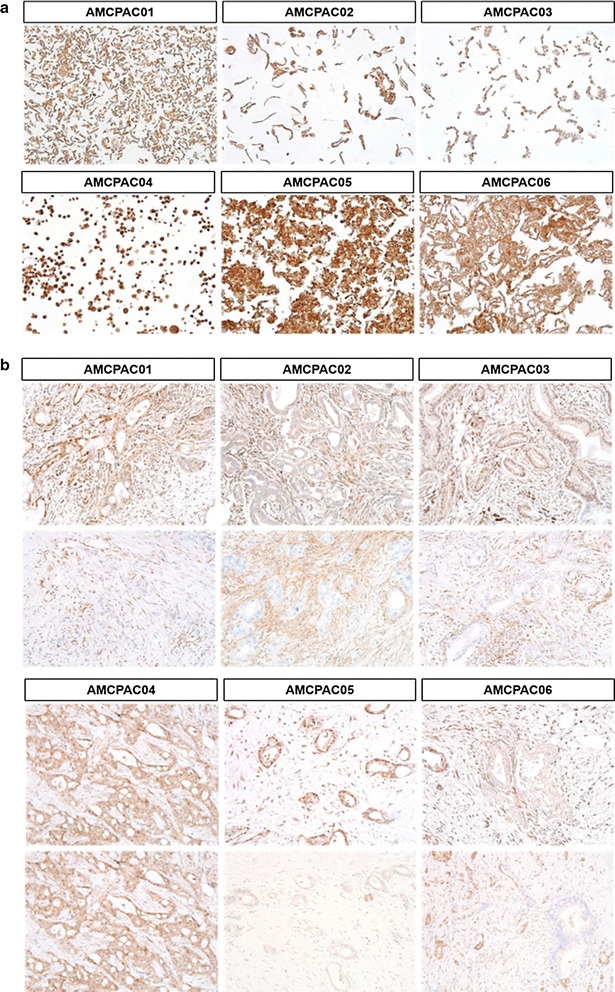
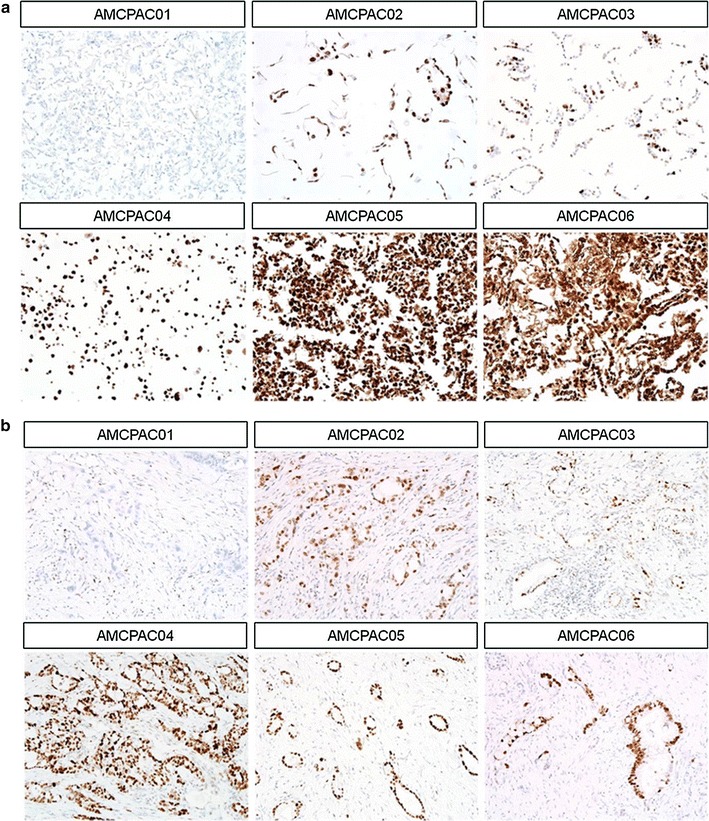
From the 81 pancreatic ductal adenocarcinomas, six (7.4% success rate) patient-derived primary cell lines were established. The six AMCPAC cell lines showed various morphologies and exhibited a wide range of doubling times. AMCPAC cell lines contained mutant in codons 12, 13, or 61 and in exon 5 as well as showed aberrant p53 (5 overexpression and 1 total loss) or DPC4 (all 6 intact) expression. AMCPAC cell lines demonstrated homology for the mutation and p53 expression compared with matched primary cancer tissues, but showed heterogeneous DPC4 expression patterns.
The novel AMCPAC01-06 cell lines established in this study may contribute to the understanding of pancreatic ductal adenocarcinomas. Retrospectively registered.
胰腺导管腺癌是最具恶性的肿瘤之一,预后很差。除胰腺癌外,我们对各种癌症的了解最近改善了癌症患者的生存率。建立胰腺导管腺癌的原发性癌细胞系将有助于了解这种疾病的分子机制。
收集81例手术切除的胰腺导管腺癌。建立了6个新的胰腺癌细胞系AMCPAC01 - 06,并将其组织发生学特征与其匹配组织进行比较。通过测序或SMAD4和p53免疫组织化学研究细胞系的临床病理和分子特征。使用AMCPAC细胞系建立异种移植模型。
从81例胰腺导管腺癌中,建立了6个(成功率7.4%)患者来源的原发性细胞系。6个AMCPAC细胞系表现出不同的形态,倍增时间范围广泛。AMCPAC细胞系在密码子12、13或61以及外显子5中含有突变,并且显示出异常的p53(5个过表达和1个完全缺失)或DPC4(全部6个完整)表达。与匹配的原发性癌组织相比,AMCPAC细胞系在突变和p53表达方面表现出同源性,但显示出异质性的DPC4表达模式。
本研究建立的新型AMCPAC01 - 06细胞系可能有助于对胰腺导管腺癌的理解。回顾性注册。