UCLA School of Nursing, University of California at Los Angeles, 700 Tiverton Avenue, Los Angeles, CA 90095-1702 USA.
Brain Research Institute, David Geffen School of Medicine at UCLA, University of California at Los Angeles, Los Angeles, CA 90095 USA.
Biol Sex Differ. 2017 Apr 20;8:13. doi: 10.1186/s13293-017-0135-9. eCollection 2017.
Cardiovascular disease varies between sexes, suggesting male-female autonomic control differences. Insular gyri help coordinate autonomic regulation and show a sex-dependent response to a sympathetic challenge.
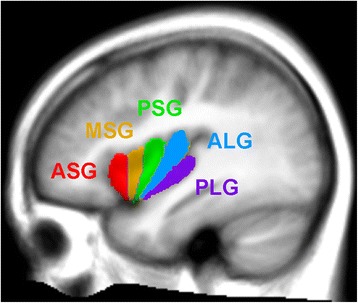
We examined sex-related insular gyral responses to a short static handgrip exercise challenge eliciting parasympathetic withdrawal with functional magnetic resonance imaging (fMRI) during four 16-s challenges (80% maximum strength) in 23 healthy females (age; mean ± std 50 ± 8 years) and 40 males (46 ± 9 years). Heart rate (HR) and fMRI signals were compared with repeated measures ANOVA ( < 0.05). Additional analyses were performed with age and age interactions, as well as right-handed only subjects.
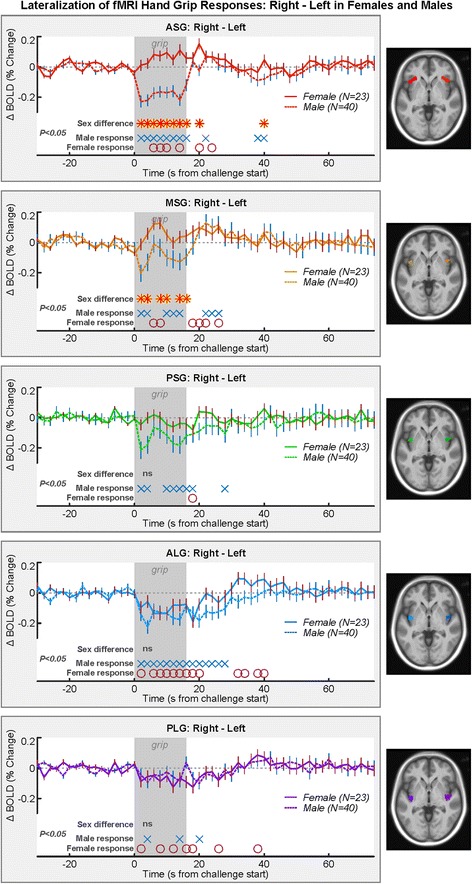
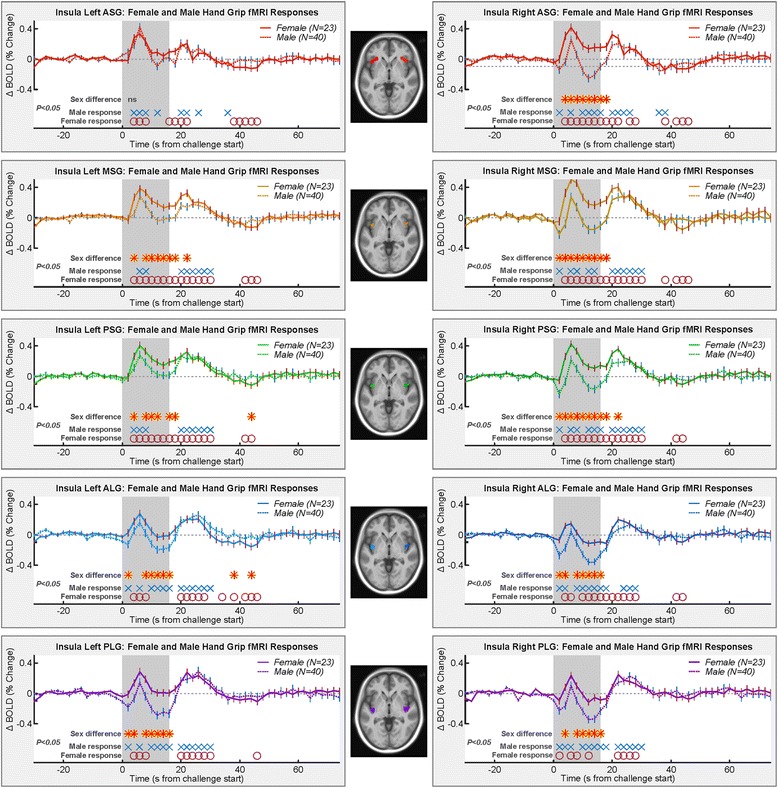
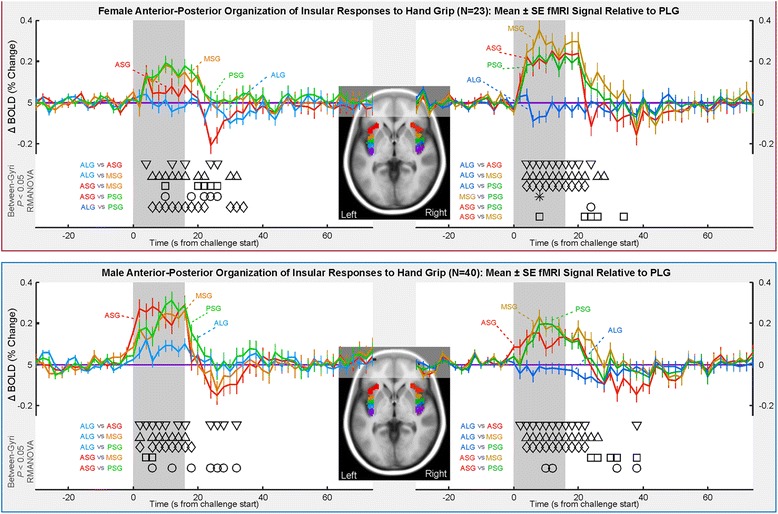
Females showed higher resting HR than males, but smaller percent HR change increases to the challenges. All gyri showed fMRI patterns concurrent with an HR peak and decline to baseline. fMRI signals followed an anterior-posterior organization in both sexes, but lateralization varied by gyri and sex. All subjects showed greater signals in the anterior vs. posterior gyri (females 0.3%, males 0.15%). The middle gyri showed no lateralization in females but left-sided dominance in males (0.1%). The posterior gyri showed greater left than right activation in both sexes. The anterior-most gyri exhibited a prominent sex difference, with females showing a greater right-sided activation (0.2%) vs. males displaying a greater left-sided activation (0.15%). Age and handedness affected a minority of findings but did not alter the overall pattern of results.
The anterior insula plays a greater role in cardiovascular regulation than posterior areas during a predominantly parasympathetic withdrawal challenge, with opposite lateralization between sexes. In females, the left anterior-most gyrus responded distinctly from other regions than males. Those sex-specific structural and functional brain patterns may contribute over time to variations in cardiovascular disease between the sexes.
心血管疾病在性别之间存在差异,这表明男性和女性的自主神经控制存在差异。脑岛回有助于协调自主神经调节,并对交感神经挑战表现出性别依赖性反应。
我们使用功能磁共振成像(fMRI)在 23 名健康女性(年龄;平均值±标准差 50±8 岁)和 40 名男性(46±9 岁)中,在 4 个 16 秒的挑战(最大强度的 80%)期间检查了与性别相关的脑岛回对短暂静态手握挑战的反应,该挑战引发副交感神经撤回。使用重复测量方差分析( < 0.05)比较心率(HR)和 fMRI 信号。还进行了年龄和年龄相互作用以及仅右手的受试者的附加分析。
女性的静息心率高于男性,但对挑战的 HR 变化百分比增加较小。所有脑回均显示出与 HR 峰值和基线下降同时发生的 fMRI 模式。fMRI 信号在两性中均遵循前后组织,但其侧化方式因脑回和性别而异。所有受试者在前回与后回相比显示出更大的信号(女性 0.3%,男性 0.15%)。女性的中间回没有侧化,但男性表现出左侧优势(0.1%)。后回在两性中显示出左侧比右侧更大的激活。最前的脑回表现出明显的性别差异,女性显示出右侧更大的激活(0.2%),而男性则显示出左侧更大的激活(0.15%)。年龄和惯用手影响了少数发现,但并未改变整体结果模式。
在前摄性脑岛中,在主要副交感神经撤退挑战期间,心血管调节的作用大于后摄区域,而性别之间的侧化相反。在女性中,最左侧的前回与男性的其他区域明显不同。这些性别特异性的结构和功能大脑模式可能随着时间的推移而导致男女之间心血管疾病的变化。