Maeda Eijiro, Nakagaki Masashi, Ichikawa Katsuhisa, Nagayama Kazuaki, Matsumoto Takeo
Biomechanics Laboratory, Department of Mechanical Science and Engineering, Graduate School of Engineering, Nagoya University, Nagoya, Japan.
Biomechanics Laboratory, Department of Mechanical Engineering, Nagoya Institute of Technology, Nagoya, Japan.
Bone Rep. 2017 Apr 4;6:120-128. doi: 10.1016/j.bonr.2017.04.002. eCollection 2017 Jun.
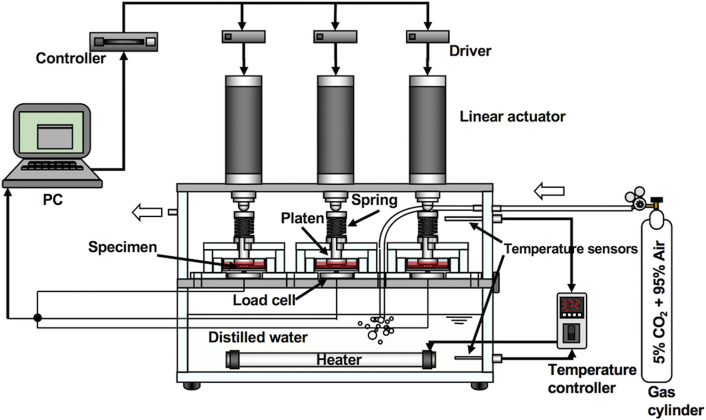
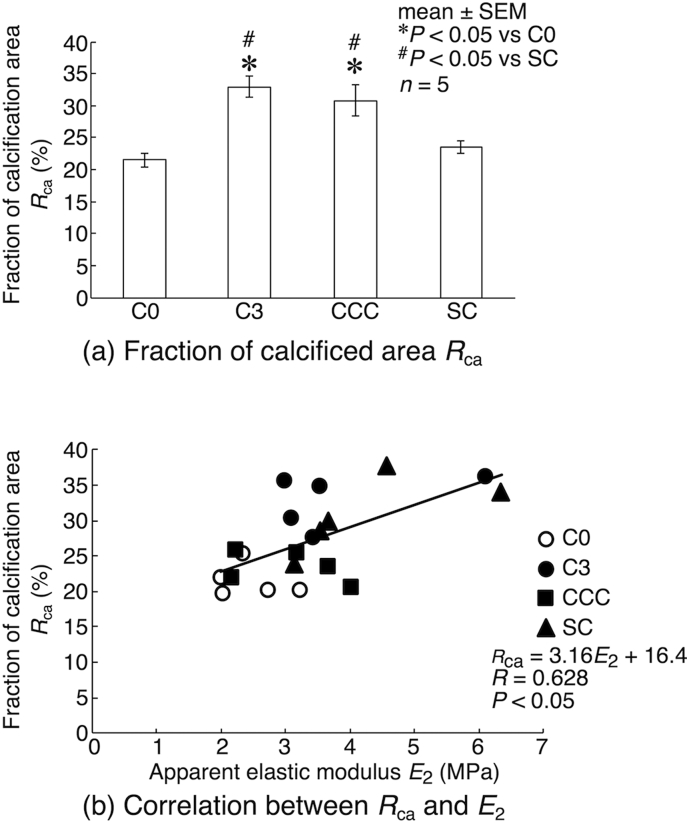
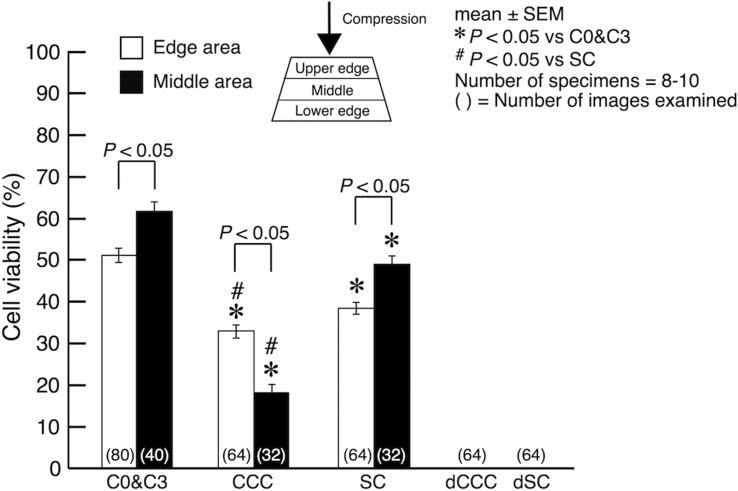
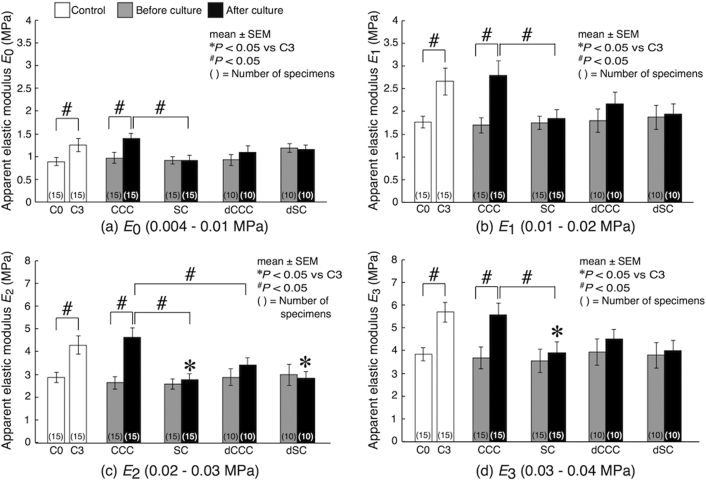
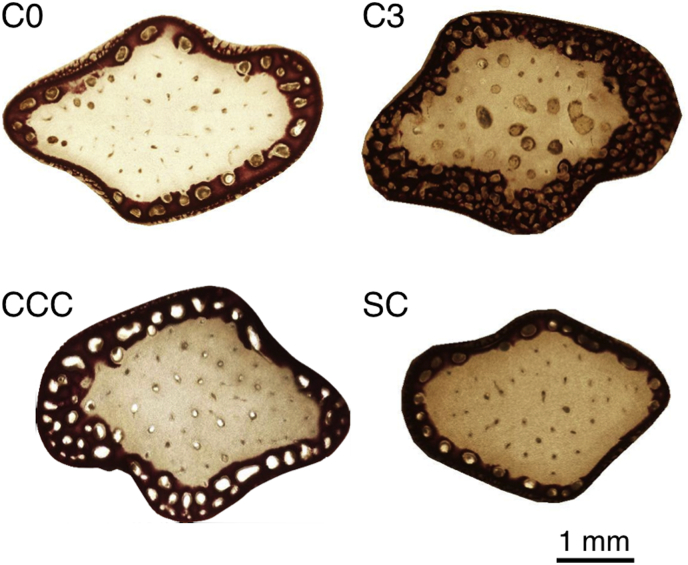
Contribution of mechanical loading to tissue growth during both the development and post-natal maturation is of a particular interest, as its understanding would be important to strategies in bone tissue engineering and regenerative medicine. The present study has been performed to investigate how immature bone responds to mechanical loading using an ex vivo culture system. A slice of the tibia, with the thickness of 3 mm, was obtained from 0-day-old chick. For the ex vivo culture experiment in conjunction with cyclic compressive loading, we developed a custom-made, bioreactor system where both the load and the deformation applied to the specimen was recorded. Cyclic compression, with an amplitude of 0.3 N corresponding to 1 to 2% compressive strain, was applied to immature bone specimen during a 3-day culture period at an overall loading rate 3-4 cycles/min, in the presence of β-glycerol phosphate and dexamethasone in culture medium. The stress-strain relationship was obtained at the beginning and the end of the culture experiment. In addition, analyses for alkaline phosphate release, cell viability and tissue calcification were also performed. It was exhibited that elastic moduli of bone slices were significantly elevated at the end of the 3-day culture in the presence of cyclic compression, which was a similar phenomenon to significant elevation of the elastic moduli of bone tissue by the maturation from 0-day old to 3-day old. By contrast, no significant changes in the moduli were observed in the absence of cyclic compression or in deactivated, cell-free samples. The increases in the moduli were coincided with the increase in calcified area in the bone samples. It was confirmed that immature bone can respond to compressive loading in vitro and demonstrate the growth of bone matrix, similar to natural, in vivo maturation. The elevation of the elastic moduli was attributable to the increased calcified area and the realignment of collagen fibers parallel to the loading direction. The ex vivo loading system established here can be further applied to study responses to mechanical loading in osteogenesis as well as callus maturation for better understanding of factors to consider in successful bone regeneration with mechanical factors.
机械负荷在发育和出生后成熟过程中对组织生长的作用尤其令人关注,因为了解这一点对于骨组织工程和再生医学的策略至关重要。本研究旨在使用体外培养系统研究未成熟骨对机械负荷的反应。从0日龄雏鸡获取厚度为3毫米的胫骨切片。为了结合循环压缩负荷进行体外培养实验,我们开发了一种定制的生物反应器系统,该系统记录施加到标本上的负荷和变形。在3天的培养期内,以0.3 N的振幅(对应1%至2%的压缩应变)对未成熟骨标本施加循环压缩,总体加载速率为3 - 4次/分钟,培养基中存在β - 甘油磷酸和地塞米松。在培养实验开始和结束时获得应力 - 应变关系。此外,还进行了碱性磷酸酶释放、细胞活力和组织钙化的分析。结果表明,在循环压缩存在的情况下,骨切片的弹性模量在3天培养结束时显著升高,这与从0日龄到3日龄成熟过程中骨组织弹性模量的显著升高现象相似。相比之下,在没有循环压缩或失活的无细胞样本中,模量没有显著变化。模量的增加与骨样本中钙化面积的增加一致。证实未成熟骨在体外可对压缩负荷作出反应,并表现出骨基质的生长,类似于自然的体内成熟。弹性模量的升高归因于钙化面积的增加以及胶原纤维沿负荷方向的重新排列。这里建立的体外加载系统可进一步应用于研究成骨过程中对机械负荷以及骨痂成熟的反应,以便更好地理解在成功的骨再生中考虑机械因素时需要考虑的因素。