Wagner Kay-Dietrich, Ying Yilin, Leong Waiian, Jiang Jie, Hu Xuefei, Chen Yi, Michiels Jean-François, Lu Yiming, Gilson Eric, Wagner Nicole, Ye Jing
Université Côte d'Azur, CNRS, Inserm, Institut for Research on Cancer and Aging, Nice (IRCAN), Faculty of Medicine, Nice, France.
Université Côte d'Azur, CNRS, Inserm, Institut Biology Valrose (iBV), Faculty of Medicine, Nice, France.
Aging (Albany NY). 2017 Apr;9(4):1219-1232. doi: 10.18632/aging.101223.
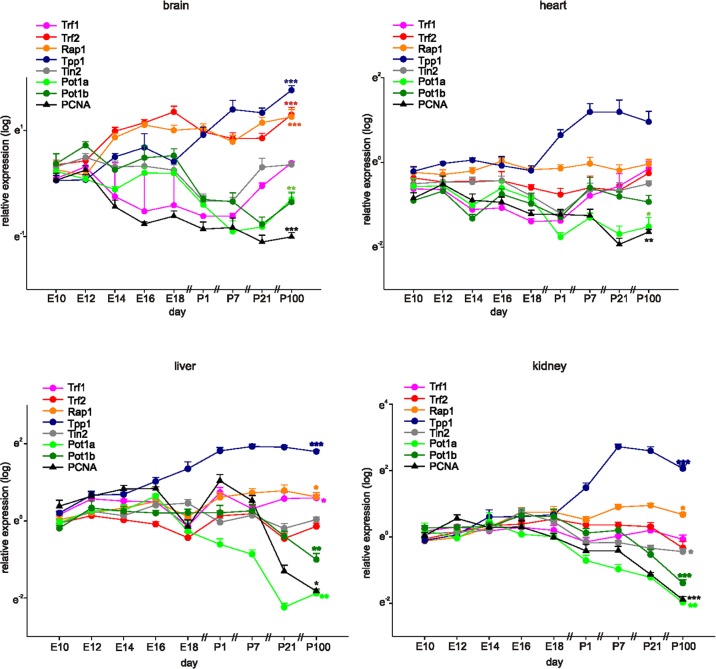
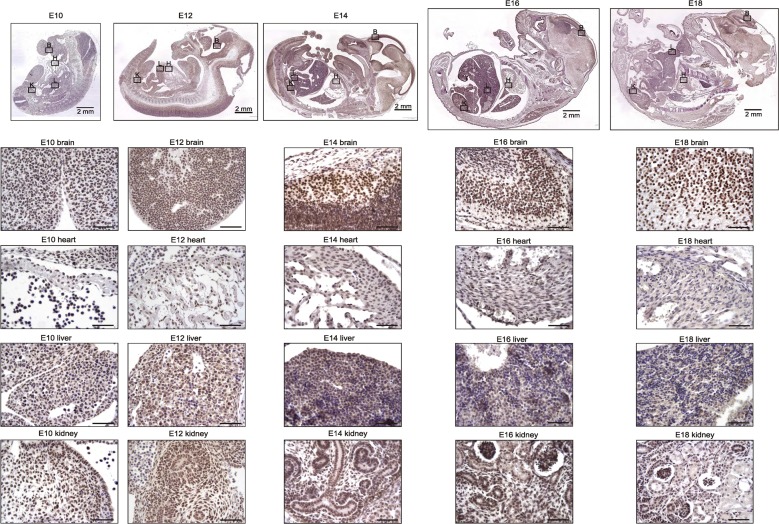
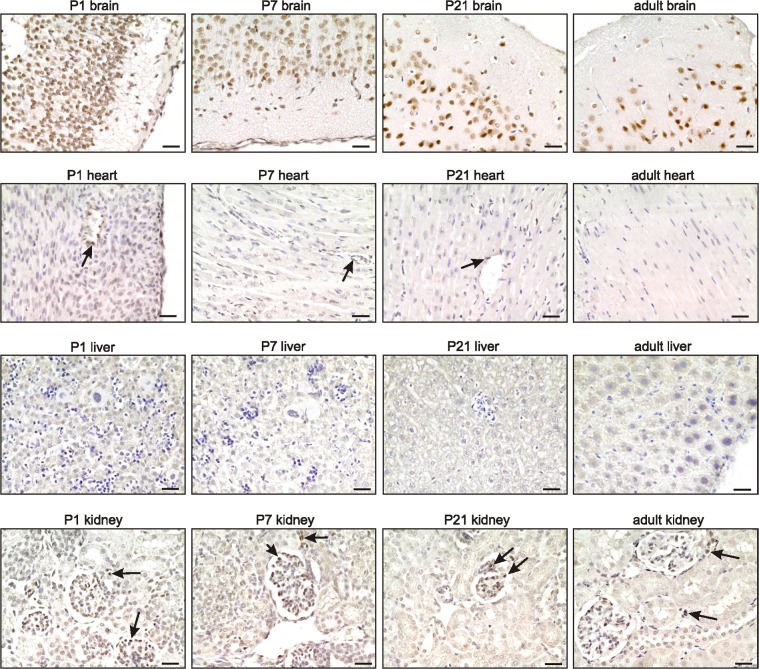
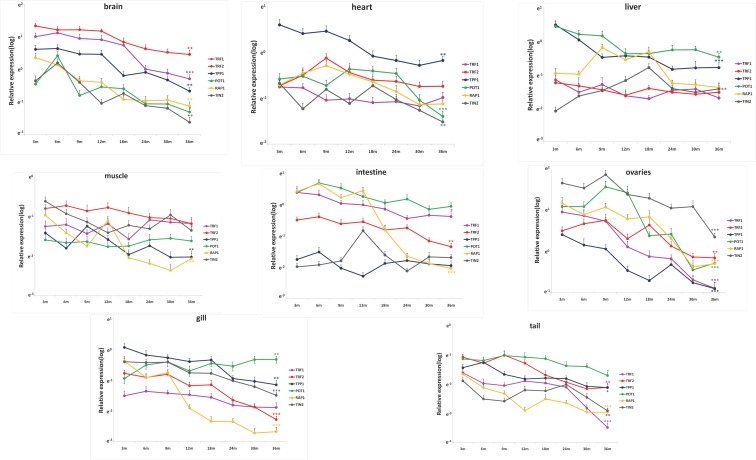
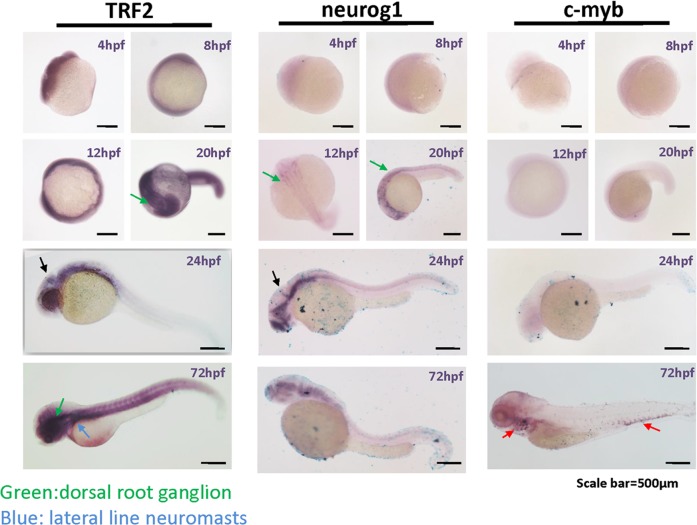
Shelterin forms the core complex of telomere proteins and plays critical roles in protecting telomeres against unwanted activation of the DNA damage response and in Emaintaining telomere length homeostasis. Although shelterin expression is believed to be ubiquitous for stabilization of chromosomal ends. Evidences suggest that some shelterin subunits have tissue-specific functions. However, very little is known regarding how shelterin subunit gene expression is regulated during development and aging. Using two different animal models, the mouse and zebrafish, we reveal herein that shelterin subunits exhibit distinct spatial and temporal expression patterns that do not correlate with the proliferative status of the organ systems examined. Together, this work shows that the shelterin subunits exhibit distinct spatiotemporal expression patterns, suggesting important tissue-specific functions during development and aging.
端粒保护蛋白复合体构成端粒蛋白的核心复合体,在保护端粒免受DNA损伤反应的不必要激活以及维持端粒长度稳态方面发挥着关键作用。尽管人们认为端粒保护蛋白复合体的表达普遍存在,以稳定染色体末端。但有证据表明,一些端粒保护蛋白复合体亚基具有组织特异性功能。然而,关于端粒保护蛋白复合体亚基基因在发育和衰老过程中是如何被调控的,我们知之甚少。利用小鼠和斑马鱼这两种不同的动物模型,我们在此揭示,端粒保护蛋白复合体亚基呈现出独特的时空表达模式,这些模式与所检测的器官系统的增殖状态无关。总之,这项工作表明,端粒保护蛋白复合体亚基呈现出独特的时空表达模式,这表明它们在发育和衰老过程中具有重要的组织特异性功能。