Xiao Mei-Fang, Xu Desheng, Craig Michael T, Pelkey Kenneth A, Chien Chun-Che, Shi Yang, Zhang Juhong, Resnick Susan, Pletnikova Olga, Salmon David, Brewer James, Edland Steven, Wegiel Jerzy, Tycko Benjamin, Savonenko Alena, Reeves Roger H, Troncoso Juan C, McBain Chris J, Galasko Douglas, Worley Paul F
Solomon H. Snyder Department of Neuroscience, Johns Hopkins University School of Medicine, Baltimore, United States.
Department of Physiology, Johns Hopkins University School of Medicine, Baltimore, United States.
Elife. 2017 Mar 23;6:e23798. doi: 10.7554/eLife.23798.
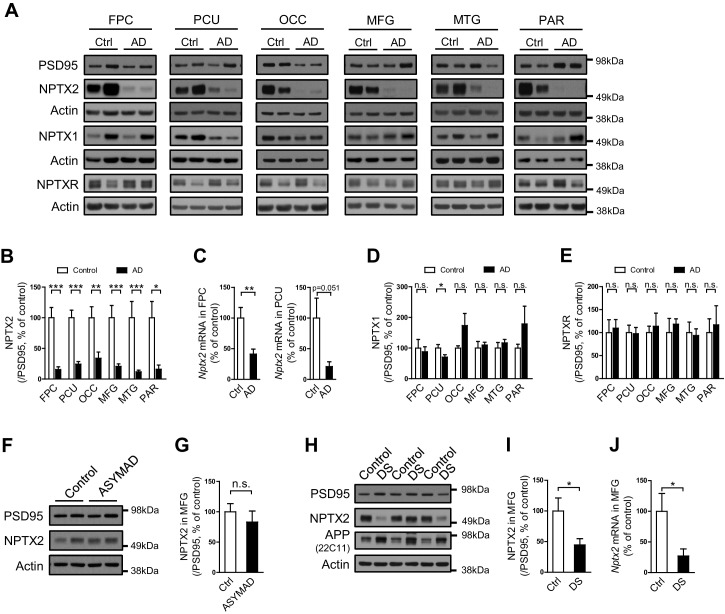
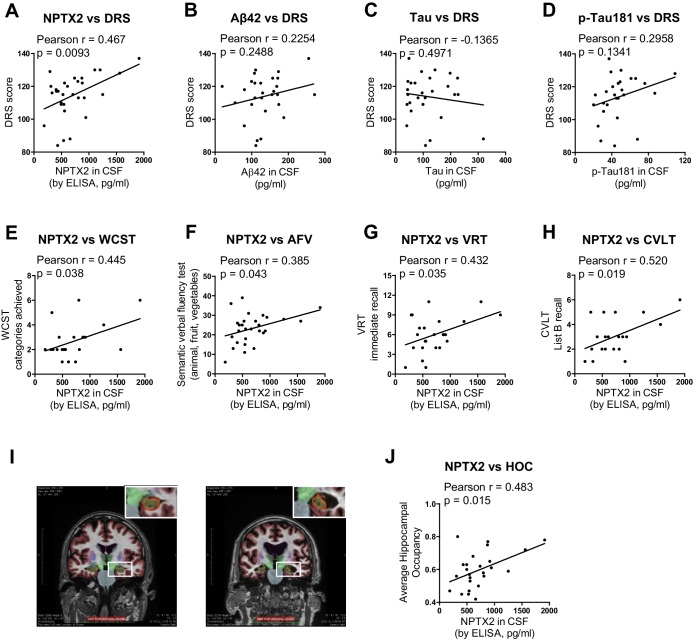
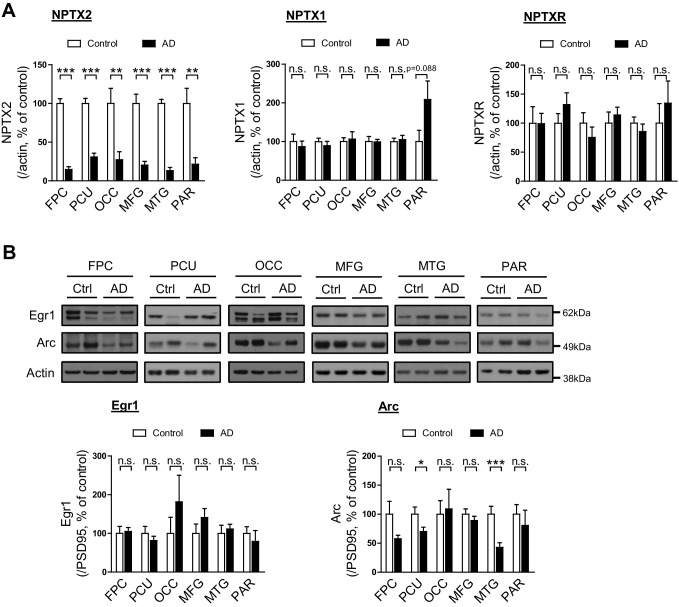
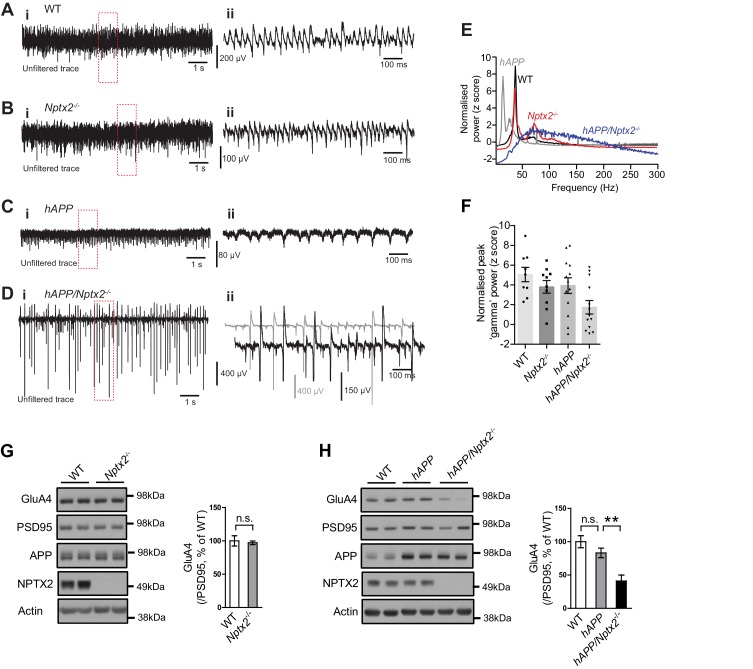
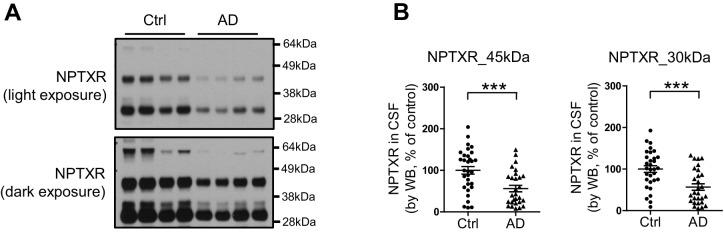
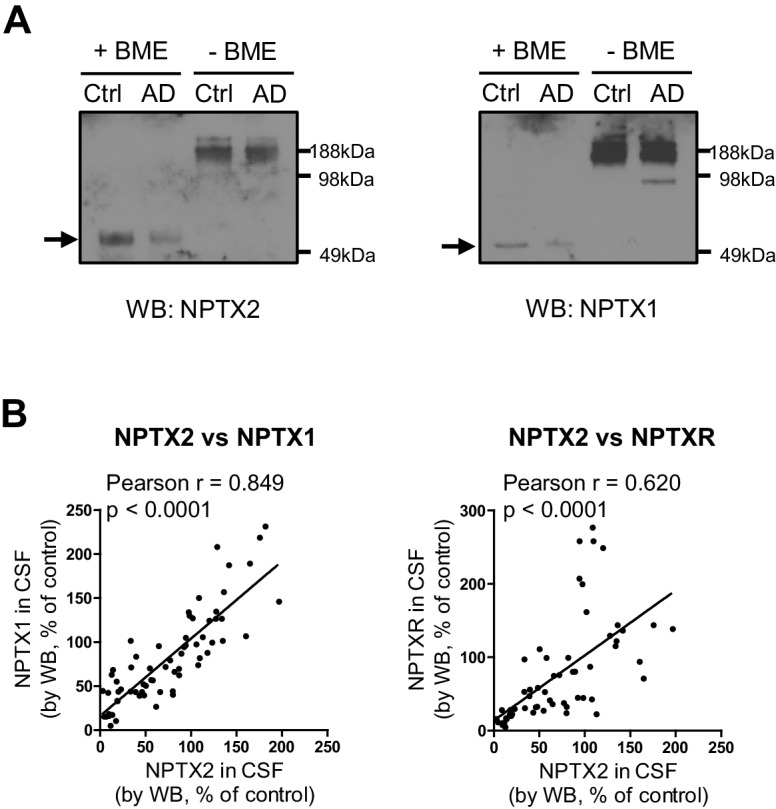
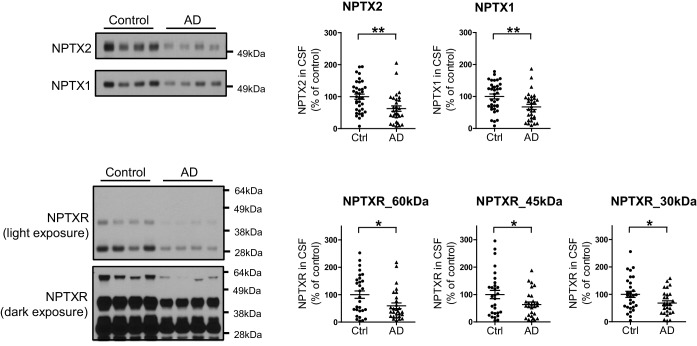
Memory loss in Alzheimer's disease (AD) is attributed to pervasive weakening and loss of synapses. Here, we present findings supporting a special role for excitatory synapses connecting pyramidal neurons of the hippocampus and cortex with fast-spiking parvalbumin (PV) interneurons that control network excitability and rhythmicity. Excitatory synapses on PV interneurons are dependent on the AMPA receptor subunit GluA4, which is regulated by presynaptic expression of the synaptogenic immediate early gene NPTX2 by pyramidal neurons. In a mouse model of AD amyloidosis, results in reduced GluA4 expression, disrupted rhythmicity, and increased pyramidal neuron excitability. Postmortem human AD cortex shows profound reductions of NPTX2 and coordinate reductions of GluA4. NPTX2 in human CSF is reduced in subjects with AD and shows robust correlations with cognitive performance and hippocampal volume. These findings implicate failure of adaptive control of pyramidal neuron-PV circuits as a pathophysiological mechanism contributing to cognitive failure in AD.
阿尔茨海默病(AD)中的记忆丧失归因于突触普遍减弱和丧失。在此,我们展示的研究结果支持连接海马体和皮质的锥体神经元与控制网络兴奋性和节律性的快速放电小白蛋白(PV)中间神经元的兴奋性突触具有特殊作用。PV中间神经元上的兴奋性突触依赖于AMPA受体亚基GluA4,而GluA4受锥体神经元突触生成即早基因NPTX2的突触前表达调控。在AD淀粉样变性小鼠模型中,结果导致GluA4表达降低、节律紊乱以及锥体神经元兴奋性增加。AD患者死后的皮质显示NPTX2显著减少,同时GluA4也相应减少。AD患者脑脊液中的NPTX2减少,并与认知表现和海马体体积密切相关。这些发现表明,锥体神经元 - PV回路的适应性控制失效是导致AD认知功能障碍的一种病理生理机制。