Yang Yang, Ding Shiao, Xu Gaojun, Chen Fei, Ding Fangbao
Department of Cardiothoracic Surgery, Xinhua Hospital, School of Medicine, Shanghai Jiao Tong University, Shanghai 200092, P.R. China.
Mol Med Rep. 2017 Jun;15(6):3699-3705. doi: 10.3892/mmr.2017.6466. Epub 2017 Apr 12.
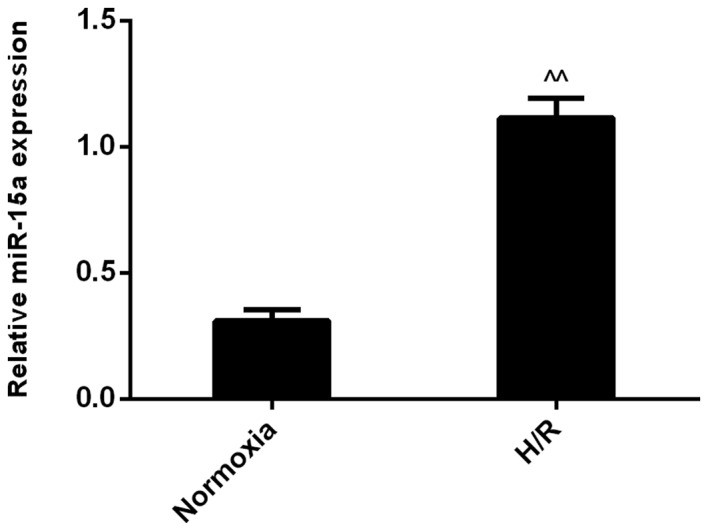
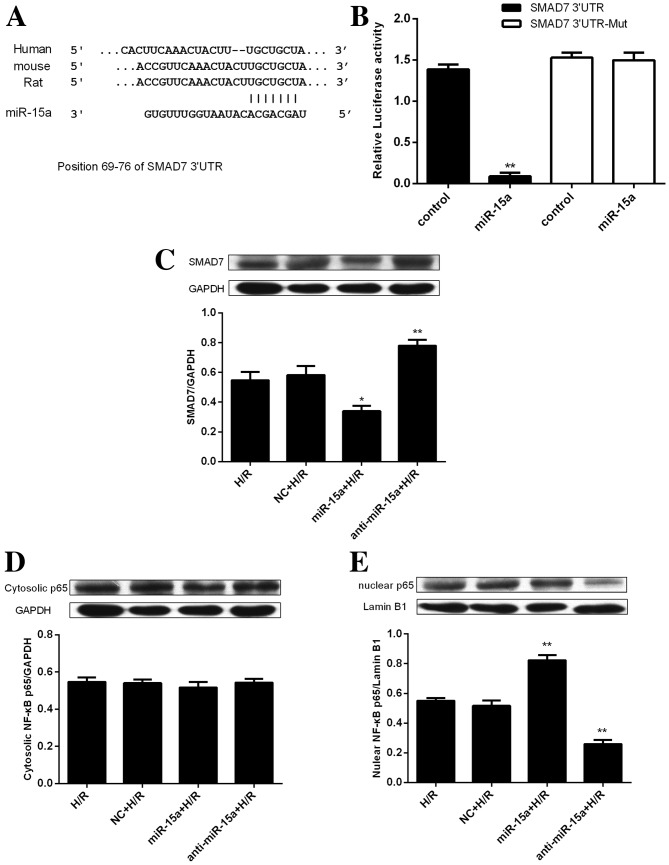
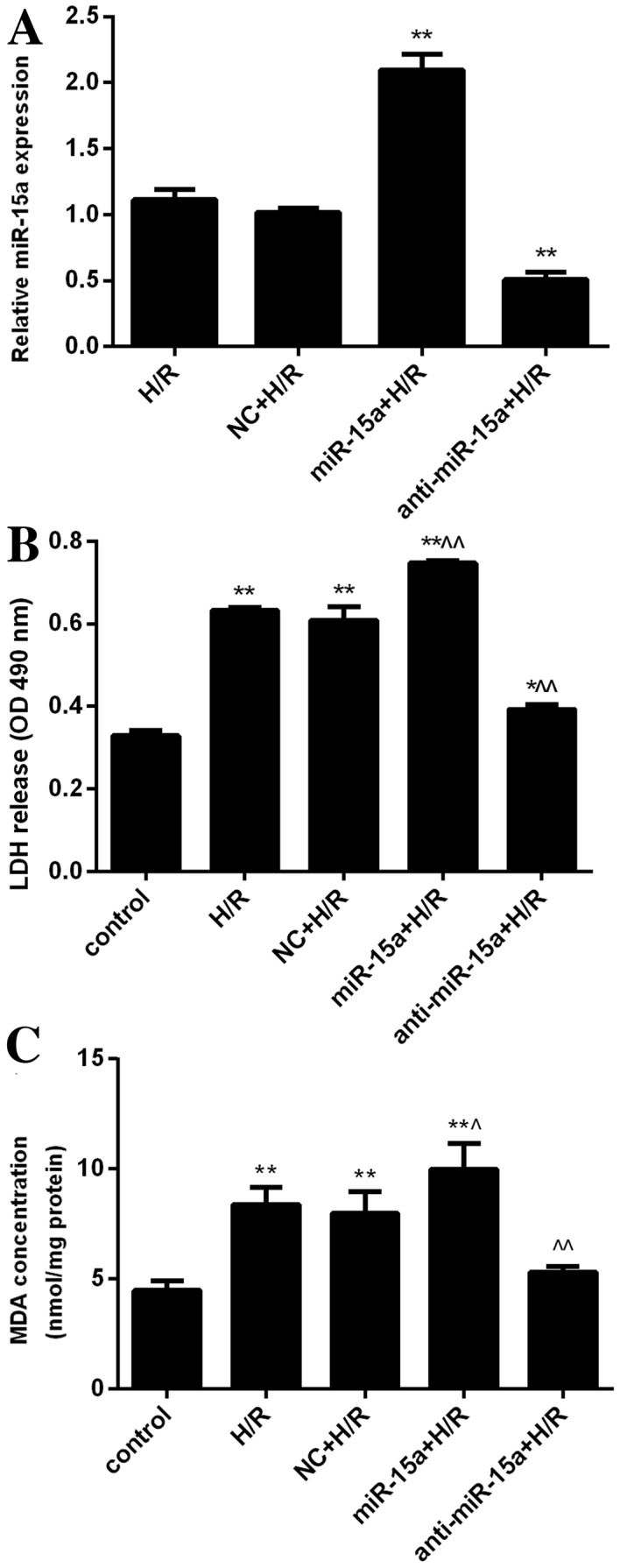
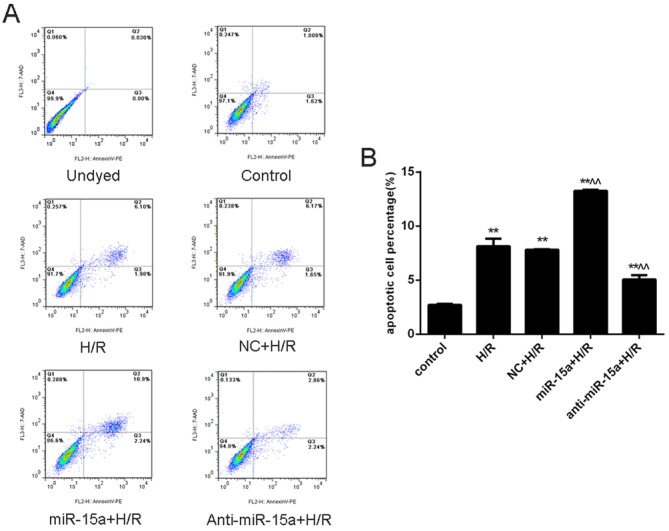
Myocardial ischemia/reperfusion (I/R) injury is a major pathological process in coronary heart disease and cardiac surgery, and is associated with aberrant microRNA (miR) expression. Previous studies have demonstrated that inhibition of miR-15a expression may ameliorate I/R‑induced myocardial injury. In the present study, the potential role and underlying mechanism of miR‑15a in hypoxia/reoxygenation‑induced apoptosis of cardiomyocytes was investigated. Myocardial I/R was simulated in cultured H9c2 cells by 24 h hypoxia followed by 24 h reoxygenation. Using recombinant lentivirus vectors, the inhibition of miR‑15a was indicated to significantly reduce cardiomyocyte apoptosis and release of lactate dehydrogenase and malondialdehyde. Conversely, upregulated miR‑15a expression was pro‑apoptotic. Mothers against decapentaplegic homolog 7 (SMAD7) was identified by bioinformatics analysis as a potential target of miR‑15a. Luciferase reporter assays and western blotting for endogenous SMAD7 protein indicated that miR‑15a inhibited SMAD7 expression via its 3'‑untranslated region. Nuclear levels of nuclear factor‑κB (NF‑κB) p65 were increased by miR‑15a expression and decreased by miR‑15a inhibition, which is consistent with the possibility that the inhibition of SMAD7 by miR-15a results in NF‑κB activation. These findings suggested that the therapeutic effects of miR‑15a inhibition on I/R injury may potentially be explained by its ability to release SMAD‑7‑dependent NF‑κB inhibition. This may provide evidence for miR‑15a as a potential therapeutic target for the treatment of cardiac I/R injury.
心肌缺血/再灌注(I/R)损伤是冠心病和心脏手术中的主要病理过程,与微小RNA(miR)表达异常有关。先前的研究表明,抑制miR-15a表达可能改善I/R诱导的心肌损伤。在本研究中,研究了miR-15a在缺氧/复氧诱导的心肌细胞凋亡中的潜在作用及潜在机制。通过24小时缺氧随后24小时复氧,在培养的H9c2细胞中模拟心肌I/R。使用重组慢病毒载体,结果表明抑制miR-15a可显著减少心肌细胞凋亡以及乳酸脱氢酶和丙二醛的释放。相反,上调miR-15a表达具有促凋亡作用。通过生物信息学分析确定,抗五肢瘫蛋白同源物7(SMAD7)是miR-15a的潜在靶标。荧光素酶报告基因检测和内源性SMAD7蛋白的蛋白质印迹分析表明,miR-15a通过其3'非翻译区抑制SMAD7表达。miR-15a表达可增加核因子-κB(NF-κB)p65的核水平,而抑制miR-15a则使其降低,这与miR-15a抑制SMAD7导致NF-κB激活的可能性一致。这些发现表明,抑制miR-15a对I/R损伤的治疗作用可能是由于其能够解除SMAD-7依赖性NF-κB抑制。这可能为miR-15a作为治疗心脏I/R损伤的潜在治疗靶点提供证据。