Xu Zhifeng, Liu Yanchao, Wei Peng, Feng Kaiyang, Niu Jinzhi, Shen Guangmao, Lu Wencai, Xiao Wei, Wang Jinjun, Smagghe Guy J, Xu Qiang, He Lin
Key Laboratory of Entomology and Pest Control Engineering of Chongqing, College of Plant Protection, Southwest UniversityChongqing, China.
Department of Crop Protection, Faculty of Bioscience Engineering, Ghent UniversityGhent, Belgium.
Front Physiol. 2017 Apr 11;8:216. doi: 10.3389/fphys.2017.00216. eCollection 2017.
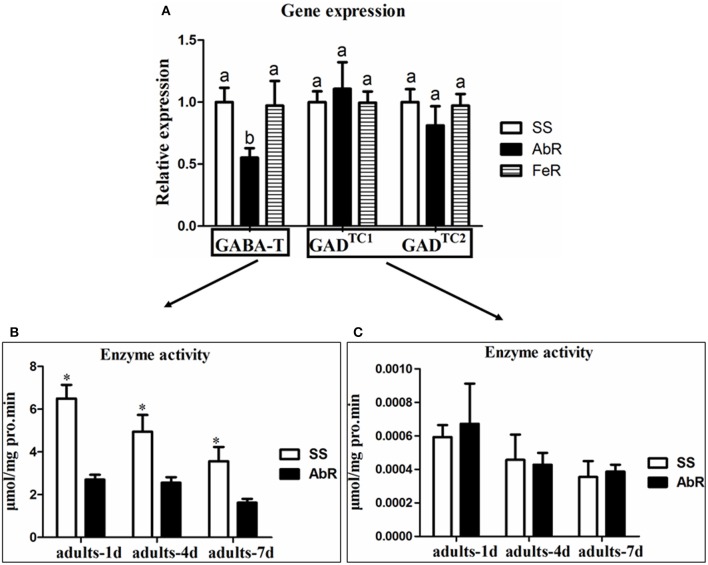
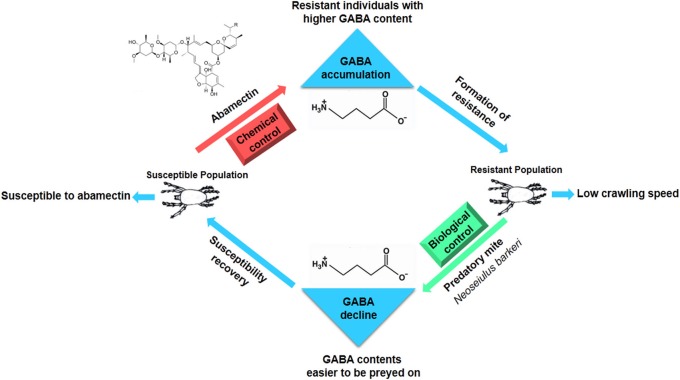
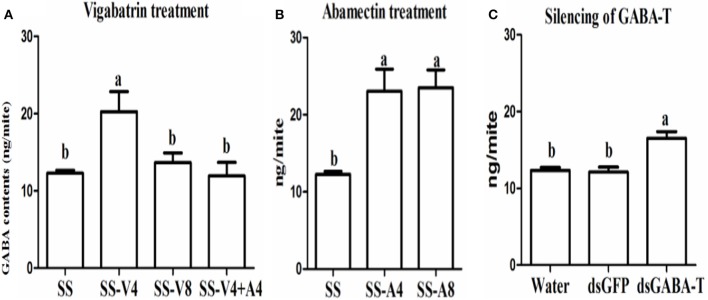
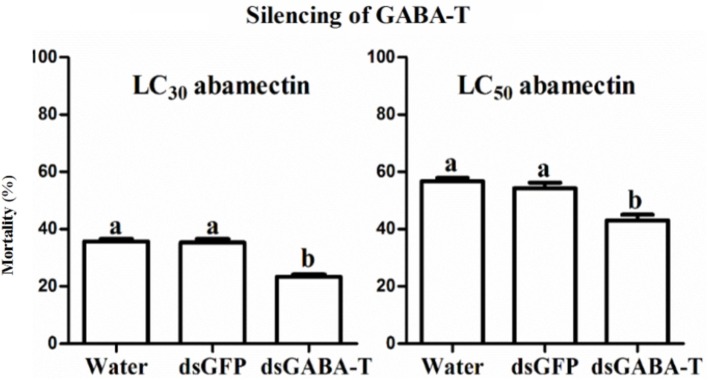
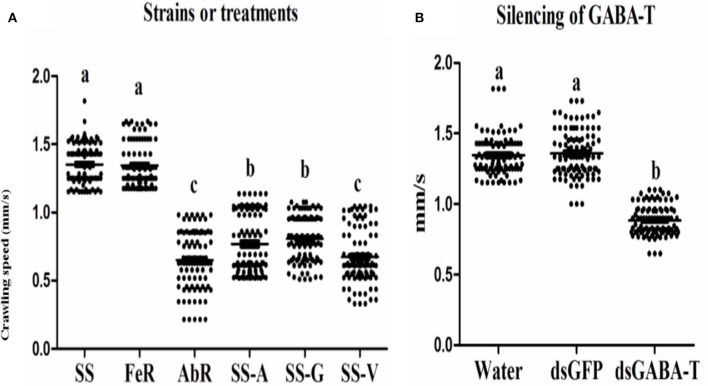
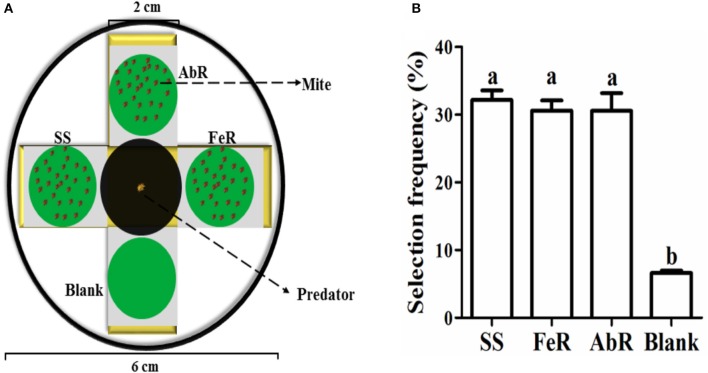
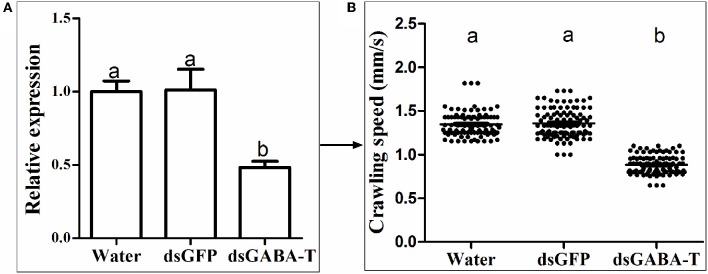
Abamectin has been widely used as an insecticide/acaricide for more than 30 years because of its superior bioactivity. Recently, an interesting phenomenon was identified in the carmine spider mite, , an important pest in agriculture. The gamma aminobutyric acid (GABA) contents in a laboratory abamectin resistant strain of (AbR) were significantly increased. Decreases in activity and mRNA expression of GABA transaminase (GABA-T) were responsible for GABA accumulation in AbR mites. To clarify the mechanism of GABA accumulation mediated abamectin resistance, three artificial approaches were conducted to increase GABA contents in susceptible mites, including feeding of vigabatrin (a specific inhibitor of GABA-T), feeding of exogenous GABA, and inhibition of GABA-T gene expression. The results showed that susceptible mites developed resistance to abamectin when the GABA contents were artificially increased. We also observed that the mites with higher GABA contents moved more slowly, which is consistent with the fact that GABA is an inhibitory neurotransmitter in arthropods. Subsequently, functional response assays revealed that predation rates of predatory mites on GABA accumulated abamectin-resistant mites were much higher than control groups. The tolerance to abamectin, slow crawling speed, and vulnerability to predators were all resulted from GABA accumulation. This relationship between GABA and predation was also confirmed in a field-collected population. Our finding indicates that predatory mites might be used as a tool for biological control to circumvent the development of abamectin resistance in mites.
由于其卓越的生物活性,阿维菌素作为杀虫剂/杀螨剂已被广泛使用30多年。最近,在农业重要害虫朱砂叶螨中发现了一个有趣的现象。在实验室阿维菌素抗性品系(AbR)中,γ-氨基丁酸(GABA)含量显著增加。GABA转氨酶(GABA-T)活性和mRNA表达的降低导致了AbR螨中GABA的积累。为了阐明GABA积累介导的阿维菌素抗性机制,采取了三种人工方法来增加敏感螨中的GABA含量,包括饲喂氨己烯酸(GABA-T的特异性抑制剂)、饲喂外源性GABA以及抑制GABA-T基因表达。结果表明,当GABA含量人为增加时,敏感螨对阿维菌素产生了抗性。我们还观察到,GABA含量较高的螨移动速度更慢,这与GABA是节肢动物中的抑制性神经递质这一事实一致。随后,功能反应试验表明,捕食性螨对GABA积累的阿维菌素抗性螨的捕食率远高于对照组。对阿维菌素的耐受性、缓慢的爬行速度和对捕食者的易感性均由GABA积累导致。在田间采集的种群中也证实了GABA与捕食之间的这种关系。我们的发现表明,捕食性螨可能被用作一种生物防治工具,以规避螨类对阿维菌素抗性的发展。