Weil Sandra, Memmer Stefanie, Lechner Axel, Huppert Volker, Giannattasio Ariane, Becker Tamara, Müller-Runte Andreas, Lampe Karen, Beutner Dirk, Quaas Alexander, Schubert Ralf, Herrmann Eva, Steinle Alexander, Koehl Ulrike, Walter Lutz, von Bergwelt-Baildon Michael S, Koch Joachim
NK Cell Biology, Georg-Speyer-Haus, Institute for Tumor Biology and Experimental Therapy, Frankfurt am Main, Germany.
Institute of Medical Microbiology and Hygiene, University of Mainz Medical Center, Mainz, Germany.
Front Immunol. 2017 Apr 10;8:387. doi: 10.3389/fimmu.2017.00387. eCollection 2017.
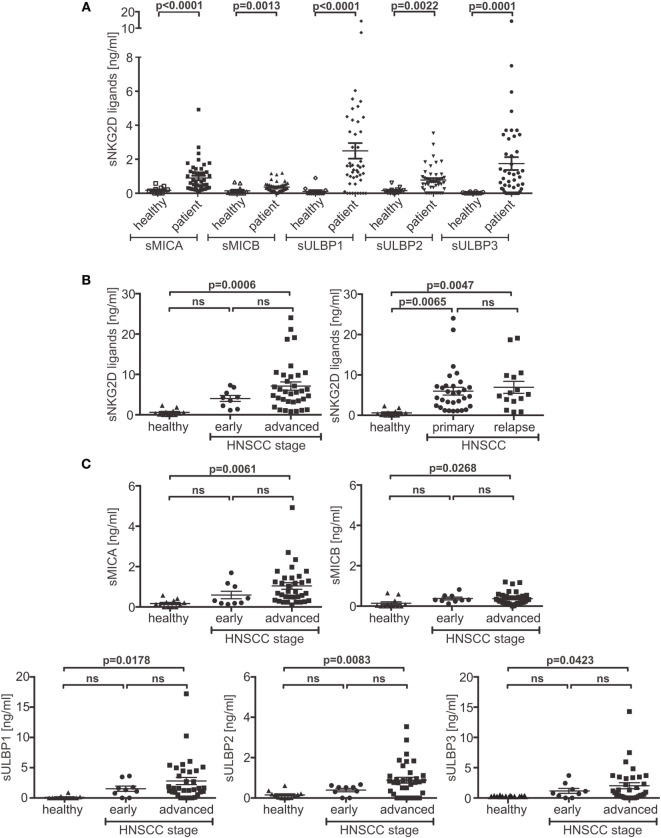
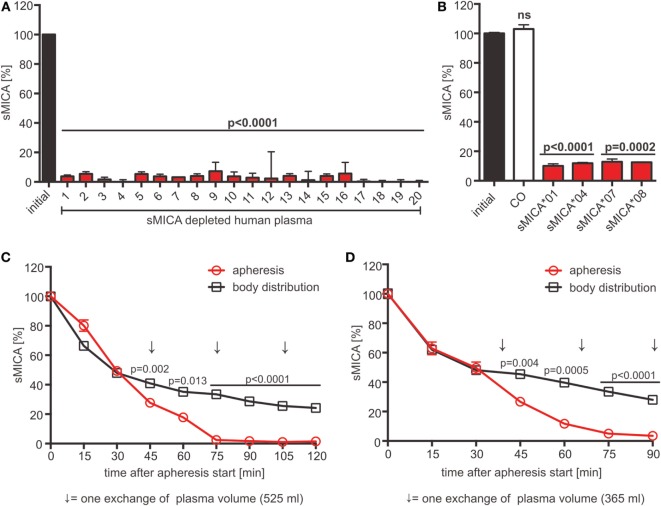
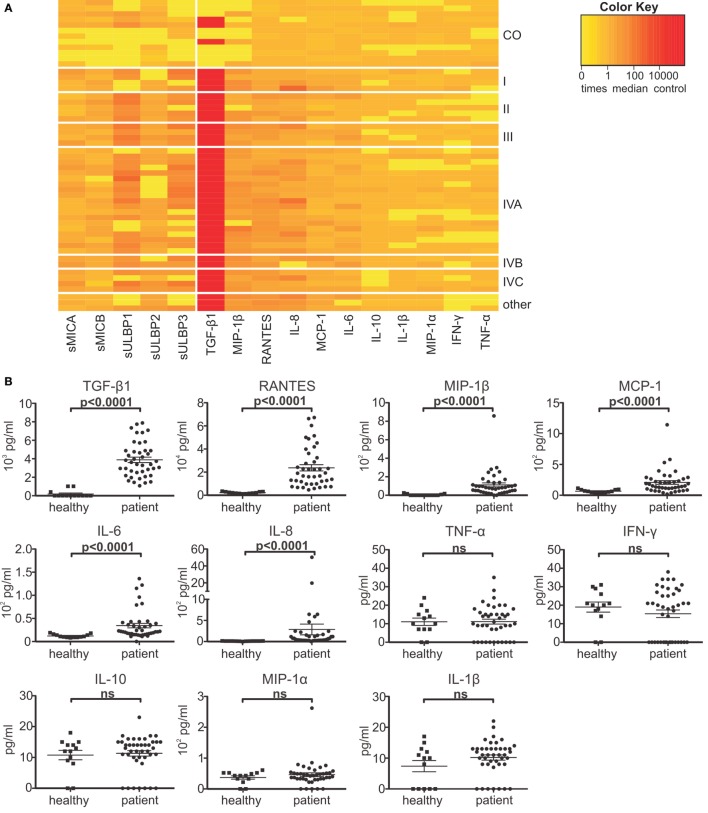
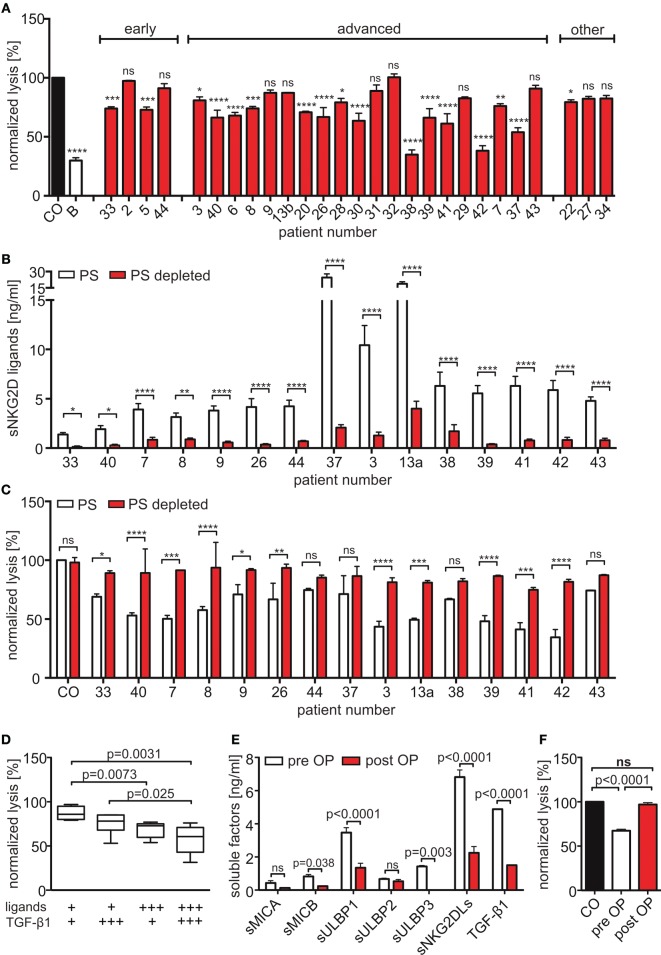
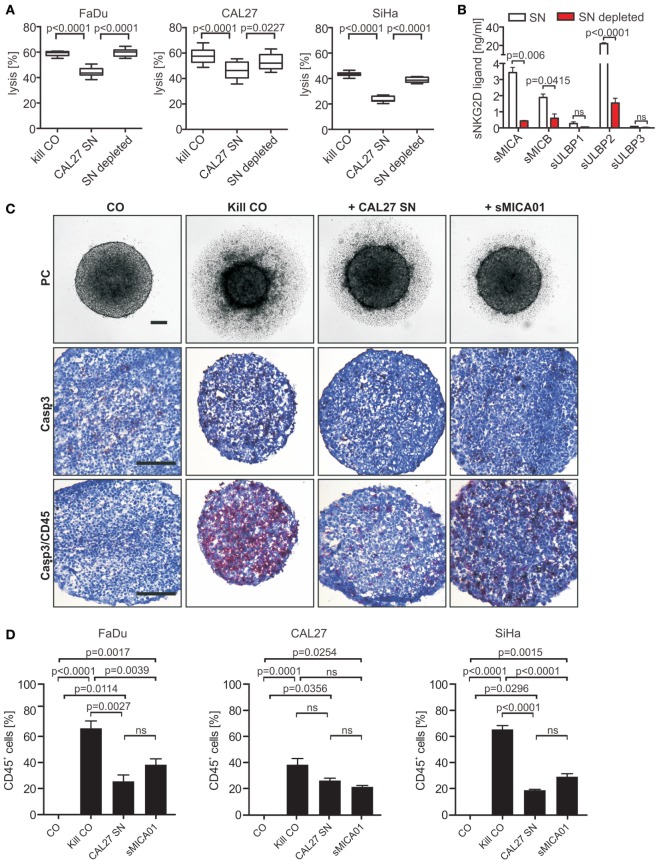
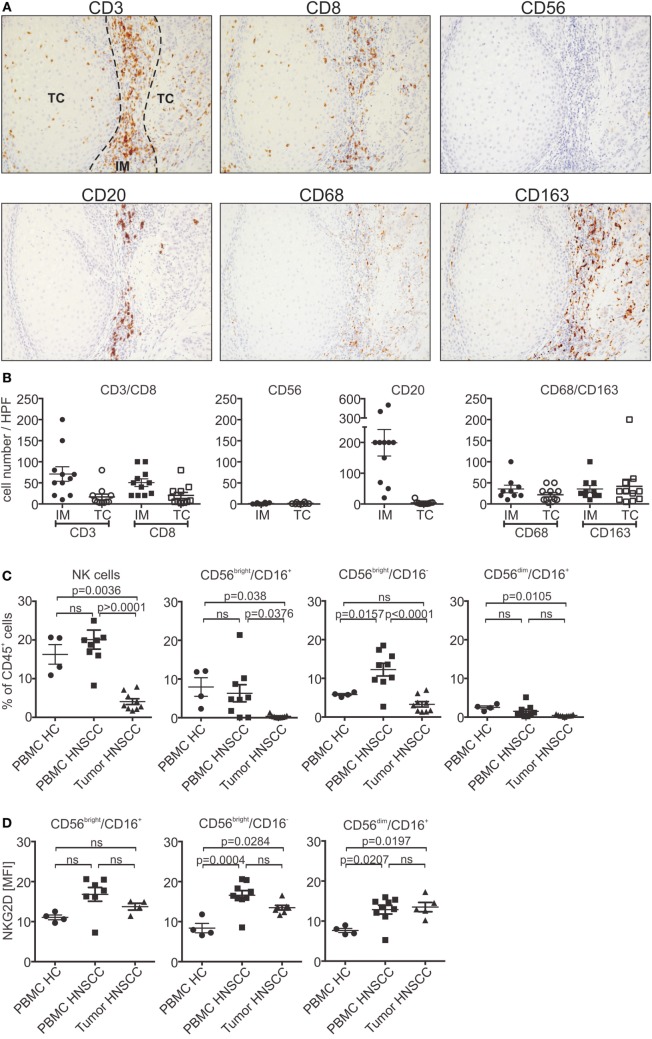
Head and neck squamous cell carcinoma (HNSCC) is a highly heterogeneous and aggressive tumor originating from the epithelial lining of the upper aero-digestive tract accounting for 300,000 annual deaths worldwide due to failure of current therapies. The natural killer group 2D (NKG2D) receptors on natural killer (NK) cells and several T cell subsets play an important role for immunosurveillance of HNSCC and are thus targeted by tumor immune evasion strategies in particular by shedding of various NKG2D ligands (NKG2DLs). Based on plasma and tumor samples of 44 HNSCC patients, we found that despite compositional heterogeneity the total plasma level of NKG2DLs correlates with NK cell inhibition and disease progression. Strikingly, based on tumor spheroids and primary tumors of HNSCC patients, we found that NK cells failed to infiltrate HNSCC tumors in the presence of high levels of NKG2DLs, demonstrating a novel mechanism of NKG2DL-dependent tumor immune escape. Therefore, the diagnostic acquisition of the plasma level of all NKG2DLs might be instrumental for prognosis and to decipher a patient cohort, which could benefit from restoration of NKG2D-dependent tumor immunosurveillance. Along these lines, we could show that removal of shed NKG2DLs (sNKG2DLs) from HNSCC patients' plasma restored NK cell function and in individual patients following surgical removal of the primary tumor. In order to translate these findings into a therapeutic setting, we performed a proof-of-concept study to test the efficacy of adsorption apheresis of sNKG2DLs from plasma after infusion of human MICA in rhesus monkeys. Complete removal of MICA was achieved after three plasma volume exchanges. Therefore, we propose adsorption apheresis of sNKG2DLs as a future preconditioning strategy to improve the efficacy of autologous and adoptively transferred immune cells in cellular cancer immunotherapy.
头颈部鳞状细胞癌(HNSCC)是一种高度异质性且侵袭性强的肿瘤,起源于上呼吸道和消化道的上皮组织,由于目前治疗方法的局限性,全球每年有30万人死于该病。自然杀伤(NK)细胞和多个T细胞亚群上的自然杀伤细胞2D(NKG2D)受体在HNSCC的免疫监视中发挥重要作用,因此成为肿瘤免疫逃逸策略的靶点,尤其是通过多种NKG2D配体(NKG2DLs)的脱落。基于44例HNSCC患者的血浆和肿瘤样本,我们发现尽管存在成分异质性,但NKG2DLs的血浆总水平与NK细胞抑制及疾病进展相关。令人惊讶的是,基于HNSCC患者的肿瘤球体和原发性肿瘤,我们发现当存在高水平的NKG2DLs时,NK细胞无法浸润HNSCC肿瘤,这表明了一种NKG2DL依赖的肿瘤免疫逃逸新机制。因此,检测所有NKG2DLs的血浆水平可能有助于预后诊断,并识别出可能从恢复NKG2D依赖的肿瘤免疫监视中获益的患者群体。据此,我们能够证明,去除HNSCC患者血浆中的脱落NKG2DLs(sNKG2DLs)可恢复NK细胞功能,并且在原发性肿瘤手术切除后的个体患者中也有此效果。为了将这些发现转化为治疗方案,我们进行了一项概念验证研究,以测试在恒河猴体内输注人MICA后,从血浆中吸附去除sNKG2DLs的疗效。经过三次血浆置换后,MICA被完全清除。因此,我们建议将吸附去除sNKG2DLs作为一种未来的预处理策略,以提高细胞癌症免疫治疗中自体和过继转移免疫细胞的疗效。