Goad Jyoti, Ko Yi-An, Syed Shafiq M, Crossingham Yazmin J, Tanwar Pradeep S
School of Biomedical Sciences and Pharmacy, University of Newcastle, Callaghan, New South Wales 2308, Australia.
Data Brief. 2017 Apr 8;12:208-212. doi: 10.1016/j.dib.2017.03.047. eCollection 2017 Jun.
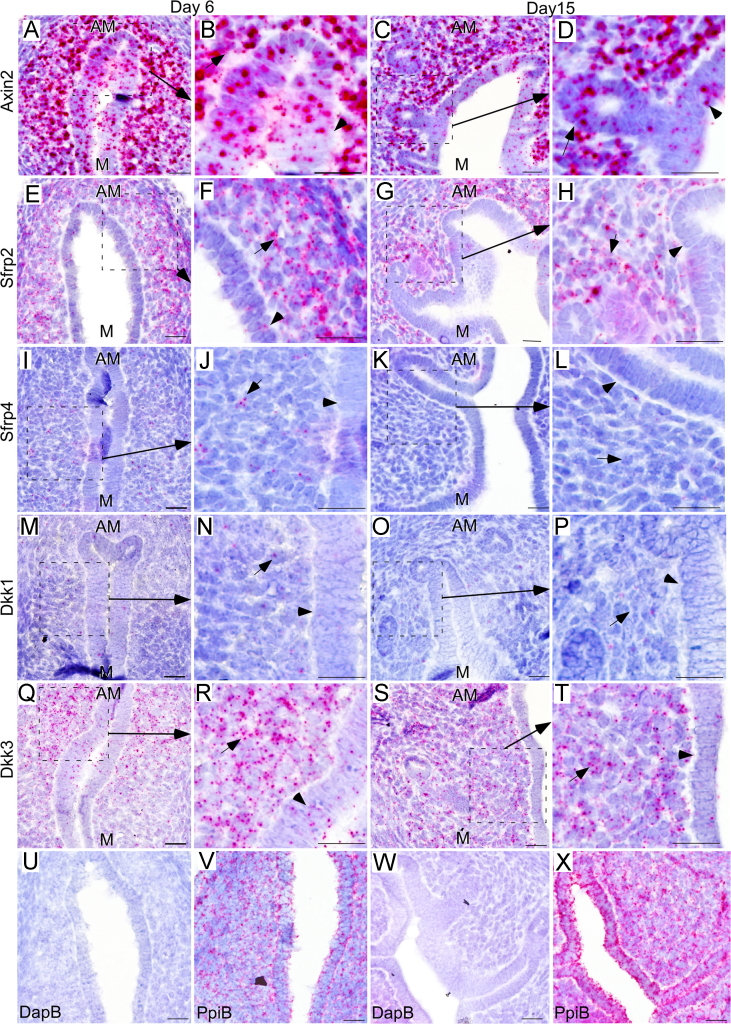
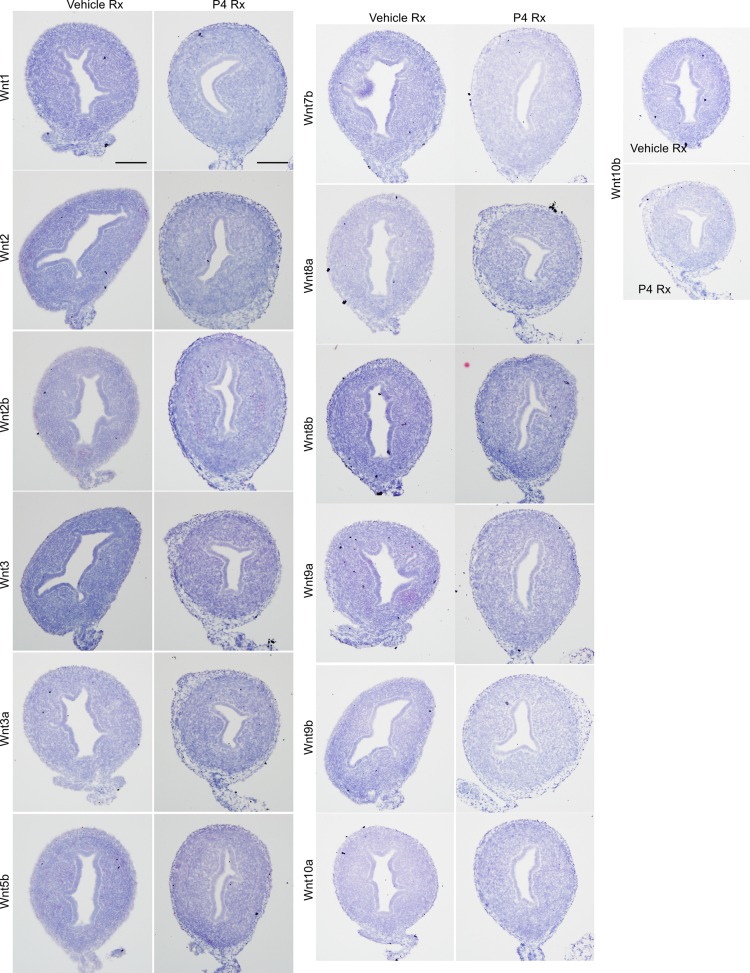
Wnt signaling plays an important role in uterine organogenesis and oncogenesis. Our mRNA expression data documents the expression of various Wnt pathway members during the key stages of uterine epithelial gland development. Our data illustrates the expression of Wnt signaling inhibitors (Axin2, Sfrp2, Sfrp4, Dkk1 and Dkk3) in mice uteri at postnatal day 6 (PND 6) and day 15 (PND 15). They also describe the expression pattern of the Wnt ligands (Wnt1, Wnt2, Wnt2b, Wnt3, Wnt3a, Wnt5b, Wnt7b, Wnt8a, Wnt8b, Wnt9a, Wnt9b, Wnt10a and Wnt10b) in mice uteri with or without progesterone treatment. Detailed interpretation and discussion of these data is presented in the research article entitled "Differential Wnt signaling activity limits epithelial gland development to the anti-mesometrial side of the mouse uterus" [1].
Wnt信号通路在子宫器官发生和肿瘤发生中起着重要作用。我们的mRNA表达数据记录了子宫上皮腺体发育关键阶段各种Wnt信号通路成员的表达情况。我们的数据显示了出生后第6天(PND 6)和第15天(PND 15)小鼠子宫中Wnt信号抑制剂(Axin2、Sfrp2、Sfrp4、Dkk1和Dkk3)的表达。它们还描述了在有或没有孕酮处理的小鼠子宫中Wnt配体(Wnt1、Wnt2、Wnt2b、Wnt3、Wnt3a、Wnt5b、Wnt7b、Wnt8a、Wnt8b、Wnt9a、Wnt9b、Wnt10a和Wnt10b)的表达模式。这些数据的详细解读和讨论在题为《差异Wnt信号活性将上皮腺体发育限制在小鼠子宫的抗系膜侧》的研究文章中给出[1]。