Oon Chern Ein, Bridges Esther, Sheldon Helen, Sainson Richard C A, Jubb Adrian, Turley Helen, Leek Russell, Buffa Francesca, Harris Adrian L, Li Ji-Liang
Molecular Oncology Laboratories, Department of Oncology, Weatherall Institute of Molecular Medicine, University of Oxford, John Radcliffe Hospital, Oxford OX3 9DS, UK.
Institute for Research in Molecular Medicine, Universiti Sains Malaysia, Penang, Malaysia.
Oncotarget. 2017 Jun 20;8(25):40115-40131. doi: 10.18632/oncotarget.16969.
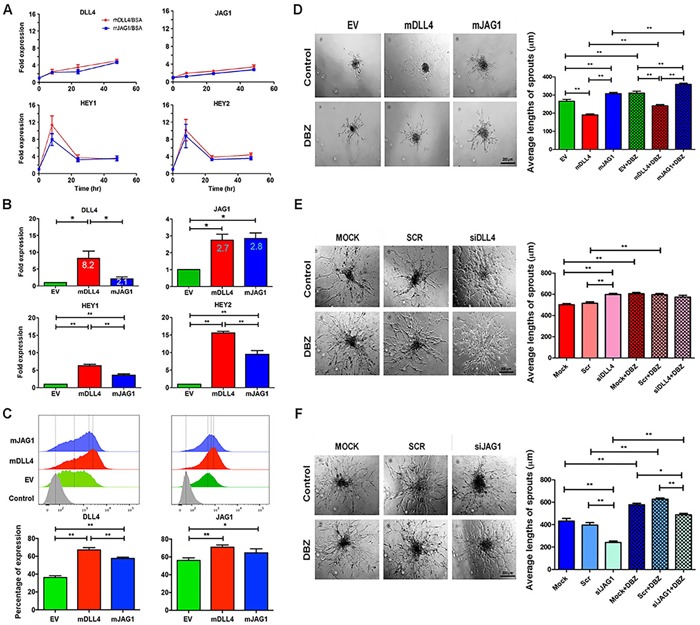
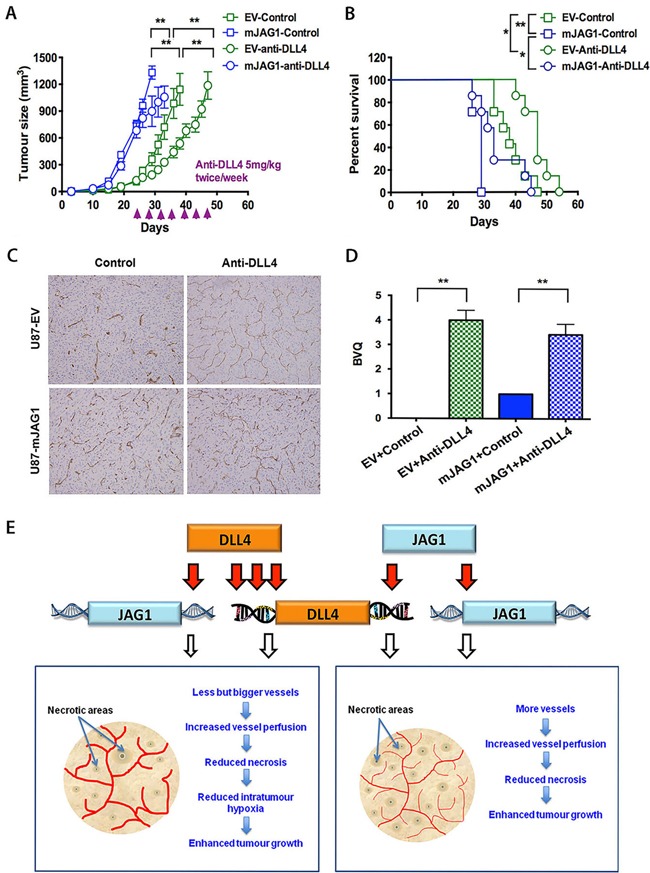
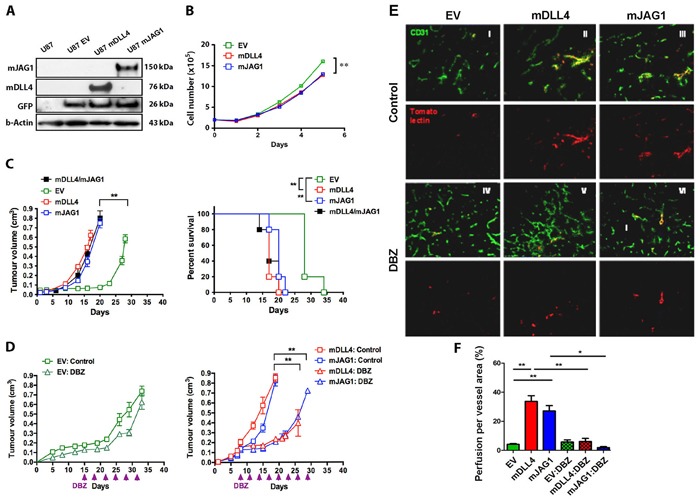
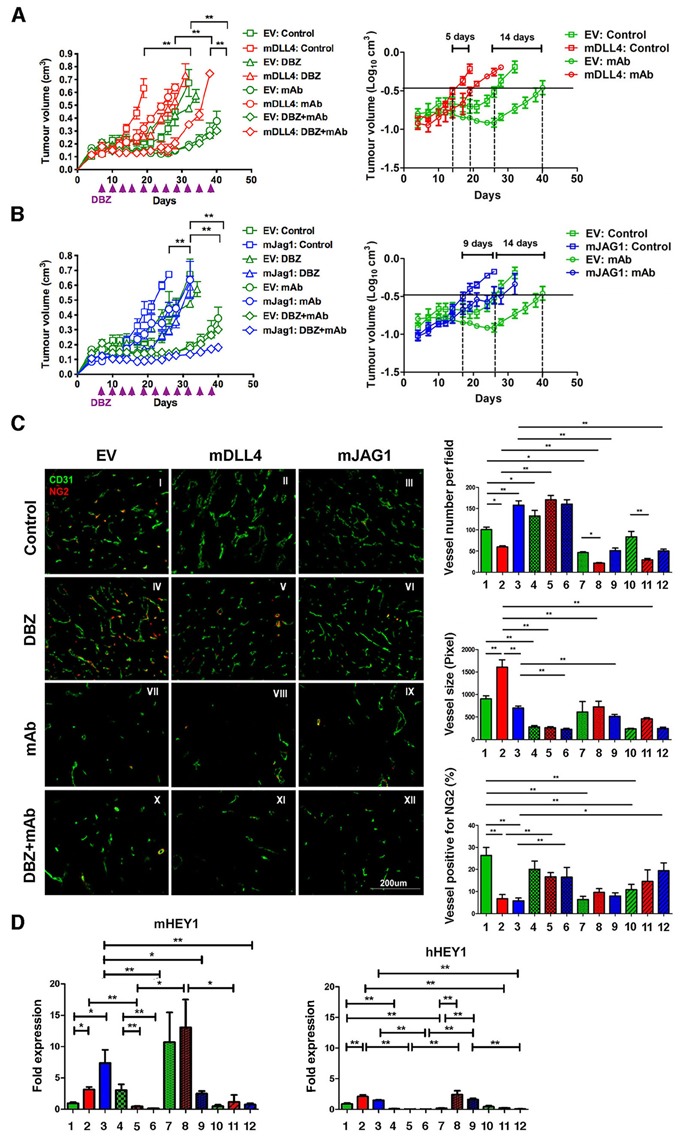
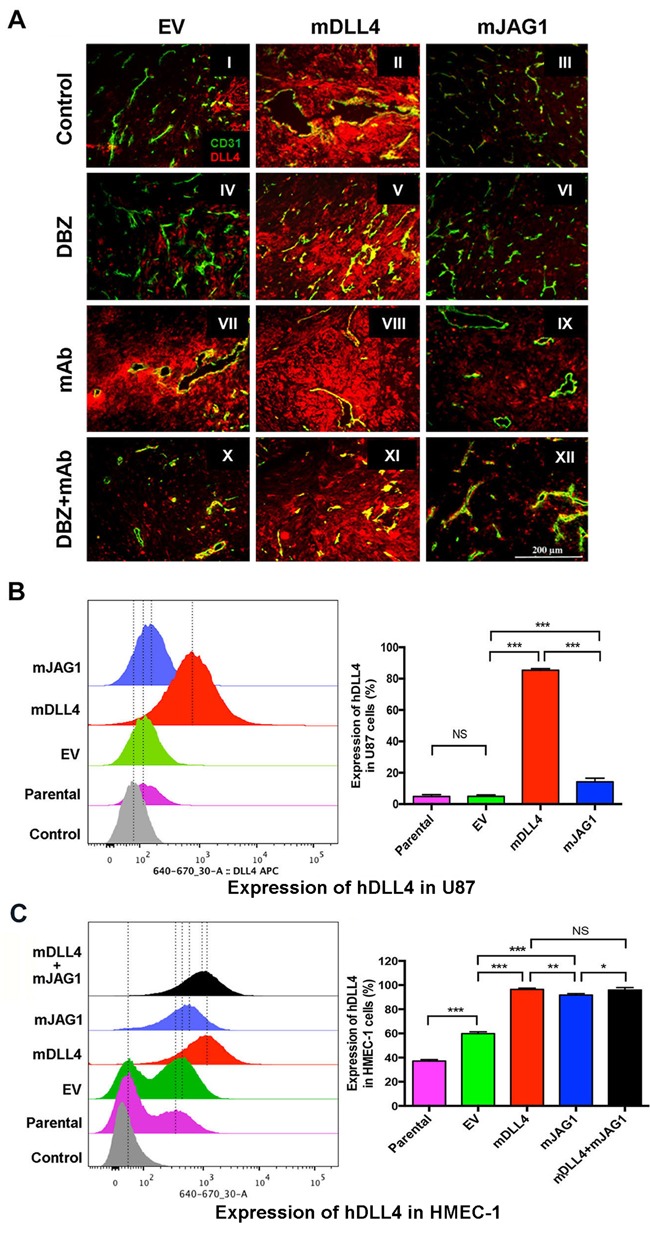
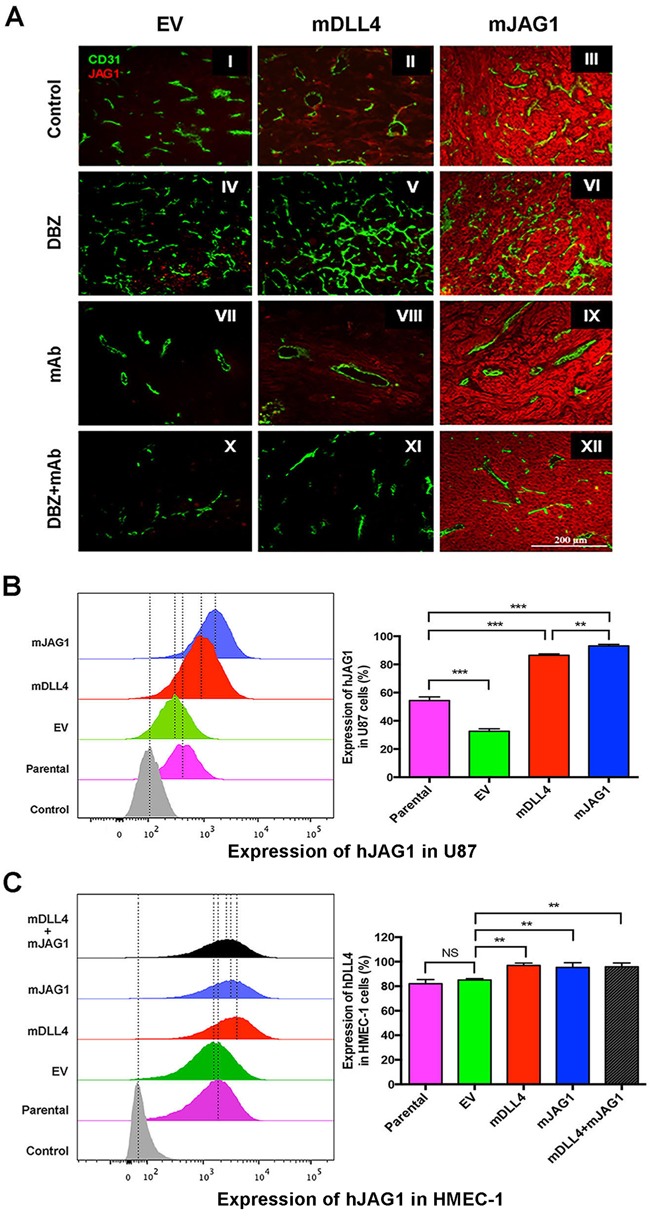
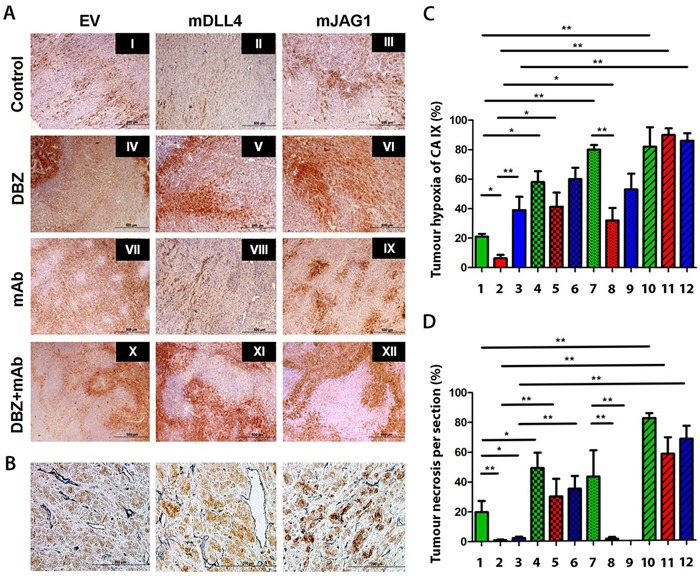
Delta-like 4 (DLL4) and Jagged1 (JAG1) are two key Notch ligands implicated in tumour angiogenesis. They were shown to have opposite effects on mouse retinal and adult regenerative angiogenesis. In tumours, both ligands are upregulated but their relative effects and interactions in tumour biology, particularly in tumour response to therapeutic intervention are unclear. Here we demonstrate that DLL4 and JAG1 displayed equal potency in stimulating Notch target genes in HMEC-1 endothelial cells but had opposing effects on sprouting angiogenesis in vitro. Mouse DLL4 or JAG1 expressed in glioblastoma cells decreased tumour cell proliferation in vitro but promoted tumour growth in vivo. mDLL4-expressing tumours showed fewer but larger vessels whereas mJAG1-tumours produced more vessels. In both tumour types pericyte coverage was decreased but the vessels were more perfused. Both ligands increased tumour resistance towards anti-VEGF therapy but the resistance was higher in mDLL4-tumours versus mJAG1-tumours. However, their sensitivity to the therapy was restored by blocking Notch signalling with dibenzazepine. Importantly, anti-DLL4 antibody blocked the effect of JAG1 on tumour growth and increased vessel branching in vivo. The mechanism behind the differential responsiveness was due to a positive feedback loop for DLL4-Notch signalling, rendering DLL4 more dominant in activating Notch signalling in the tumour microenvironment. We concluded that DLL4 and JAG1 promote tumour growth by modulating tumour angiogenesis via different mechanisms. JAG1 is not antagonistic but utilises DLL4 in tumour angiogenesis. The results suggest that anti-JAG1 therapy should be explored in conjunction with anti-DLL4 treatment in developing anti-Notch therapies in clinics.
Delta样蛋白4(DLL4)和Jagged1(JAG1)是与肿瘤血管生成相关的两种关键Notch配体。它们在小鼠视网膜和成年再生血管生成中显示出相反的作用。在肿瘤中,这两种配体均上调,但其在肿瘤生物学中的相对作用和相互作用,尤其是在肿瘤对治疗干预的反应中尚不清楚。在此,我们证明DLL4和JAG1在刺激HMEC-1内皮细胞中的Notch靶基因方面具有同等效力,但在体外对芽生血管生成具有相反的作用。在胶质母细胞瘤细胞中表达的小鼠DLL4或JAG1在体外降低了肿瘤细胞增殖,但在体内促进了肿瘤生长。表达mDLL4的肿瘤显示血管较少但较大,而表达mJAGl的肿瘤产生更多血管。在两种肿瘤类型中,周细胞覆盖率均降低,但血管灌注更多。两种配体均增加了肿瘤对抗VEGF治疗的抗性,但mDLL4肿瘤中的抗性高于mJAG1肿瘤。然而,通过用二苯并氮杂䓬阻断Notch信号传导,它们对该疗法的敏感性得以恢复。重要的是,抗DLL4抗体阻断了JAG1对肿瘤生长的作用,并增加了体内血管分支。差异反应性背后的机制是由于DLL4-Notch信号传导的正反馈回路,使得DLL4在激活肿瘤微环境中的Notch信号传导方面更具主导性。我们得出结论,DLL4和JAG1通过不同机制调节肿瘤血管生成来促进肿瘤生长。JAG1并非起拮抗作用,而是在肿瘤血管生成中利用DLL4。结果表明,在临床开发抗Notch疗法时,应探索将抗JAG1疗法与抗DLL4治疗联合使用。