Roybal Kole T, Lim Wendell A
Parker Institute for Cancer Immunotherapy, Department of Microbiology and Immunology, University of California, San Francisco, California 94143; email:
Howard Hughes Medical Institute, Department of Cellular and Molecular Pharmacology, University of California, San Francisco, California 94158; email:
Annu Rev Immunol. 2017 Apr 26;35:229-253. doi: 10.1146/annurev-immunol-051116-052302.
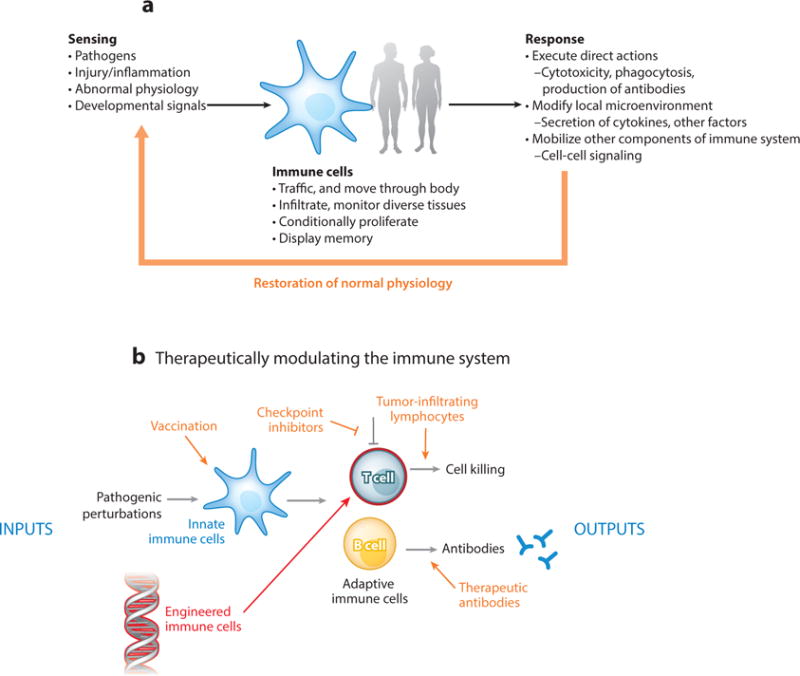
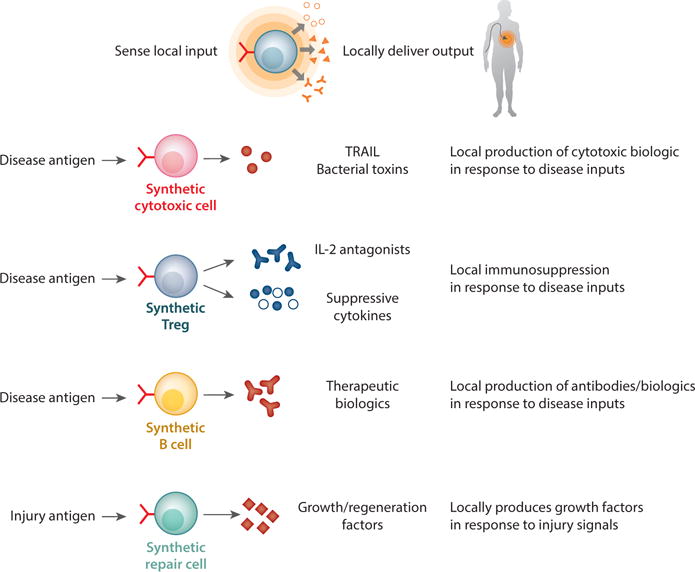
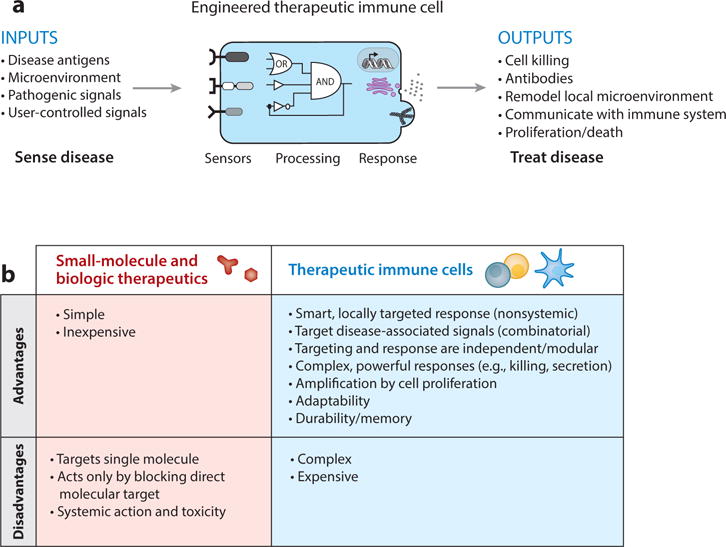
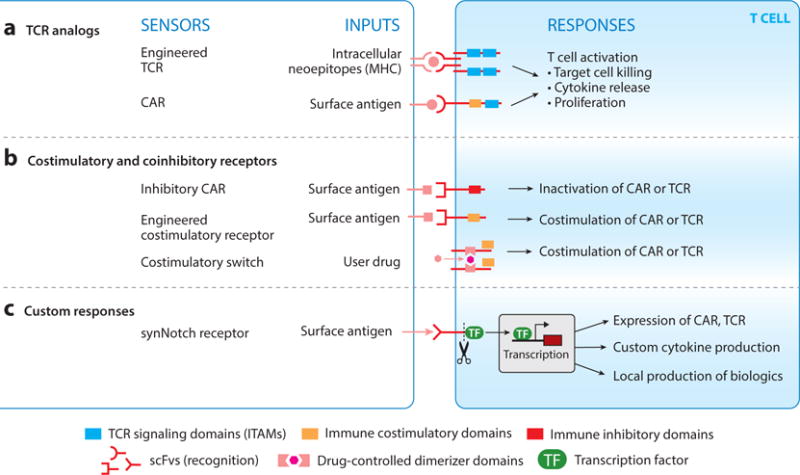
The ability of immune cells to survey tissues and sense pathologic insults and deviations makes them a unique platform for interfacing with the body and disease. With the rapid advancement of synthetic biology, we can now engineer and equip immune cells with new sensors and controllable therapeutic response programs to sense and treat diseases that our natural immune system cannot normally handle. Here we review the current state of engineered immune cell therapeutics and their unique capabilities compared to small molecules and biologics. We then discuss how engineered immune cells are being designed to combat cancer, focusing on how new synthetic biology tools are providing potential ways to overcome the major roadblocks for treatment. Finally, we give a long-term vision for the use of synthetic biology to engineer immune cells as a general sensor-response platform to precisely detect disease, to remodel disease microenvironments, and to treat a potentially wide range of challenging diseases.
免疫细胞监测组织以及感知病理损伤和偏差的能力,使其成为与身体和疾病相互作用的独特平台。随着合成生物学的迅速发展,我们现在能够对免疫细胞进行工程改造并为其配备新的传感器和可控的治疗反应程序,以感知和治疗我们天然免疫系统通常无法应对的疾病。在此,我们回顾工程化免疫细胞疗法的当前状态,以及与小分子和生物制剂相比它们所具有的独特能力。然后,我们将讨论如何设计工程化免疫细胞来对抗癌症,重点关注新的合成生物学工具如何为克服治疗的主要障碍提供潜在方法。最后,我们对利用合成生物学将免疫细胞工程化为通用的传感器-反应平台以精确检测疾病、重塑疾病微环境并治疗一系列潜在具有挑战性的疾病给出长远展望。