Liu Yujie, Chen Xizhou, Li Jie
Department of Cardiology, Tongchuan Kuangwuju Central Hospital, Shaanxi Coal and Chemical Industry Group, Tongchuan, Shaanxi 727000, P.R. China.
Department of General Medicine, Baoji Central Hospital, Baoji, Shaanxi 721008, P.R. China.
Mol Med Rep. 2017 May;15(5):2457-2464. doi: 10.3892/mmr.2017.6304. Epub 2017 Mar 9.
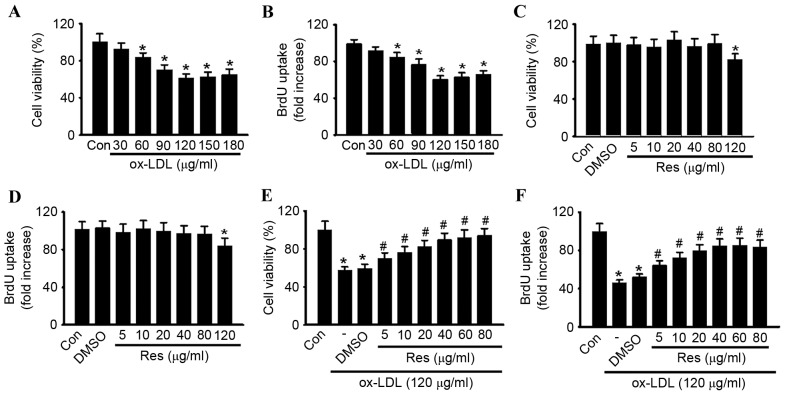
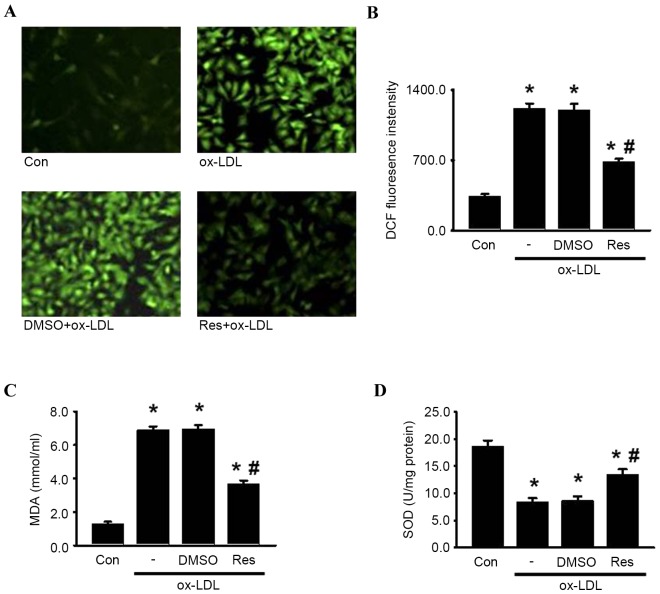
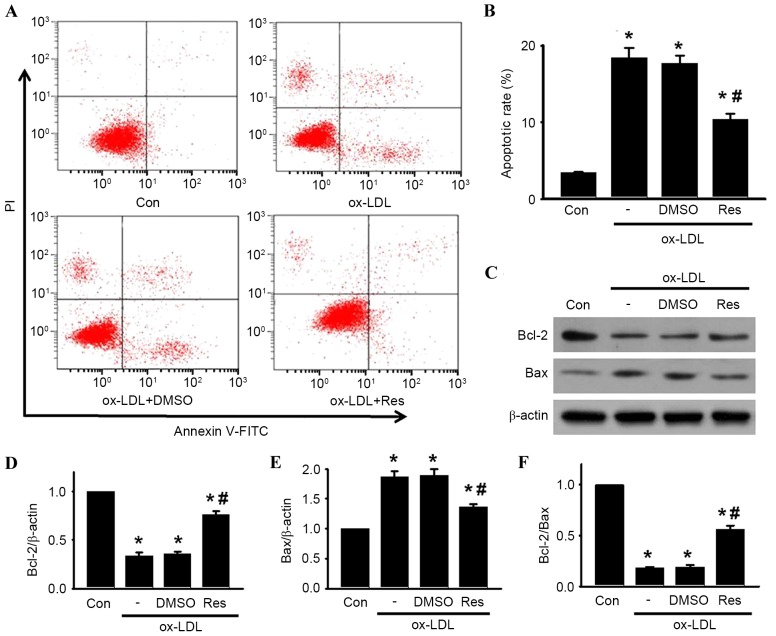
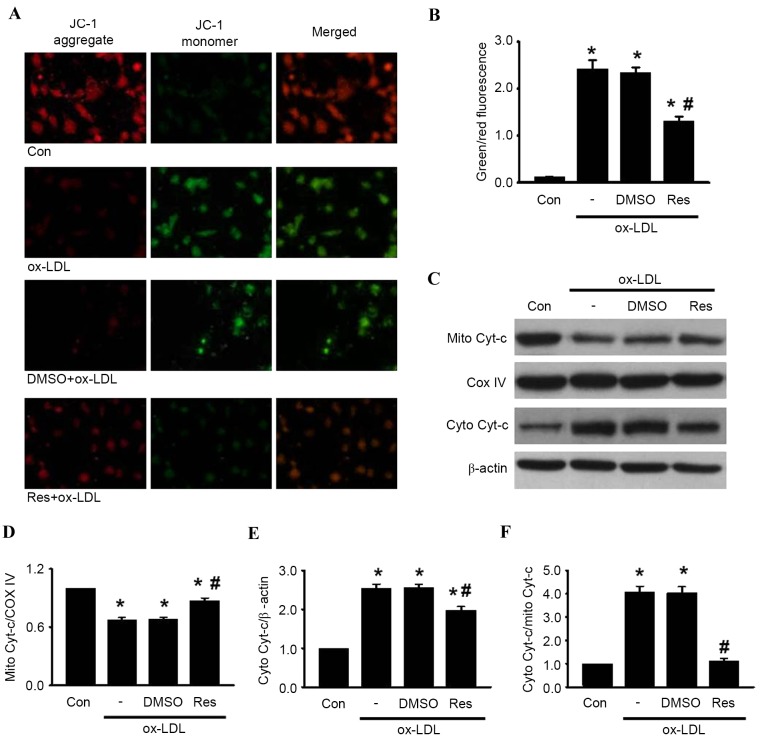
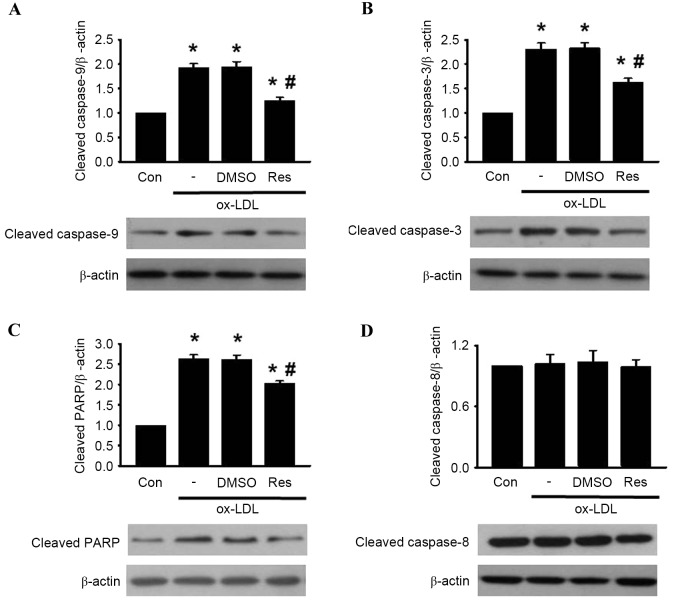
Resveratrol, a natural phytochemical found in grapes and red wine, has been found to possess protective effects against endothelial cell apoptosis and oxidative damage. Oxidized‑low density lipoprotein (ox‑LDL) can induce apoptosis of endothelial cells, which is an important initial event in several cardiovascular diseases. However, the effect of resveratrol on ox‑LDL‑induced apoptosis and oxidative damage, and the possible associated mechanisms remain to be elucidated. In the present study, following exposure to ox‑LDL, human umbilical vein endothelial cells (HUVECs) were treated with or without resveratrol. Cell viability was examined using Cell Counting Kit‑8 and 5‑bromo‑2'‑deoxyuridine uptake assays, respectively. Cell apoptosis was determined by flow cytometry. Apoptosis‑associated markers were detected using western blot analysis. Oxidative stress was analyzed using molecular and biochemical approaches. Resveratrol restored ox‑LDL‑induced HUVEC injury and apoptosis in a dose‑dependent manner. In addition, compared with the control group, ox‑LDL treatment decreased the B cell lymphoma‑2 (Bcl‑2)/Bcl‑2‑associated X protein ratio, mitochondrial membrane potential and activation of superoxide dismutase, and enhanced the release of mitochondrial cytochrome c into the cytoplasm, the activation of caspase and lipid peroxidation. All these alterations were significantly inhibited following treatment with resveratrol. The results demonstrated that resveratrol prevented HUVEC apoptosis through inhibiting mitochondria‑derived oxidative damage. These findings may provide a novel mechanism by which resveratrol prevents against endothelial cell apoptosis.
白藜芦醇是一种存在于葡萄和红酒中的天然植物化学物质,已被发现具有保护内皮细胞免受凋亡和氧化损伤的作用。氧化型低密度脂蛋白(ox-LDL)可诱导内皮细胞凋亡,这是几种心血管疾病中的一个重要初始事件。然而,白藜芦醇对ox-LDL诱导的凋亡和氧化损伤的影响以及可能的相关机制仍有待阐明。在本研究中,人脐静脉内皮细胞(HUVECs)在暴露于ox-LDL后,分别用或不用白藜芦醇处理。分别使用细胞计数试剂盒-8和5-溴-2'-脱氧尿苷摄取试验检测细胞活力。通过流式细胞术测定细胞凋亡。使用蛋白质免疫印迹分析检测凋亡相关标志物。使用分子和生化方法分析氧化应激。白藜芦醇以剂量依赖性方式恢复ox-LDL诱导的HUVEC损伤和凋亡。此外,与对照组相比,ox-LDL处理降低了B细胞淋巴瘤-2(Bcl-2)/Bcl-2相关X蛋白比值、线粒体膜电位和超氧化物歧化酶的活性,并增强了线粒体细胞色素c释放到细胞质中、半胱天冬酶的激活和脂质过氧化。在用白藜芦醇处理后,所有这些改变均受到显著抑制。结果表明,白藜芦醇通过抑制线粒体衍生的氧化损伤来预防HUVEC凋亡。这些发现可能为白藜芦醇预防内皮细胞凋亡提供一种新机制。