Weth Agnes, Dippl Carsten, Striedner Yasmin, Tiemann-Boege Irene, Vereshchaga Yana, Golenhofen Nikola, Bartelt-Kirbach Britta, Baumgartner Werner
a Institute of Biomedical Mechatronics, Johannes Kepler University of Linz , Linz , Austria.
b Institute of Biophysics, Johannes Kepler University of Linz , Linz , Austria.
Tissue Barriers. 2017 Apr 3;5(2):e1285390. doi: 10.1080/21688370.2017.1285390. Epub 2017 Jan 24.
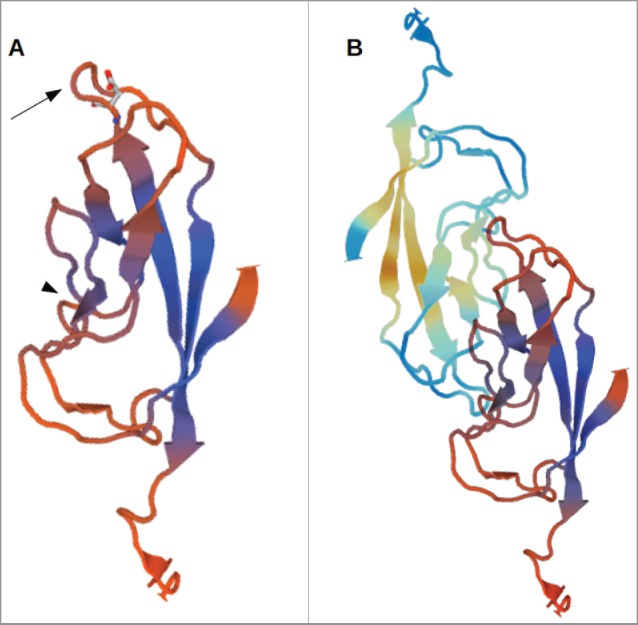
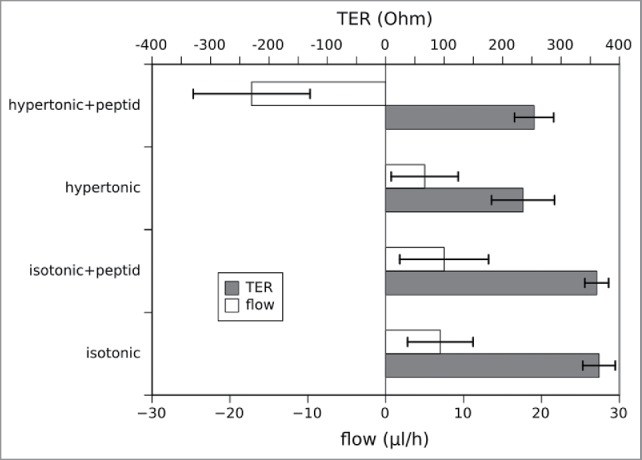
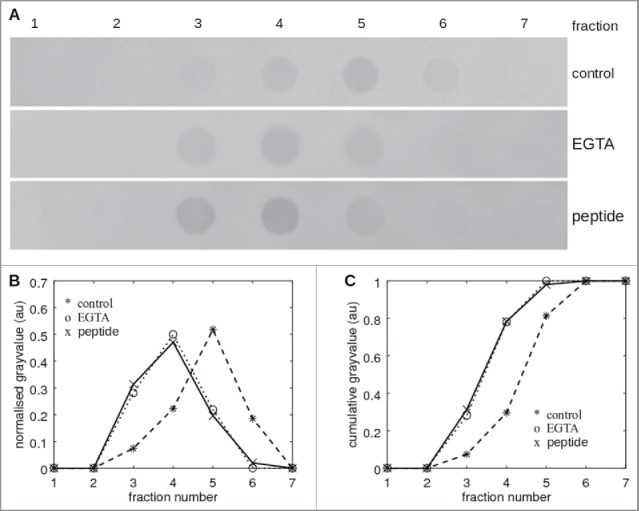
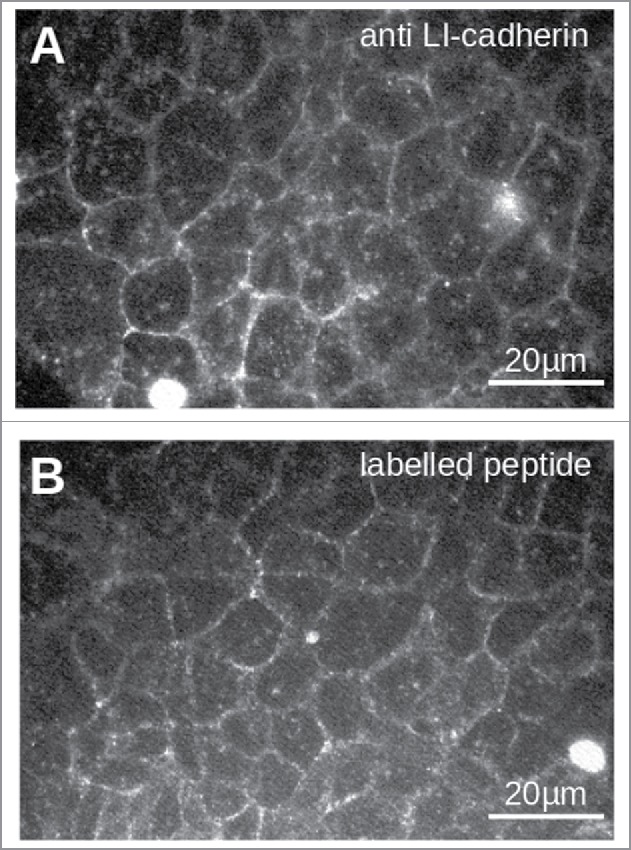
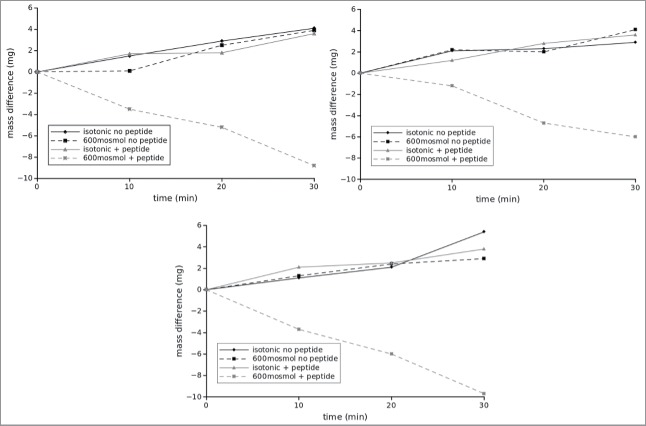
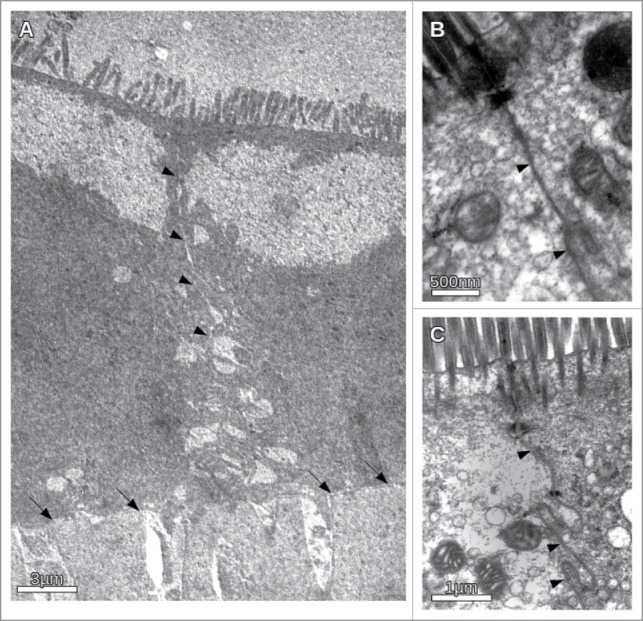
In the intestine water has to be reabsorbed from the chymus across the intestinal epithelium. The osmolarity within the lumen is subjected to high variations meaning that water transport often has to take place against osmotic gradients. It has been hypothesized that LI-cadherin is important in this process by keeping the intercellular cleft narrow facilitating the buildup of an osmotic gradient allowing water reabsorption. LI-cadherin is exceptional among the cadherin superfamily with respect to its localization along the lateral plasma membrane of epithelial cells being excluded from adherens junction. Furthermore it has 7 but not 5 extracellular cadherin repeats (EC1-EC7) and a small cytosolic domain. In this study we identified the peptide VAALD as an inhibitor of LI-cadherin trans-interaction by modeling the structure of LI-cadherin and comparison with the known adhesive interfaces of E-cadherin. This inhibitory peptide was used to measure LI-cadherin dependency of water transport through a monolayer of epithelial CACO2 cells under various osmotic conditions. If LI-cadherin trans-interaction was inhibited by use of the peptide, water transport from the luminal to the basolateral side was impaired and even reversed in the case of hypertonic conditions whereas no effect could be observed at isotonic conditions. These data are in line with a recently published model predicting LI-cadherin to keep the width of the lateral intercellular cleft small. In this narrow cleft a high osmolarity can be achieved due to ion pumps yielding a standing osmotic gradient allowing water absorption from the gut even if the faeces is highly hypertonic.
在肠道中,水必须从食糜中穿过肠上皮细胞被重新吸收。肠腔内的渗透压变化很大,这意味着水的运输常常不得不逆着渗透梯度进行。据推测,LI-钙黏蛋白在这个过程中很重要,它通过保持细胞间缝隙狭窄,促进渗透梯度的形成,从而有利于水的重吸收。LI-钙黏蛋白在钙黏蛋白超家族中是独特的,其沿着上皮细胞的外侧质膜定位,被排除在黏附连接之外。此外,它有7个而非5个细胞外钙黏蛋白重复序列(EC1-EC7)和一个小的胞质结构域。在本研究中,我们通过对LI-钙黏蛋白的结构进行建模,并与E-钙黏蛋白已知的黏附界面进行比较,确定了肽VAALD是LI-钙黏蛋白反式相互作用抑制剂。在各种渗透条件下,使用这种抑制肽来测量水通过单层上皮Caco-2细胞运输对LI-钙黏蛋白的依赖性。如果使用该肽抑制LI-钙黏蛋白的反式相互作用,从肠腔到基底外侧的水运输就会受损,在高渗条件下甚至会逆转,而在等渗条件下则未观察到影响。这些数据与最近发表的一个模型一致,该模型预测LI-钙黏蛋白可使外侧细胞间缝隙保持狭窄。在这个狭窄的缝隙中,由于离子泵可产生一个稳定的渗透梯度,即使粪便处于高渗状态,也能实现高渗透压,从而使水从肠道吸收。